Itineraries
The Azores Triangle in 7 days: Faial, Pico and São Jorge
We may earn a commission when you book through links on this page, at no extra cost to you. We don't visit or try the places we cover: we summarize published sources. How we work
Day by day
- Day 1Arrive in Horta: Café Sport and marina murals
- Day 2Faial caldera and Capelinhos volcano
- Day 3Ferry to Madalena, Pico vineyards and wine tasting
- Day 4Climbing Montanha do Pico
- Day 5Lajes do Pico: whaling museum, whale watching, natural pools
- Day 6Ferry to Velas, Fajã dos Cubres, Fajã de Santo Cristo
- Day 7North coast, Topo, Velas, return to Horta
Where to sleep
- Horta2 nights
- Pico3 nights
- São Jorge1 night
Estimated budget
$350 – $570 per person (€320 – €520)
For 2 travelers sharing a double room and a rental car, with mid-range lodging. Total without car rental, fuel and tolls: no checked price yet.
| Item | Per person |
|---|---|
| Lodging | $220 – $340 |
| Paid visits | $130 – $230 |
Not included: international flights, meals and insurance.
In short
- The Triangle is three neighboring islands, Faial, Pico and São Jorge, linked by Atlanticoline ferries (Horta-Madalena €8.20, about 30 minutes).
- Plan about 2 days on Faial, 3 on Pico (one for the climb) and 2 on São Jorge; a car is essential on each island.
- The Pico climb (2,351 m / 7,713 ft) needs a booked slot at €25 per person; a guide is strongly recommended the first time.
- June to September has the best weather; November to January is not recommended because of rough ferry crossings.
The Azores Triangle (Faial, Pico and São Jorge) is one of the Portuguese archipelago’s best-kept secrets. Three neighboring islands, three radically different characters, linked by ferries that cross the Atlantic in under 30 minutes. Faial, the blue island, with its hydrangea-covered caldera and its Horta harbor, legendary among sailors. Pico, the black island, dominated by the highest peak in Portugal and covered in UNESCO-listed vineyards. São Jorge, the remote one, with its mysterious fajãs at the foot of the cliffs and the raw-milk cheeses that are the pride of the archipelago.
This 7-day circuit lets you experience the three islands at an unhurried pace, combining volcanic hikes, whale watching, scuba diving and immersion in the most authentic Azorean culture.
Practical information before you go
Entry point: International flights arrive at Horta airport (Faial) via Lisbon or Ponta Delgada. Alternatively, fly to Ponta Delgada and then take an inter-island flight or ferry to Faial.
Atlanticoline ferries (2026 fares, one-way, non-resident): Horta-Madalena €8.20 (about $10) / 30 min, Madalena-Velas €17.30 (about $20) / about 1 h 20, Horta-Calheta (São Jorge) €25.50 (about $30) / 2 h 30. Check atlanticoline.pt for schedules: the green line Faial-Pico-São Jorge runs all year with several daily crossings.
Budget: Expect to pay €100-150 per person per day (about $115-$175) at a mid-range level (lodging, car, ferries, meals). See our Azores budget guide.
Car: Book your car in advance on each island, especially in high season. Plan three separate reservations (one per island).
Weather: The weather in the central group is unpredictable. Always keep a light rain jacket in your bag. The Pico climb can be canceled if conditions are bad.
Days 1-2: Faial, the blue island of hydrangeas
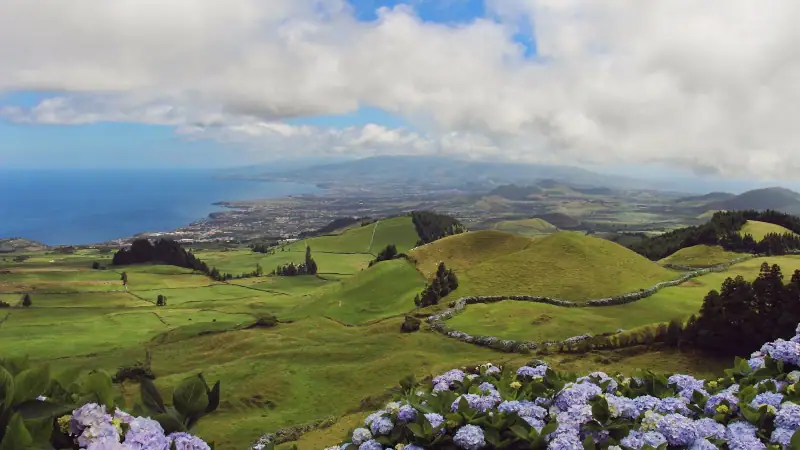
Day 1: Arrival in Horta and the harbor
Morning: Land in Horta and pick up your rental car. Check in at your accommodation.
Afternoon: Dive straight into the unique atmosphere of Café Sport (Peter Café Sport), the legendary meeting place for sailors from around the world since 1918. The walls covered in boat pennants bear witness to decades of circumnavigations. Then stroll around the Horta marina, where tradition says every crew that stops over paints its emblem on the quays. Thousands of marine murals now cover the breakwaters, a one-of-a-kind open-air museum.
Evening: Dinner at one of the restaurants in central Horta. Order the lapas (limpets) grilled in garlic butter, a cabbage soup (sopa de couves) typical of Faial, or simply fresh grilled fish. Alcatra (beef braised in a clay pot with vinho de cheiro), on the other hand, is strictly a Terceira specialty; you will taste it best in Angra.
Day 2: Faial caldera and the west coast
Morning: Head up to the Faial Caldera, a giant crater 2 km (1.2 mi) across, overlooked by Cabeço Gordo (1,043 m / 3,422 ft), the island’s highest point. The viewpoint is at around 1,020 m (3,346 ft). This caldera is one of the most impressive in the archipelago: a green abyss ringed by blue hydrangeas (hydrangea macrophylla) that give Faial its nickname, the “blue island”. The crater rim trail (PRC04 FAI, 6.8 km / 4.2 mi, 2 h 30, easy) offers 360-degree views.
Afternoon: Head to Capelinhos, Faial’s most spectacular geological attraction. From September 27, 1957 to October 24, 1958 (13 months), a submarine then Surtseyan eruption added about 2.5 km² (about 1 sq mi) of land to the island’s western tip (an area since halved by marine erosion), burying the old lighthouse in volcanic ash. The Centro de Interpretação do Vulcão dos Capelinhos (admission €10 / about $12) tells this fascinating story from an underground building dug beneath the old lighthouse. Then walk across the cooled lava flows to the sand-buried lighthouse: an unforgettable lunar landscape.
Evening: Back to Horta. Have a cocktail at Café Sport (try the maracujá, local passion fruit). Prepare for the next morning’s crossing.
Hotels in Horta, Faial
From Portuguese charm to marina hotels with views of Pico.
Days 3-5: Pico, the volcano and the vines
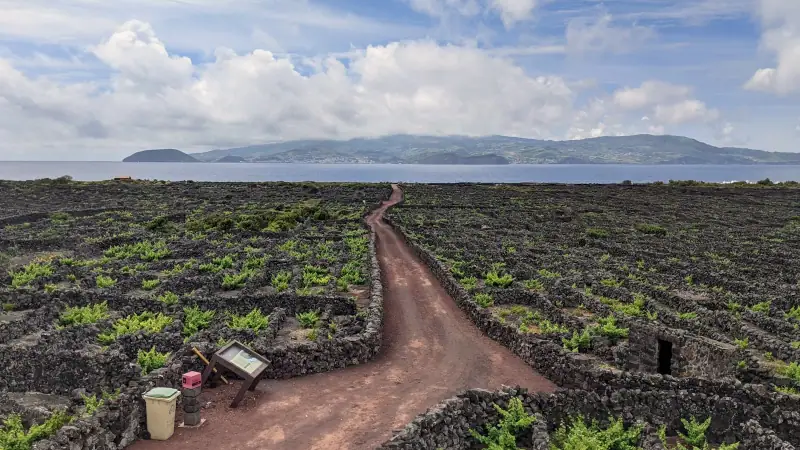
Day 3: Crossing to Madalena and the UNESCO vineyards
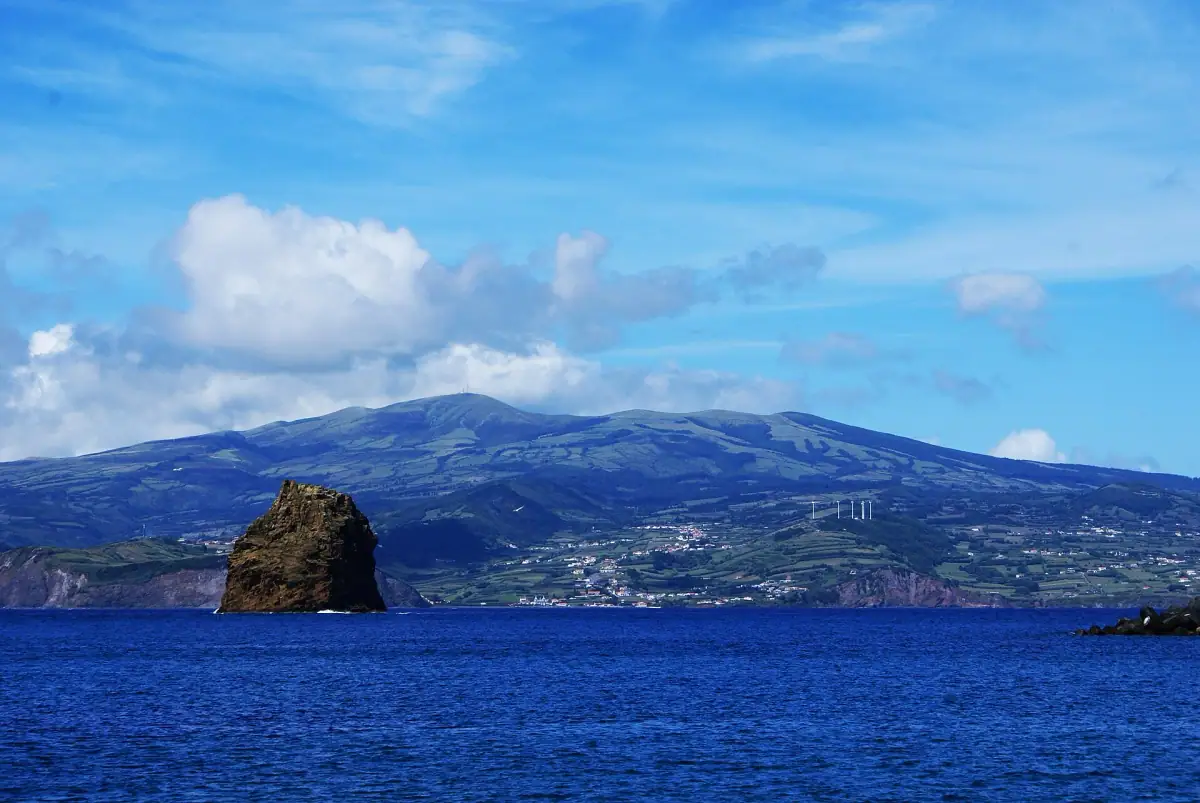
Morning: Ferry from Horta to Madalena (€8.20 / about $10, 30 min). On board, watch Pico’s silhouette gradually reveal itself: the perfect cone of Montanha do Pico (2,351 m / 7,713 ft), the highest point in Portugal, floats above the clouds when the weather allows. Pick up your car in Madalena.
Afternoon: Discover the Landscape of the Pico Island Vineyard Culture, listed as a UNESCO World Heritage site in 2004. This volcanic wine-growing landscape is made of countless small black basalt enclosures (currais) that shelter the vines from wind and sea spray. Visit an adega (winery) for a tasting of Pico wines (DOC Pico), whose emblematic grapes are Verdelho, Arinto dos Açores and the rare Terrantez do Pico: mineral, briny whites, inherited from a wine-growing tradition that goes back to the island’s settlement in the 15th century.
Evening: Dinner in Madalena or São Roque do Pico. Try the fresh local cheeses and the smoked linguiça do Pico, or grilled fish with a glass of Verdelho.
Day 4: Climbing Pico (the highlight day)
Leave before dawn. The climb of Montanha do Pico is the central experience of any trip to the central group of the Azores: it is the ascent of Portugal’s highest peak (2,351 m / 7,713 ft).
The trail (PR01 PIC): the start is at the Casa da Montanha, at 1,200 m (3,937 ft) (reachable by car on a narrow road, about 30 min from Madalena). Allow 3.8 km (2.4 mi) of climbing (about 7.6 km / 4.7 mi round trip) and an elevation gain of +1,150 m (3,773 ft), for a total day of 7 to 8 hours. The trail is marked by 47 numbered wooden posts between the base and the summit, but can disappear in fog. Registration at the Casa da Montanha is mandatory (booking at montanhapico.azores.gov.pt, €25 per person / about $29, quota capped at 320 climbers per day); a GPS tracker is handed to each group.
Conditions: a physically demanding climb on unstable volcanic terrain. The weather can turn within minutes above 1,500 m (4,921 ft). Bring a rain jacket, fleece and warm clothing (5-10 °C / 41-50 °F at the summit even in summer), at least 2 L (about 2 qt) of water, snacks, and a headlamp for late returns.
The summit: the terminal crater holds the Piquinho (or Pico Pequeno), a small secondary cone about 30 m (98 ft) high that you can climb (watch for the lukewarm fumaroles). On a clear day, the view takes in Faial, São Jorge and sometimes Graciosa and Terceira. São Miguel, in the eastern group, is not visible from the summit.
Our advice: Book a guide for this climb, especially if it is your first time. Local guides know the climbing conditions and the danger zones, and can make the experience much richer.
Guides for the Pico climb
Climb safely with a certified local guide. Small groups, equipment provided.
Day 5: Lajes do Pico, whales and diving
Morning: Go to Lajes do Pico, the former whaling capital of the Azores (banned since 1984). The Museu dos Baleeiros tells this history in former 19th-century whaling sheds. Then board a whale-watching trip in the channel between Faial and Pico (€60-90 per adult / about $70-$105, about 3 h). The sperm whale can be seen year-round off the Azores; blue whales, fin whales and humpback whales pass through on migration between April and June; common dolphins, spotted dolphins and bottlenose dolphins are frequent in summer.
Want to go deeper below the surface? See our guide to diving in the Azores for the spots around Pico.
Afternoon: Head back to the north of the island. Stop at the natural pools of São Roque do Pico for a swim in clear water at 20-22 °C (68-72 °F) in summer, sheltered by basalt rocks. These pools are among the finest in the archipelago.
Evening: Get ready for the next day’s crossing to São Jorge.
Days 6-7: São Jorge, the wild fajãs
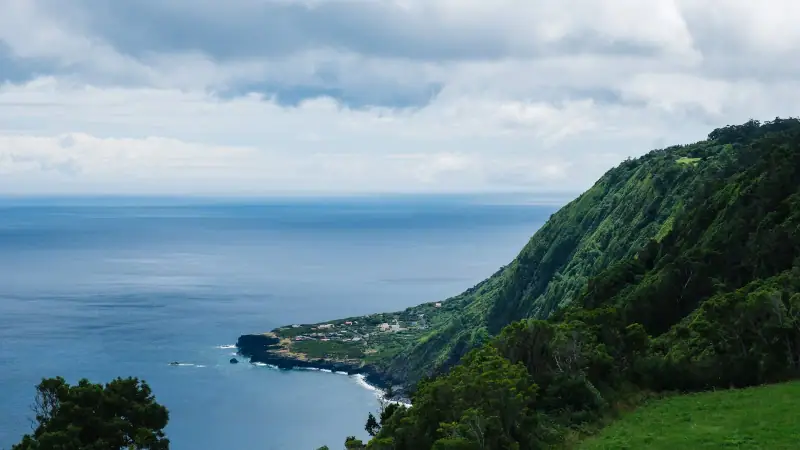
Day 6: Crossing and discovering the fajãs
Morning: Ferry Madalena → Velas (€17.30 / about $20, about 1 h 20). Pick up your car in Velas.
São Jorge is a ridge island: a volcanic alignment about 54 km long and 7 km wide (34 mi by 4 mi), with a high point at Pico da Esperança (1,053 m / 3,455 ft), whose cliffs plunge straight into the ocean. Its specialty is the fajãs: about 70 low-altitude platforms formed by old lava flows or landslides, pressed against the foot of the cliffs and linked by dizzying trails. These remote corners shelter tiny farming communities, vineyards and a timeless atmosphere.
Afternoon: Reach the Fajã dos Cubres, accessible by car along the winding Serra do Topo road. Its brackish lagoon, classified as a nature reserve, is an important site for migratory birds. From there, the PR01 SJO trail descends in about 1 hour on foot to the Fajã da Caldeira de Santo Cristo (4 km / 2.5 mi, elevation change about 250 m / 820 ft), the most famous of the fajãs: a black pebble beach, a lagoon and a hamlet of about thirty inhabitants with no road access.
A Santo Cristo specialty: the lagoon is the only place in the Azores where the clam Ruditapes decussatus (amêijoas) is harvested, under a strict quota (50 kg / 110 lb per month maximum, closed from May 15 to August 15). Prepared simply with white wine and garlic, it remains one of the most memorable meals of the trip.
Evening: Stay in Velas or in a typical quinta (country house).
Day 7: North coast and return
Morning: Explore the north coast of São Jorge, spectacular with its black cliffs and hydrangeas. Stop at the São Tomé viewpoint for a view of the island of Graciosa. Visit the village of Topo, at the far southeast of the island, with its lighthouse and accessible fajãs.
Afternoon: A last stroll in Velas before your crossing back to Faial or your flight. If you have time, visit one of the island’s cooperative dairies to buy Queijo São Jorge PDO (protected designation of origin since 1986, raw cow’s milk), aged at least 3 months and up to 12 months for the most characterful versions, the most emblematic cheese of the Azores.
Return: Ferry to Horta for a flight home, or a SATA Air Açores flight from Velas to Terceira or Ponta Delgada (no direct flight to Lisbon).
Car rental in the Azores
Book your car on Faial, Pico and São Jorge in advance to guarantee your vehicle in high season.
A mental map of the Triangle
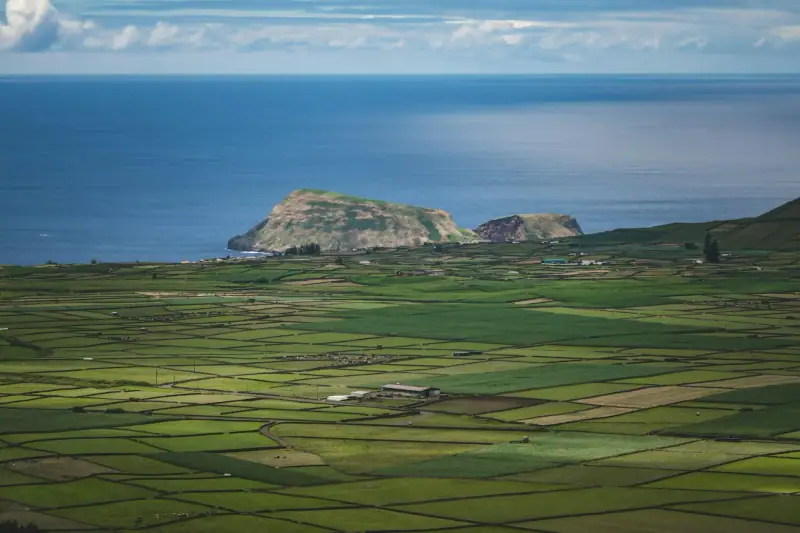
| Island | Highlights | Recommended time |
|---|---|---|
| Faial | Caldera, Capelinhos, Horta marina | 2 days |
| Pico | Volcano climb, UNESCO vineyards, whales | 3 days |
| São Jorge | Fajãs, cheeses, cliffs, hikes | 2 days |
Ferry links (Atlanticoline, green line, 2026 one-way fares, non-resident):
- Horta → Madalena (Pico): €8.20 (about $10) / 30 min, 5-10 crossings a day
- Madalena → Velas (São Jorge): €17.30 (about $20) / about 1 h 20, usually 1-2 crossings a day
- Horta → Calheta (São Jorge, direct line): €25.50 (about $30) / about 2 h 30
- Velas → Horta (Faial, via Cais do Pico): about 2 h 10
Tips for a successful stay in the Triangle
Managing the ferries
Atlanticoline ferries do not always leave on time, especially if the sea is rough. Always plan your crossings with a comfortable margin before important appointments (the Pico climb, a whale-watching trip). Book your ferry tickets online as early as possible, especially in July-August.
The Pico climb: be ready
The climb is open all year but much more accessible from May to October (in winter the summit is often snow-covered and the weather window very narrow). Book your slot and pay the €25 (about $29) at montanhapico.azores.gov.pt in advance, and start at dawn to get the best conditions. If the weather worsens, do not push on: local guides cancel without hesitation for your safety.
Finding the right place to stay
Faial has the most choice (Horta is a proper town). On Pico and São Jorge, prefer casas de campo or quintas for a more authentic experience. Book early in high season: lodging remains limited on these islands.
The weather, your best friend (and sometimes your enemy)
The Azores can offer four seasons in one day. A cloudy morning can turn into a bright afternoon. Be flexible with your plan. If Pico is in the clouds on the planned day, push the climb to the next day and adjust the rest of the program.
Soaking up local culture
The central group of the Azores is less touristy than São Miguel. You will find authentic local life, patron saint festivals in summer, and farmers’ markets on Sundays. Learn a few words of Portuguese (obrigado/obrigada, bom dia, faz favor): locals appreciate the effort.
The Azores Triangle in the off-season
April-May: Lush vegetation, hydrangeas starting to bloom, fewer tourists. Ideal for hiking. Ferry crossings can be canceled in bad weather.
June-September: The best period for the Pico climb and whale watching. July and August are the busiest months. Book everything well in advance.
October: Beautiful autumn light, fewer people. Rougher sea. The Pico grape harvest takes place in September-October.
November-March: Difficult weather, ferries sometimes canceled. Not recommended for this circuit unless you have a lot of flexibility.
This 7-day circuit through the Azores Triangle will be one of your most memorable trips. The combination of these three islands offers an incomparable range of experiences: Faial’s maritime friendliness, Pico’s volcanic verticality and São Jorge’s wild ruggedness. Three islands, three characters, one sea: the Atlantic, so vast and so close at once.
To round out your exploration of the archipelago, see our complete 7-day São Miguel itinerary or our guide to hiking in the Azores.
Sources
Frequently asked questions
What is the Azores Triangle?
The Azores Triangle refers to the three neighboring islands of Faial, Pico and São Jorge, linked by regular ferries. The three islands are less than 30 km (19 mi) from each other and form a geographic triangle in the central group of the archipelago.
How do you get between Faial, Pico and São Jorge?
Atlanticoline ferries run regularly between Horta (Faial, €8.20 / about $10), Madalena (Pico) and Velas (São Jorge, €17.30 / about $20 from Madalena). The Faial-Pico crossing takes about 30 minutes, Madalena-Velas about 1 h 20. SATA flights exist, but the ferry remains the most practical and scenic option.
Do you need to rent a car on each island?
Yes, a car is essential on each island. Public transport is very limited. You can book your vehicle in advance on each island: several local agencies operate in Horta, Madalena and Velas.
Can you climb Pico on your own?
Technically yes, but a guide is strongly recommended for a first climb. The summit (2,351 m / 7,713 ft) is often in the clouds, the weather can change very fast and conditions can be difficult. Local guides know the volcano perfectly and make the climb safer.
What is the best time to visit the Azores Triangle?
June to September offers the best weather. July and August are ideal for the Pico climb and whale watching. Spring (April-May) is beautiful for the flowering vegetation. Avoid November to January for ferry crossings (rough seas).
Is 7 days enough for the Azores Triangle?
Seven days let you get to know the three islands well without rushing. Allow about 2 days on Faial, 3 days on Pico (including one for the climb) and 2 days on São Jorge. If you want to go deeper on each island, choose 10 days instead.
More Azores guides
Keep reading
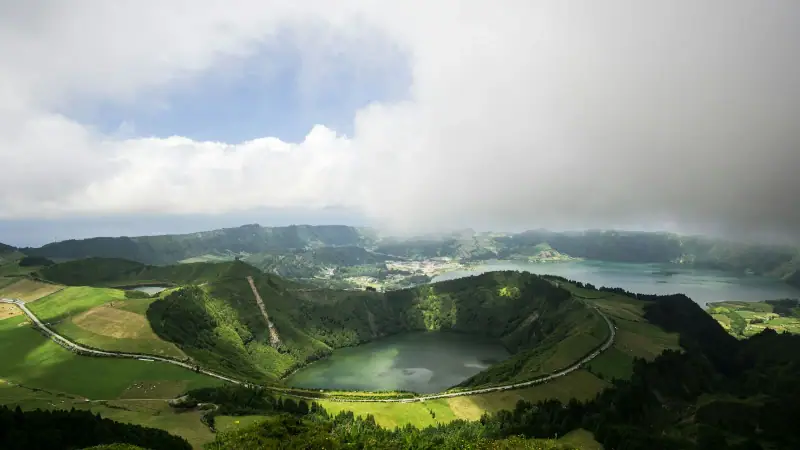
Azores Lakes and Volcanoes: The Main Natural Sites
The most beautiful volcanic lakes in the Azores. Sete Cidades, Fogo, Furnas, Algar do Carvão: the archipelago's natural wonders.
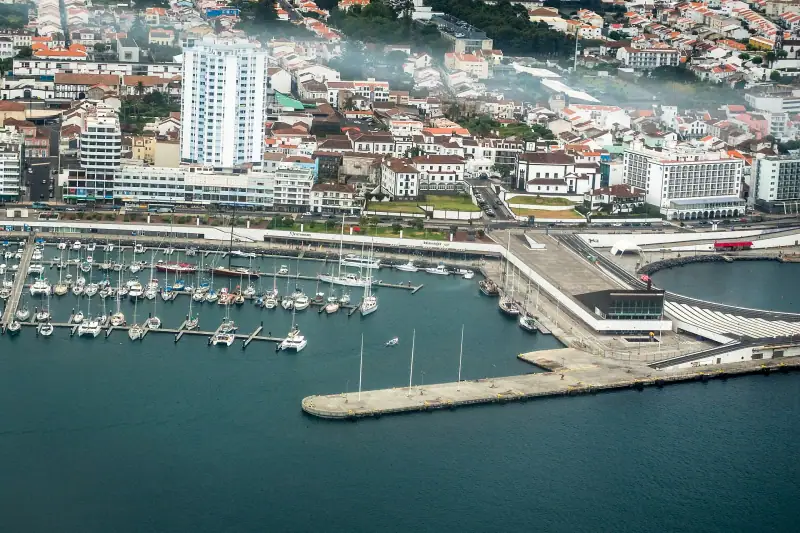
Where to Stay in São Miguel: Best Areas and Hotels
Where to stay on São Miguel in the Azores? A complete guide to the best areas of Ponta Delgada, rural stays and options for every budget.
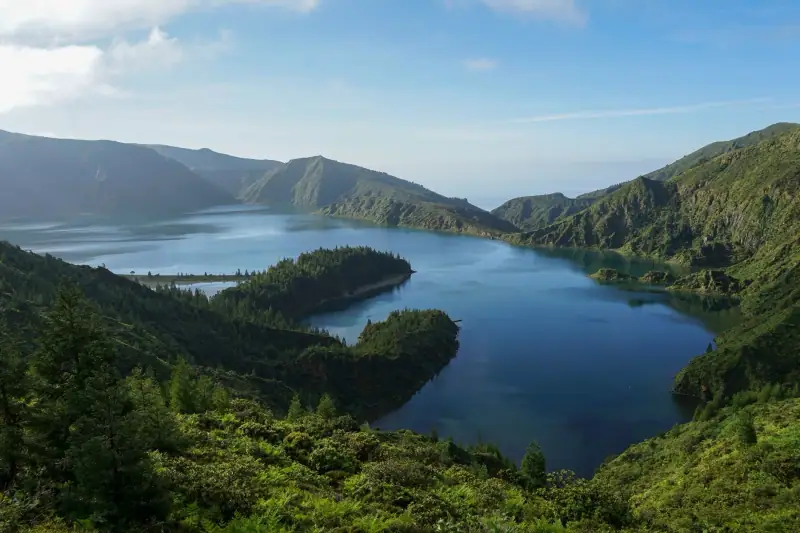
Best Time to Visit the Azores: Month by Month
When to go to the Azores? Weather, temperatures, crowds and prices month by month, to pick the best time for what you want to do.
Ready-made
Azores itineraries
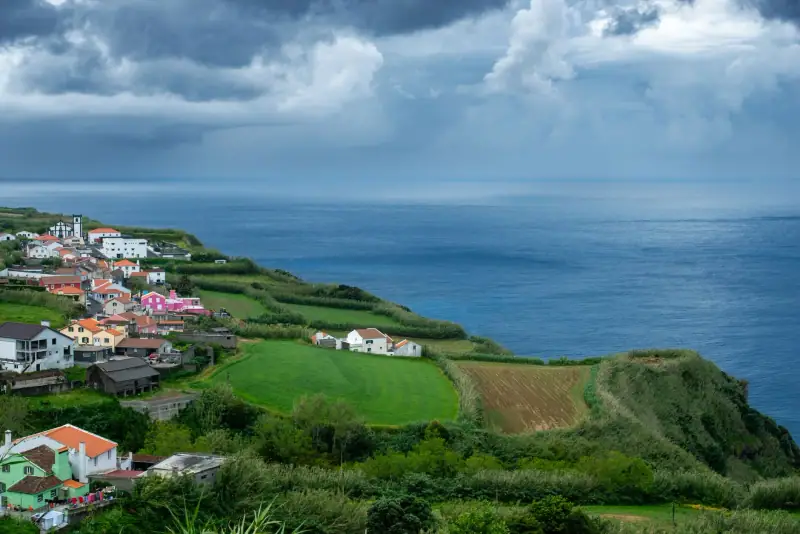
São Miguel Road Trip: Driving Around the Island
A complete guide to driving around São Miguel in the Azores: route, essential stops, road tips and lesser-known spots.
4 days
São Miguel in 4 Days Without a Car: A Realistic Itinerary by Bus and Organized Tour
Can you visit São Miguel without a rental car? A realistic 4-day itinerary with public buses, organized tours, schedules, prices and distances.
5 days
São Miguel in 5 days with kids: stops, miles and a realistic pace
5 days on São Miguel (Azores) with kids: day-by-day stops, distances and drive times, naps, swims, whales and pace pitfalls to avoid.
Can be adapted in the planner