What to see
Visiting Mahé: a complete guide to the big island of the Seychelles
We may earn a commission when you book through links on this page, at no extra cost to you. We don't visit or try the places we cover: we summarize published sources. How we work
In short
- Three to five days are ideal on Mahé; a rental car is the most practical way around, and driving is on the left.
- Beau Vallon is the most popular beach for families and water sports; Anse Intendance and Anse Major are the wild ones.
- Morne Seychellois National Park has marked trails: Morne Blanc (3 km, about 2 h round trip), Copolia (3 km, about 2 h), and the summit (905 m / 2,969 ft, about 5 h).
- Cat Cocos ferries link Victoria to Praslin in about 1 h 15; book ahead in high season.
Mahé is the beating heart of the Seychelles. A large granite island set in the Indian Ocean about 1,600 km (1,000 mi) east of the African coast, it holds 90% of the archipelago’s population, its only capital Victoria, and an international airport that serves as the gateway for nearly all visitors. But Mahé is not just a logistics hub: it is an island of stunning beauty, covered in rainforest, dotted with deserted beaches and dominated by the granite peaks of the Morne Seychellois. Whether you spend just one night before taking the ferry to Praslin or a whole week, Mahé has plenty to surprise you.
Mahé in brief
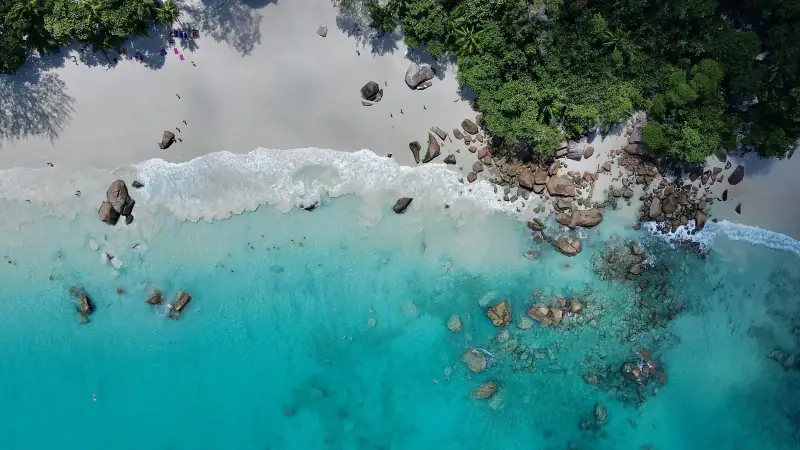
Mahé is the largest of the inner Seychelles, with an area of about 158 km² (61 sq mi). The island measures about 27 km (17 mi) from north to south and 8 km (5 mi) across at its widest point. Its relief is pronounced: the center of the island is dominated by the Morne Seychellois massif, whose summit rises to about 905 meters (2,969 ft), the highest point in the archipelago.
Key facts:
- Area: about 158 km² (61 sq mi)
- Population: about 80,000 (of the ~98,000 in the archipelago)
- Capital: Victoria
- Highest point: Morne Seychellois (~905 m / 2,969 ft)
- Airport: Seychelles International Airport (SEZ), in the northeast
- Access to neighboring islands: Mahé-Praslin ferry (~1 h 15)
The atmosphere of Mahé: Mahé is an island of many faces. In the north, Beau Vallon comes alive in the evening with its restaurants and beach bars. Victoria buzzes with harbor and commercial activity. The mountainous center is covered in primary forest and tea gardens. The south of the island is wild and preserved, with deserted beaches, secret coves and roads that wind above the Indian Ocean. Mahé is an island of contrasts, and that is exactly what makes it so fascinating.
Victoria, the world’s smallest capital
Victoria is often described as one of the smallest capitals in the world. With about 25,000 inhabitants in its urban area, it fits in a few streets but overflows with personality. The mix of cultures (African, European, Asian) shows in the faces, in the names, in the scents of the market and in the composite architecture of the town center.
The Clock Tower (Lorloz)
Victoria’s symbol is a small golden clock tower, erected in 1903 by the British colonial administration. It is a replica of “Little Ben”, a street clock near Victoria Station in London. It sits at the heart of the main intersection, surrounded by palm trees and flame trees. A great spot for a souvenir photo.
The Sir Selwyn Selwyn-Clarke Market
Victoria’s municipal market is one of the liveliest in the Indian Ocean. From dawn, fishermen drop off their night’s catch: bluefin tuna, grouper, parrotfish, swordfish, giant prawns. The tropical fruit stalls overflow with papaya, breadfruit, starfruit and bilimbi. The spice section scents the whole air with lemongrass, turmeric and fresh cinnamon.
Tip: the market is liveliest on Saturday morning. Arrive early (7-9 am) for the best atmosphere and the best produce.
The Victoria Botanical Garden
The Botanical Garden is one of Victoria’s top sights. Founded in 1901, it holds more than 2,500 tropical species, including many endemic to the Seychelles. You find the coco de mer (Lodoicea maldivica), the endemic palm with the heaviest nuts in the plant kingdom, along with an impressive range of orchids, giant ferns and tropical fruit trees.
The giant tortoises: a colony of Aldabra giant tortoises lives freely in the garden. These century-old reptiles let you come up close, a magical experience for children.
Entry: paid for foreigners, about €3-5 (about $3.50-6) per adult. Open every day.
The historic Creole district
Behind the market and the clock tower, a few streets preserve a remarkable Creole architectural heritage: colonial houses with wooden verandas painted in bright colors, corrugated iron roofs, louvered windows. This Seychelles Creole architecture blends French, English and African influences.
To go deeper into your visit of the capital, see our guide to the highlights of Victoria.
The most beautiful beaches of Mahé
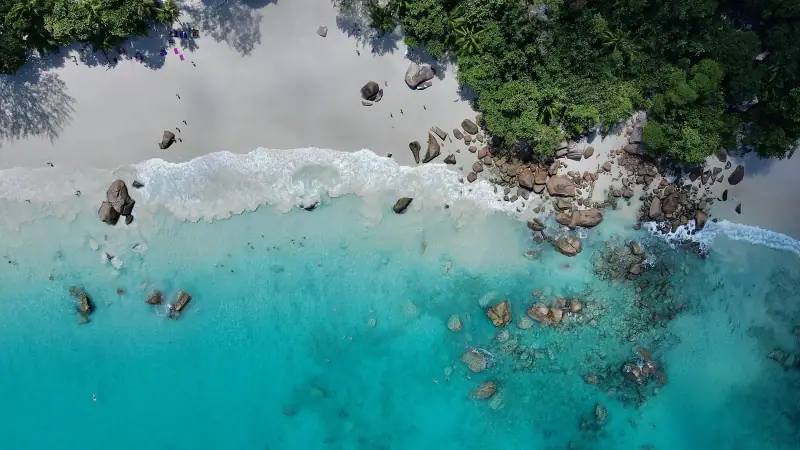
Mahé has more than 60 beaches. From the lively north to the wild south, the island offers an extraordinary variety of coastlines for every taste.
Beau Vallon: the village beach of the north
Beau Vallon is Mahé’s most popular beach, by far. About 6 km (3.7 mi) north of Victoria, it is a long strip of white sand about 3 km (1.9 mi) long, lined with coconut palms and casuarinas, with calm, shallow turquoise water. It is the beach on Mahé best suited to family swimming.
Activities: Beau Vallon is Mahé’s water-sports center: water skiing, paddleboarding, wakeboarding, kayaking, jet skiing, diving and snorkeling. Several dive centers are based here. In the evening the beachfront restaurants come alive, serving grilled fish and Creole cocktails.
To go further: our guide to the most beautiful beaches in the Seychelles compares Beau Vallon with the beaches of Praslin and La Digue.
Anse Intendance: the wild beach of the south
Anse Intendance is considered by many to be Mahé’s most beautiful beach. Wild, windy and lined with dense tropical vegetation, it is reached by a narrow road from Takamaka. The sight of waves on this ocher sand surrounded by granite rocks and leaning coconut palms is absolutely striking.
Caution: Anse Intendance is exposed to the trade winds and waves can be strong, especially in the trade wind season (May to October). Swimming is sometimes not advised, so ask locally before getting in the water. The beach is ideal for walks and sunsets.
Anse Soleil: the secret cove
Anse Soleil is a small semi-secret cove on Mahé’s west coast, reached by a winding road from Quatre Bornes. The setting is enchanting: a crescent of fine sand, granite rocks and translucent blue water, with a few leaning palms for shade. The cove is sheltered and swimming is pleasant.
Anse Takamaka and Baie Lazare: the peaceful coast
Mahé’s southwest coast, from Baie Lazare to Anse Takamaka, is a succession of peaceful beaches little visited by tourists. Fishing villages still live to the rhythm of the tides. A few discreet lodges are tucked among the coconut palms.
Anse Major: the coastal hike
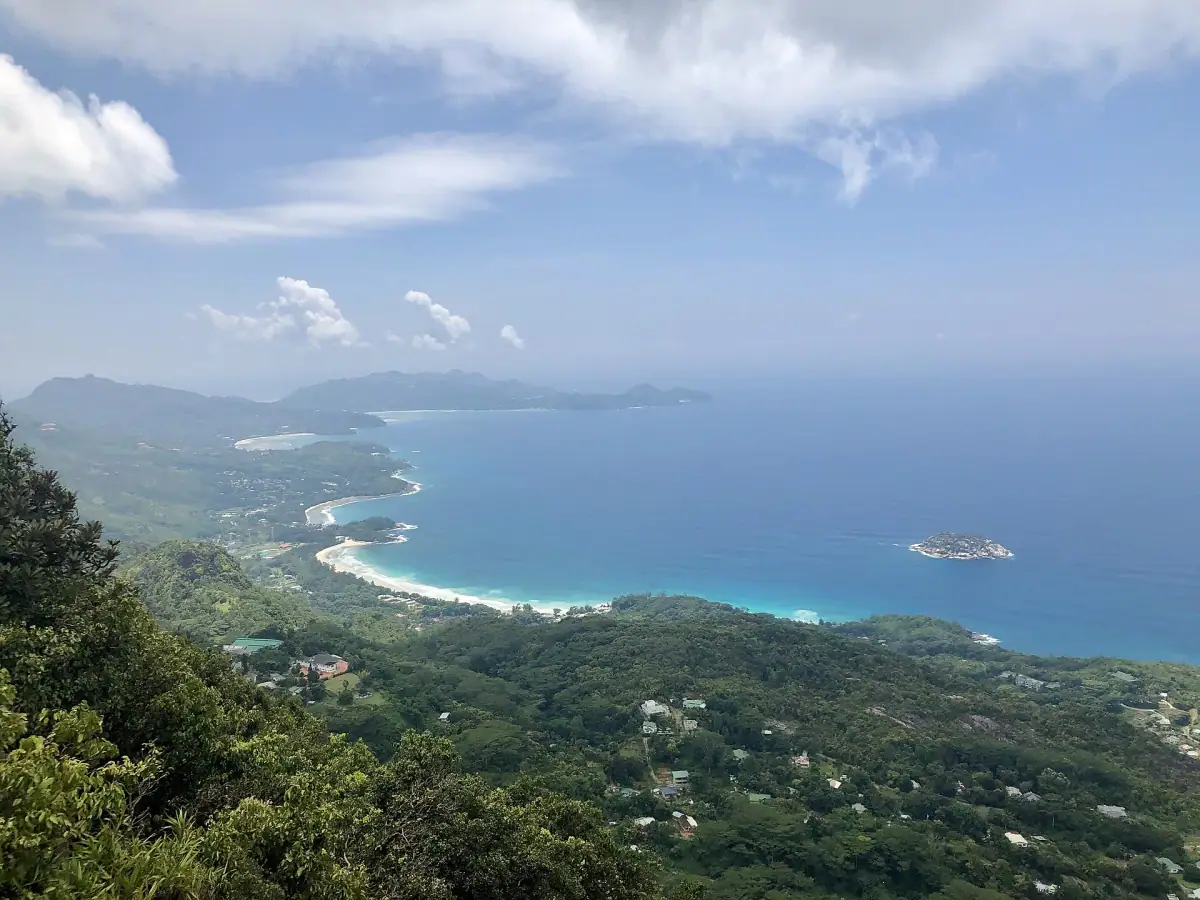
Anse Major is one of Mahé’s wildest beaches, reached only on foot from the north (about 45 to 60 minutes each way from Danzil, so 1 h 30 round trip) or by boat. The trail follows the northwest coast, passing spectacular viewpoints over the ocean and the neighboring islands (Silhouette, Thérèse). The beach itself is an isolated gem: no restaurant, no road, just nature.
Essential: bring enough water, sunscreen and a picnic. Start early in the morning to avoid the heat.
Where to stay on Mahé
From luxury hotels to Creole guesthouses: find your ideal accommodation.
Morne Seychellois National Park
Morne Seychellois National Park covers about 3,000 hectares (7,400 acres) of rainforest and montane scrub in the heart of Mahé. It is the largest national park in the Seychelles, representing about 20% of the island’s area. It holds exceptional biodiversity: endemic bird species, thousands of tropical plants including several endemic to the archipelago, and striking mountain landscapes.
Hiking trails
Park access is paid and settled online with the parks authority (SPGA) before the visit: check the current fee. The park has several marked trails for all fitness levels. Our complete guide to hiking in the Seychelles details each route, but here are the highlights:
Morne Blanc (3 km / 1.9 mi, ~2 h round trip): One of Mahé’s most popular trails. It climbs through a forest of palms and tree ferns to a spectacular viewpoint over the west coast. The slope is steady but the trail is well marked.
Copolia Trail (3 km / 1.9 mi, ~2 h round trip): This trail leads to a granite rock plateau with a 360° view over Victoria, the east coast and the islands in the distance. The highlight: a concentration of endemic carnivorous plants (Nepenthes pervillei) found only in the Seychelles.
Morne Seychellois trail (~5 h round trip): For experienced hikers, the climb to the summit (~905 m / 2,969 ft) crosses different vegetation layers: humid rainforest, cloud forest, mountain heath. The view from the top is extraordinary on a clear day.
Hiking tips:
- Start early (7-8 am) before the heat
- The island can be wrapped in cloud in the afternoon; morning is better for views
- Bring at least 1.5 liters (about 1.5 quarts) of water per person
- Sunscreen and good closed shoes are essential
- Trails can be slippery after rain
Endemic fauna and flora
The Morne Seychellois is a sanctuary for species endemic to the inner Seychelles. Among the treasures to look for:
Birds: the Seychelles Black Parrot (Coracopsis barklyi), the Seychelles White-eye, the Seychelles Bulbul. These endemic species are relatively rare but well present in the park’s forest.
Plants: the coco de mer (Lodoicea maldivica) grows naturally only in the forests of Praslin and Curieuse, but the Botanical Garden has specimens. The Morne park has endemic orchids, giant ferns and the famous Nepenthes carnivorous plants.
Reptiles: the Seychelles green gecko and various endemic lizard species live in the humid forests.
Activities and excursions from Mahé
Diving and snorkeling
Mahé is an ideal base for diving in the Indian Ocean. Several dive centers operate from Beau Vallon and offer trips to the best sites:
Around Mahé: the reefs off Beau Vallon offer snorkeling accessible from the beach. Farther sites, such as the islands of Thérèse and Conception to the west, are known for their rich marine life: manta rays, sea turtles, barracuda, schools of tropical fish.
Silhouette: the large island of Silhouette, visible from Beau Vallon, is reached by boat. It is one of the archipelago’s best-known diving destinations.
For details on diving and snorkeling in the Seychelles, see our guide to diving in the Seychelles.
Boat excursions
Catamaran and glass-bottom boat excursions leave daily from Mahé (mainly from Beau Vallon and Port Victoria). The most popular:
- Sainte Anne Marine National Park: 15-20 minutes from Victoria, this marine park includes six islands and an exceptional coral reef. Snorkeling, picnic on a private beach, turtle watching.
- Moyenne Island: a private property classified as a nature reserve, home to giant tortoises.
- Thérèse Island: a dreamlike beach, snorkeling, abundant marine fauna.
Sea excursions from Mahé
Catamaran, diving, snorkeling and private islands departing from Mahé.
Sea kayaking
Sea kayaking is a growing activity on Mahé. From Beau Vallon, rental shops offer single or double kayaks to explore the north coast at your own pace. The adventurous can paddle to Anse Major (northwest coast). For kayaking route ideas, our article on kayaking in the Seychelles will guide you.
Mahé tea: the Morne tea plantation
Mahé has one of the few tea plantations in the Indian Ocean, located in the heights of the Morne Seychellois. A visit to the plantation (with tasting) is an unusual activity off the beaten track. The tea bushes grow at around 300-400 meters (985-1,310 ft) in a setting of clouds and rainforest.
Creole food on Mahé
Seychellois Creole cooking is one of the tastiest in the Indian Ocean. With its markets, fishermen and cultural diversity, Mahé is the ideal place to explore it in depth.
Specialties to try
Fish curry: the national dish par excellence. Fresh fish (tuna, grouper, snapper) simmered with coconut milk, turmeric, lemongrass and chili. Served with rice and sautéed vegetables.
Fish broth: a light, fragrant soup, often served as a starter. A classic of Creole tables.
Sautéed palm hearts: Seychelles palm hearts have a tender texture and a delicate taste. This preparation is particularly tasty.
Ladob: a Creole dessert made from plantains or sweet potatoes cooked in coconut milk with cane sugar and vanilla. Comforting and fragrant.
Breadfruit: boiled, grilled or fried, it is a traditional side for Creole dishes.
Where to eat on Mahé
Victoria market is the best place to eat local at low prices: snack bars serve curry, rice and Creole samosas for a few euros. The seafront restaurants in Beau Vallon serve the best evening grilled fresh fish. For specific addresses and restaurant comparisons, see our guide to restaurants on Mahé.
For a full immersion in Seychelles food, our article on Seychellois Creole cuisine covers all the flavors of the archipelago.
Where to stay on Mahé
Mahé has the greatest variety of accommodation in the archipelago, from luxury resorts to family guesthouses.
Top luxury (€400 and up per night / about $465+): Several five-star resorts dot Mahé’s coast, mainly in the north (around Beau Vallon), the northwest and the south. Infinity pools, spas, private beaches and fine-dining restaurants are part of the offer.
Mid-range (€150-400 per night / about $175-465): Charming lodges and private villas occupy the slopes of the green hills. Many offer studios or apartments with a kitchen, ideal for week-long stays.
Guesthouses and small hotels (€60-150 per night / about $70-175): Local accommodation has a lot of charm. Creole family guesthouses offer authentic contact with residents, homemade breakfasts and useful advice on the good beaches to explore.
For a detailed selection by budget and preference, see our complete guide to where to stay on Mahé.
Rent a car on Mahé
Explore all the island's beaches in complete freedom with a rental car.
Getting around Mahé
Rental car
A rental car is by far the most practical way to explore Mahé. The road network is fairly dense but roads are often narrow and winding, especially in the mountainous interior. Driving is on the left (a British legacy). An international driving permit is recommended.
Some indicative distances from Victoria:
- Victoria to Beau Vallon: about 6 km (3.7 mi), 15-20 min
- Victoria to Anse Royale: about 20 km (12 mi), 30 min
- Victoria to Baie Lazare: about 22 km (14 mi), 35 min
- Victoria to Anse Intendance: about 30 km (19 mi), 40-50 min
Tip: book your car before leaving, especially in high season. Small local agencies are often cheaper than the big international groups.
Public bus
The public bus network serves the whole coast of Mahé at very low fares. It is the most economical option but frequencies are limited after 6 pm and on weekends. To get to Beau Vallon from Victoria, the bus is a good option.
Taxis
Taxis are available at the airport and in Victoria. They generally have no meter, so agree on the price in advance. Fares are fairly high for long distances.
Organizing your stay on Mahé
1-2 day itinerary (stopover or connection)
Day 1:
- Morning: arrive, settle in, visit Victoria (Market, Clock Tower, Botanical Garden)
- Afternoon: Beau Vallon, swimming and sunset
- Evening: grilled fish dinner in Beau Vallon
Day 2:
- Morning: Copolia or Morne Blanc hike (leave at 7 am)
- Afternoon: scenic road to the south, Anse Soleil or Baie Lazare
- Evening: ferry or flight to Praslin
4-5 day itinerary
Day 1: Victoria in depth: market in the morning, Botanical Garden, historic district, souvenir shopping.
Day 2: Beau Vallon in the morning (swimming, snorkeling), boat excursion in the afternoon to Sainte Anne Marine Park.
Day 3: Hike in the Morne Seychellois (Copolia or Morne Blanc), visit the tea plantation on the way down.
Day 4: Scenic road to the south: Anse Soleil, Anse Intendance, Baie Lazare, Anse Takamaka. Fresh fish lunch in a seaside restaurant.
Day 5: Free morning, swimming. Afternoon: ferry or flight to Praslin to continue island hopping.
To combine Mahé, Praslin and La Digue in a single trip, see our guide to island hopping in the Seychelles and our 7-day Seychelles itinerary.
Practical tips for Mahé
Money: Mahé has many ATMs in Victoria and the tourist areas. Bank cards are accepted at hotels and restaurants. Bring cash for markets, small snack bars and buses.
Health: Victoria’s general hospital (Mahé Hospital) can handle medical emergencies. Cover up against mosquitoes in the evening; dengue is present in the region. Ask your doctor or a travel clinic, and see the official travel health pages (CDC in the US, TravelHealthPro in the UK).
Safety: The Seychelles are generally safe for tourists. Bag snatching exists in heavily visited areas, so do not leave valuables visible in the car or on the beach.
Phone: Two phone operators (Airtel and Cable & Wireless) cover all of Mahé. Local SIM cards are available at the airport and in Victoria’s shops. Wi-Fi is available at most accommodations. Check your carrier’s international plan or use a travel eSIM.
Electricity: Sockets are British (type G, 240 V). Bring a universal adapter if your devices use a different plug or voltage.
Environment: Mahé is a fragile ecosystem. Respect the coral reefs (do not stand on them, use biodegradable sunscreen), do not collect shells or coral, and respect the sea turtle nesting areas on the beaches.
For entry requirements: entry rules depend on your passport. Check the official travel advice of your government before you book: travel.state.gov (US), GOV.UK (UK), travel.gc.ca (Canada), Smartraveller (Australia) (checked November 2026). To prepare your travel budget, see our Seychelles budget guide.
Mahé is much more than a simple gateway to the Seychelles. It is a complete, generous, contrasting island that deserves time. From the wild beaches of the south to the misty hikes of the Morne Seychellois, by way of Victoria’s colorful market and the coral reefs of Sainte Anne Marine Park, Mahé is a destination in its own right. Let its richness surprise you.
Frequently asked questions
How long should you spend on Mahé?
Three to five days are ideal to explore Mahé properly. A minimum of two days lets you see Victoria and the main beaches. With four to five days, you can hike in the Morne Seychellois, explore the wild south and take boat excursions. If you continue to Praslin and La Digue, allow two nights on Mahé at the start and two at the end of the trip.
How do you get around Mahé?
A rental car is the most practical way to explore Mahé freely. Roads are generally in good condition but narrow and winding in the mountainous interior. The public bus is inexpensive and serves the main coast, but frequencies are limited outside rush hours. Taxis are available but fairly expensive. For the isolated beaches of the south, a car remains essential.
What are the most beautiful beaches on Mahé?
Mahé has more than 60 beaches. The most beautiful include Beau Vallon in the north (a big lively beach, ideal for water sports), Anse Intendance in the south (wild and majestic), Anse Soleil (a small peaceful cove), Anse Major (reached on foot or by boat), and Anse Takamaka. The south of the island has the best-preserved beaches.
Can you snorkel and dive from Mahé?
Yes, Mahé is an excellent starting point for diving and snorkeling. Beau Vallon has a reef reachable by swimming from the beach. Dive centers run trips to neighboring islands such as Thérèse, Conception or Silhouette. The water is warm (26-29 °C / 79-84 °F) all year and visibility is generally good in the dry season.
Is Victoria worth the detour?
Yes, Victoria deserves half a day. The capital of the Seychelles is one of the smallest capitals in the world but it is full of charm: the Sir Selwyn Selwyn-Clarke Market with its spices and fresh fish, the Botanical Garden with its giant tortoises and orchids, the golden Clock Tower (the town's symbol), the historic Creole district. Combined with a morning of souvenir shopping, a visit to Victoria is memorable.
How do you get from Mahé to Praslin or La Digue?
There are two options: the fast Cat Cocos ferry links Victoria (Mahé) to Praslin in about 1 h 15 (75 minutes), with several departures a day. Tickets should be booked ahead in high season. Alternatively, Air Seychelles runs propeller flights between Mahé airport and Praslin airport (15 minutes in the air). The ferry is the most popular and most economical option.
More Seychelles guides
Keep reading
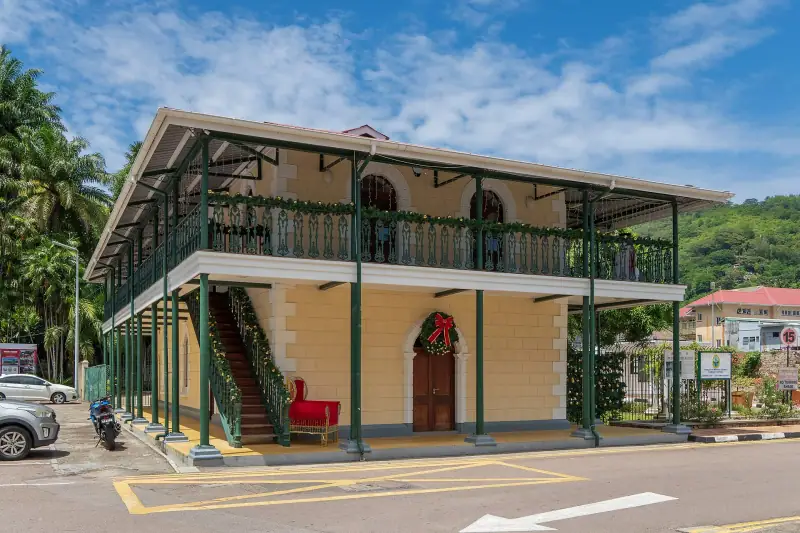
Victoria, Seychelles: the highlights of the world's smallest capital
What to do in Victoria, Seychelles? Market, Clock Tower, cathedral, museums and restaurants: a complete guide to the highlights of the Seychellois capital.
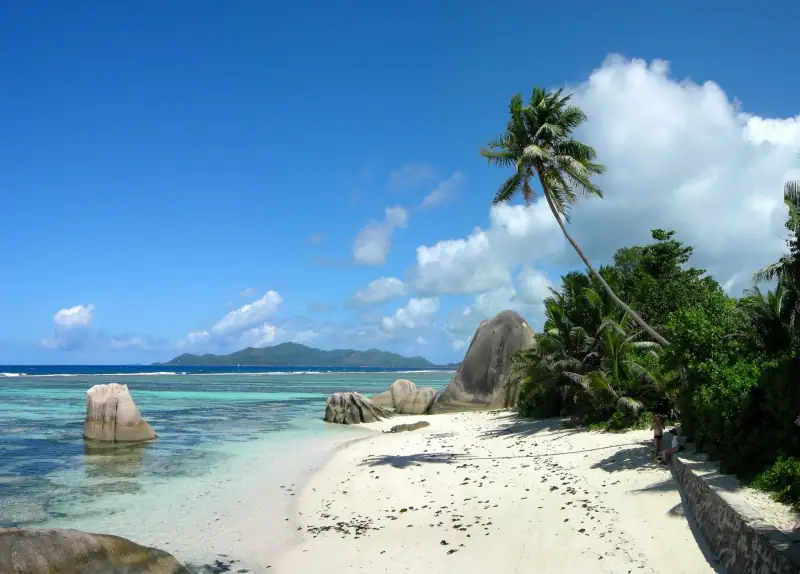
Visiting La Digue: a complete guide to the Seychelles' paradise island
A complete guide to La Digue, Seychelles: beaches, activities, places to stay, getting around and practical tips for an unforgettable stay.
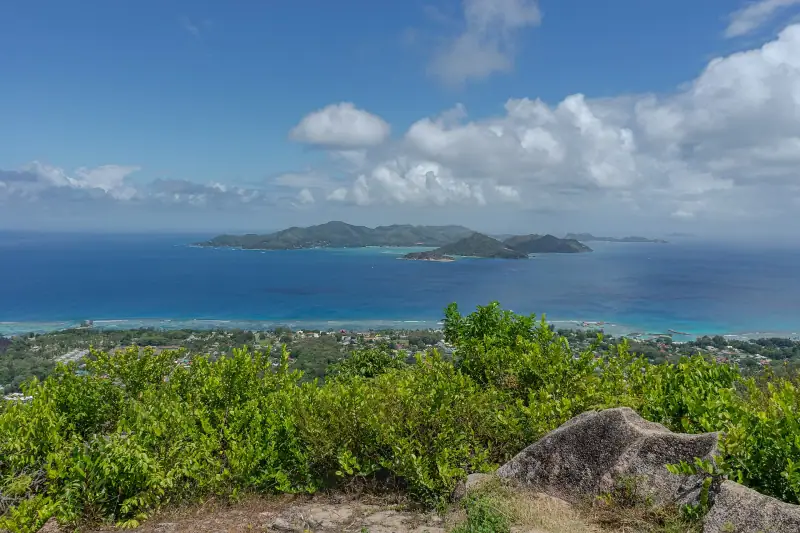
Visiting Praslin: a complete guide to the second island of the Seychelles
A complete guide to Praslin, Seychelles: Vallée de Mai, Anse Lazio, beaches, activities, places to stay and practical tips for a perfect stay.
Ready-made
Seychelles itineraries
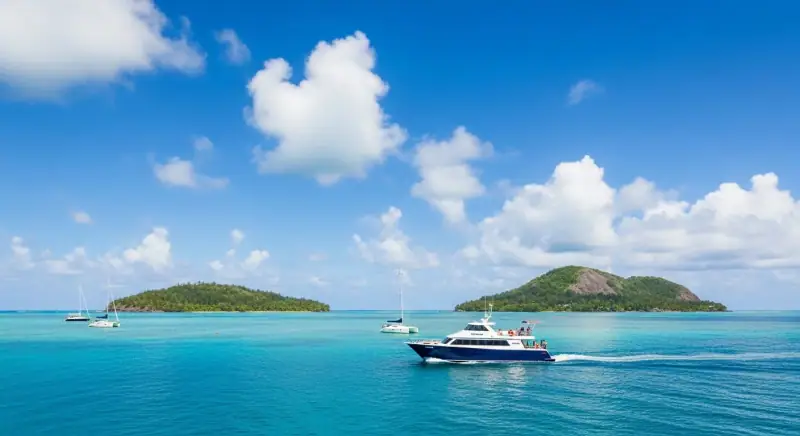
7 days
Island hopping in the Seychelles: a complete guide to visiting several islands
MahéPraslinLa Digue
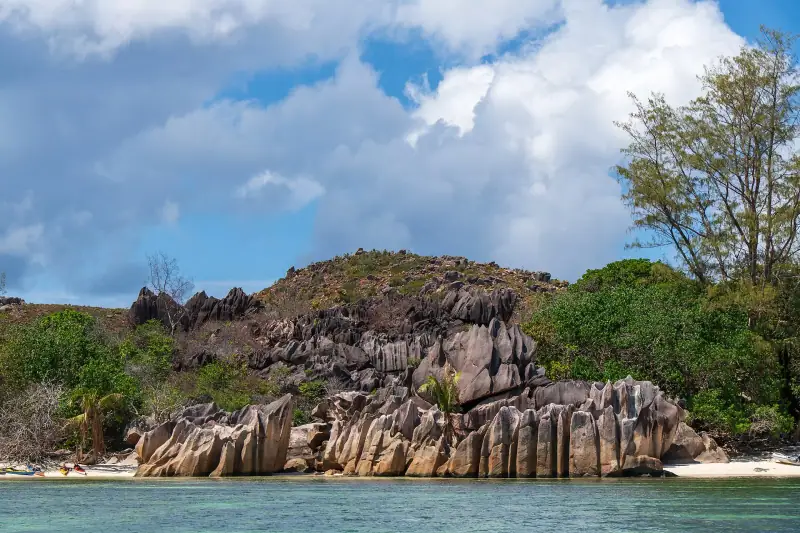
10 days
Seychelles in 10 days: a complete itinerary with Silhouette and Curieuse
MahéAnse VolbertLa Digue
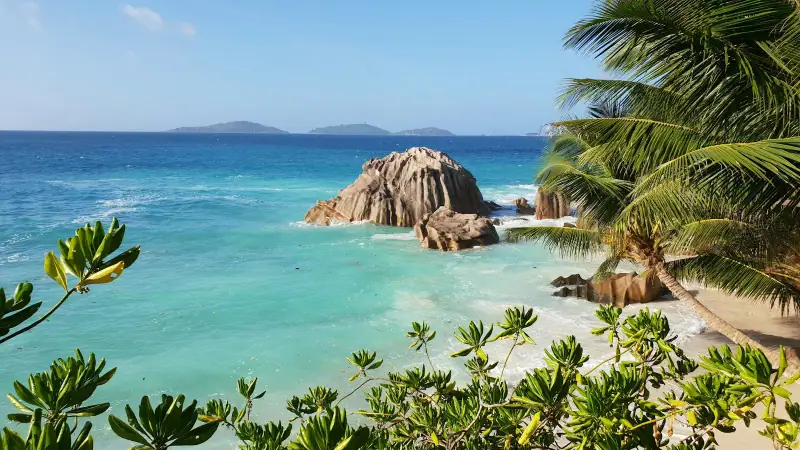
7 days
Seychelles in 7 days without a car: a realistic itinerary by bus, ferry and bike
Beau VallonAnse VolbertLa Digue