What to see
Visiting La Digue: a complete guide to the Seychelles' paradise island
We may earn a commission when you book through links on this page, at no extra cost to you. We don't visit or try the places we cover: we summarize published sources. How we work
In short
- La Digue is reached by ferry from Praslin in 15-20 minutes; the island is only 9 km² (3.5 sq mi) and bikes are the way to get around, at €10-15 (about $12-17) a day.
- Anse Source d'Argent is entered through the L'Union Estate (about €12 / $14); go early in the morning, before 9 am, to avoid the crowds.
- Two to three nights are ideal; a day trip from Praslin gives you 6-8 hours on the island.
- Grand Anse and Petite Anse can have strong currents; the south beaches are calmer from November to April.
La Digue is one of the rare destinations in the world where reality exceeds the photos. The third most populated island of the Seychelles with only 2,700 inhabitants, it is also one of the most beautiful. Here cars give way to bikes and oxen, pink granite boulders rise from the turquoise sea, and time seems suspended. Whether you come for a day or a whole week, La Digue will stay with you for life.
La Digue in brief
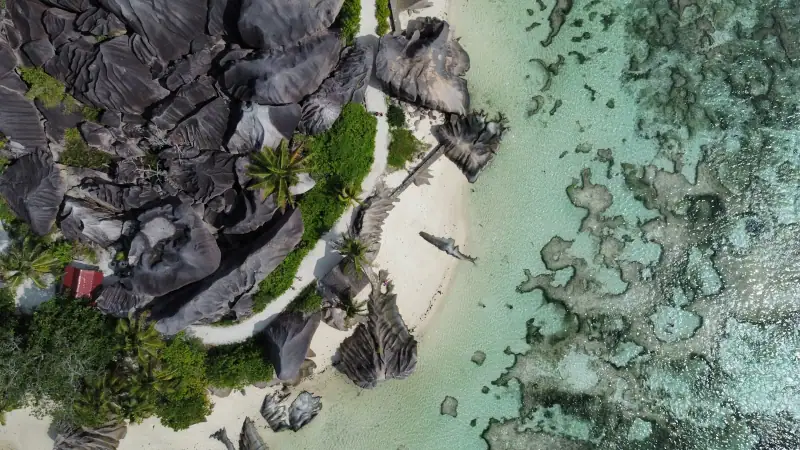
La Digue is part of the inner Seychelles archipelago, 5 km (3 mi) east of Praslin. With an area of only 9 km² (3.5 sq mi), it is a small island that is easy to explore entirely by bike. The population lives mainly in the village of La Passe, on the west coast, around the main harbor.
Key facts:
- Area: 9 km² (3.5 sq mi)
- Population: about 2,700
- Main village: La Passe
- Highest point: Belle Vue (333 m / 1,093 ft)
- Access: ferry from Praslin (15-20 min)
The La Digue atmosphere: What strikes you immediately is the slowness. Motor vehicles are very rare (only emergency vehicles and a few tractors get around). Everyone moves by bike or on foot. Oxen still sometimes pull carts loaded with goods. In the evening, residents gather on the jetty to watch the sunset. La Digue is not just an island, it is a way of being.
The beaches of La Digue
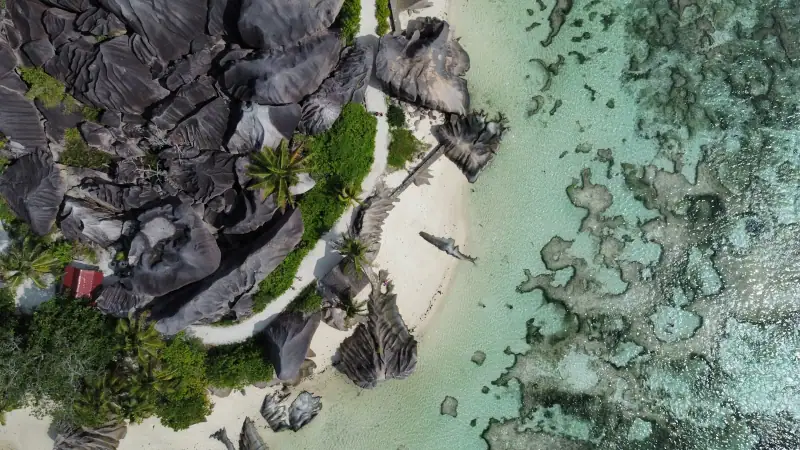
Anse Source d’Argent: the most beautiful beach in the world
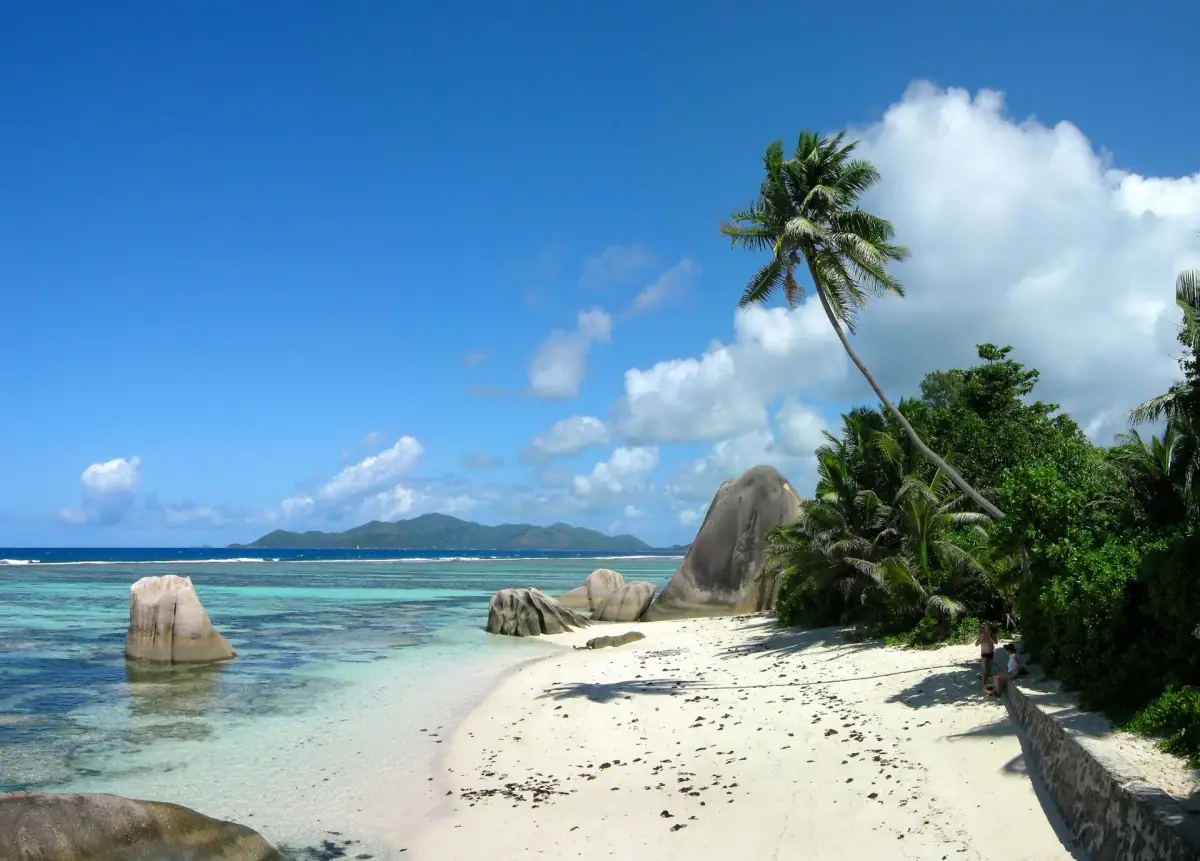
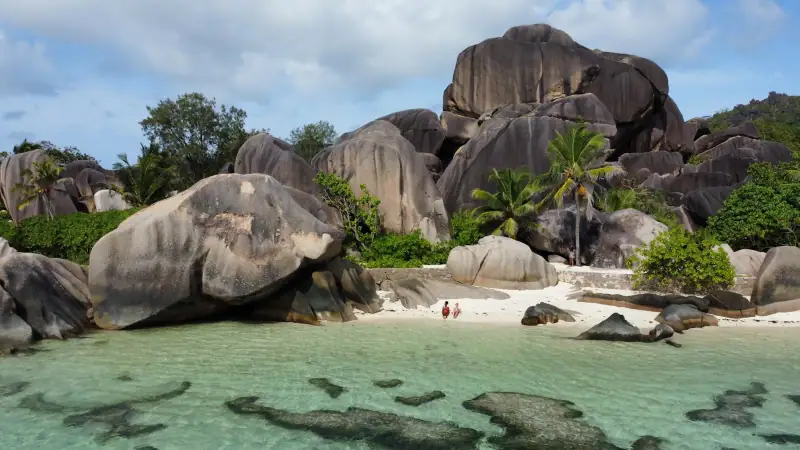
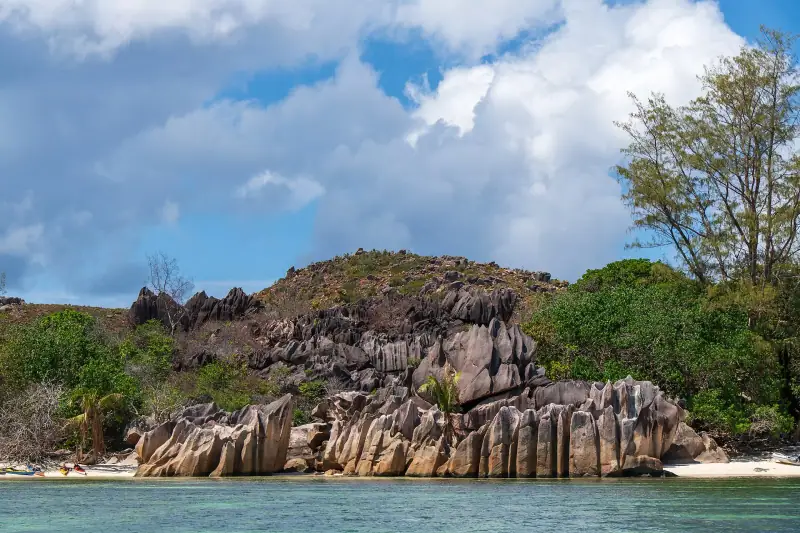
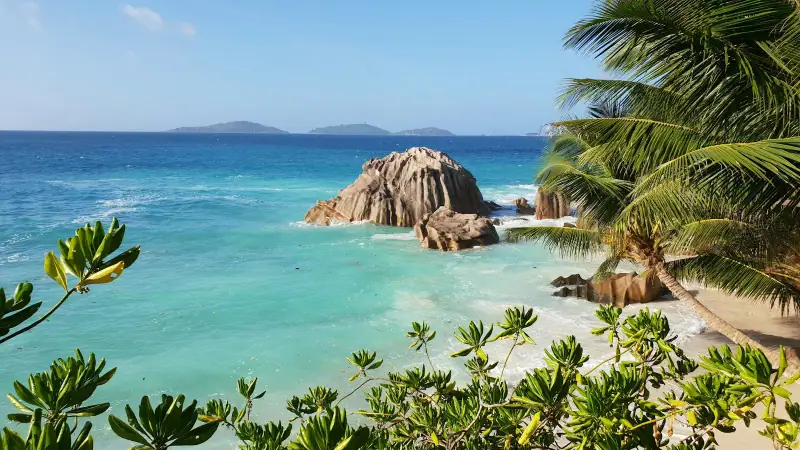
For many, Anse Source d’Argent is the most photographed beach on the planet. And for good reason: its pink and orange granite boulders, sculpted by millions of years of erosion, form incredible natural sculptures. The pinkish white sand, clear turquoise water and leaning palms complete a picture that seems to come out of a dream.
Access: you have to cross the L’Union Estate (paid entry: about €12 / $14, including the visit to the Estate and the tortoises). The beach can be reached on foot or by bike from La Passe in 20-30 minutes.
Best time to go: early in the morning (before 9 am) to avoid the crowds and enjoy the golden morning light. In early afternoon, the beach can be packed with tourists arriving on excursions from Praslin or Mahé.
Swimming: good at high tide; watch for rocks at low tide. The water is warm (26-29 °C / 79-84 °F) and visibility is excellent, ideal for snorkeling.
Grand Anse: the wild beach of the south
Grand Anse is La Digue’s largest beach. Exposed to the southern trade winds, it is often battered by impressive waves that give it a dramatic atmosphere. Swimming can be dangerous depending on the season (strong currents), but the beauty of the site is incomparable: a kilometer (0.6 mi) of light brown sand, wild coconut palms and almost nobody.
Good to know: Grand Anse can be reached by bike from La Passe (25-30 min), but the last stretch is an uphill track. The reward is worth the effort. No tourist facilities: bring water and a picnic.
Petite Anse: the closely guarded secret
Reachable only on foot from Grand Anse (15-20 minutes’ walk on a trail), Petite Anse is an isolated cove of breathtaking beauty. Less known than Source d’Argent, it rewards walkers with total seclusion and crystal-clear water. Strong currents: avoid swimming except in calm conditions.
Excursions and snorkeling on La Digue
Boat tours, diving and excursions to the neighboring islands.
Anse Cocos: the adventure rewarded
Anse Cocos is the beach farthest from the village, reachable only on foot from Grand Anse (allow 45 minutes to an hour’s walk one way on a coastal trail that is sometimes steep). The effort is amply rewarded: an isolated beach, water perfect for snorkeling and absolute serenity. Bring a picnic, water and your snorkeling gear.
The island’s top sights
L’Union Estate: history and giant tortoises
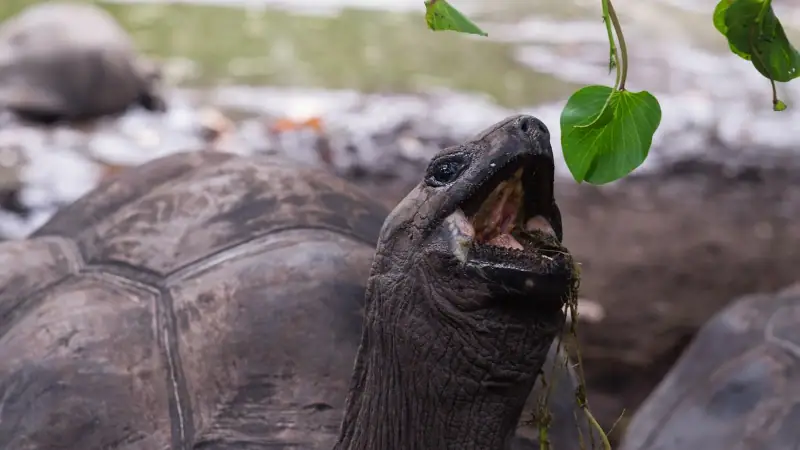
L’Union Estate is a former copra and vanilla plantation covering much of south-central La Digue. This is the main access to Anse Source d’Argent. The estate also has an enclosure of Seychelles giant tortoises (Aldabrachelys gigantea), a magical experience for young and old.
What you see there:
- Giant tortoises, some more than a century old
- A restored old colonial house
- A traditional copra kiln
- Coconut groves and typical Creole vegetation
Entry ticket: about €12 (about $14) per adult (includes access to Anse Source d’Argent).
Nid d’Aigle (Belle Vue): the ultimate panorama
La Digue’s highest point, at 333 meters (1,093 ft), offers an absolutely spectacular 360° panorama. On a clear day you can see Praslin, Curieuse, Félicité and sometimes even Mahé on the horizon. Cycling up is impossible (the slope is too steep); you have to climb on foot from the village. Allow 45 minutes to an hour for the climb. Bring water and start early in the morning to avoid the heat.
The La Passe cemetery
In the middle of the village, La Digue’s small cemetery is one of the island’s most moving places. The graves with Creole names blend French, African and Asian influences, with lively, colorful floral ornaments. A silent testimony to the human history of this archipelago.
The village of La Passe
La Digue’s main village stretches along the west coast around the harbor and landing. This is where local life beats: the school, the church, the small market, the grocery stores, the restaurants and the bike rental shops. A walk along the jetty at sunset is an unforgettable moment.
Where to stay on La Digue
Creole guesthouses, private villas and charming lodges.
Getting around La Digue
The bike, king of the island
The bike is the number one means of transport on La Digue, and it is an experience in itself. From the landing, dozens of rental shops offer classic bikes and mountain bikes at €10-15 (about $12-17) a day. The main roads are paved, but some paths to the south beaches are dirt tracks, sometimes steep.
Tips for cyclists:
- Reserve your bike as soon as you arrive; stock can be limited in high season
- Choose a mountain bike if you plan to venture toward Grand Anse or Anse Cocos
- Always carry water (fountains are rare outside the village)
- Park your bike in the shade; saddles heat up quickly under the tropical sun
Other transport
Ox-carts: less and less common but still around, these ox-drawn carts are a La Digue specialty. They are mainly used to carry goods.
Taxis: a few pickups serve as taxis for older people or heavy luggage. There are few of them; ask your accommodation.
On foot: the village of La Passe is easily explored on foot. For the south beaches, the bike remains far more efficient.
Wildlife and plants of La Digue
The Seychelles Black Paradise Flycatcher
La Digue’s emblematic bird is Terpsiphone corvina, known locally as the “Veuve” or Black Paradise Flycatcher. This songbird, endemic to the Seychelles, with the male’s long, silky black tail, is classified as vulnerable. It lives in the takamaka and casuarina forests in the center of the island. The Veuve Reserve is dedicated to its protection.
Veuve Reserve: located in the heart of the island, this nature reserve is the best place to see the Black Paradise Flycatcher in its natural habitat. Free entry; an easy 30-45 minute walk.
Tropical vegetation
La Digue’s vegetation is lush: takamaka trees (Calophyllum inophyllum) with glossy leaves, coconut palms, almond trees, wild guava, flame trees in bloom. Wild orchids grow on the island’s wooded slopes. This preserved vegetation contrasts beautifully with the granite rocks.
Nature and wildlife tours in the Seychelles
Watching tortoises, endemic birds and unspoiled nature.
Where to eat on La Digue
La Digue is small but there is no shortage of food options, with a strong predominance of Creole cooking.
Restaurants to try
The L’Union Estate restaurant: Set in the L’Union Estate grounds, this restaurant serves fresh Creole dishes in a charming colonial setting. The grilled fish and the curries are excellent. An ideal lunch after visiting Anse Source d’Argent.
La Digue Island Lodge Restaurant: This charming lodge’s restaurant serves quality mixed Creole and international cooking, with a lagoon view. A bit pricier than the local restaurants, but excellent for a romantic dinner.
Small local snack bars in the village: Around the landing and in the village streets, several snack bars serve Creole dishes at modest prices: fish curry, Creole rice, chapati, grilled fish. Fresh fish is guaranteed, as fishermen bring in their catch every morning.
Grilled fish by the sea: Some evenings, vendors offer fish and seafood grilled on the spot by the water. An authentic and delicious experience.
To discover Creole flavors in all their richness, see our guide to Seychelles food.
Where to stay on La Digue
Accommodation on La Digue is varied, from family guesthouses to luxury lodges, but the big hotel chains are absent, which is part of the island’s charm.
Family guesthouses (budget to mid-range): Many are in the village of La Passe and offer simple, authentic stays with local hosts. Homemade Creole breakfasts, local tips and a family atmosphere. Allow €60-150 (about $70-175) a night depending on the season.
Lodges and villas (mid-range to high-end): La Digue has several well-equipped charming lodges, often set in tropical gardens. Private villas with a pool are available for family or romantic stays. Allow €150-400 (about $175-465) a night.
Booking: La Digue is in high demand in high season (December-January and July-August); book several months ahead. In low season, it is possible to find good last-minute options.
To compare accommodation on Praslin (the neighboring island, 15 minutes away), see our guide to where to stay on Praslin.
When to visit La Digue
La Digue can be visited all year, but each season has its own features:
Dry season (May to October): This is the high tourist season. The southeast trade winds cool the island pleasantly. The beaches in the north and east of La Digue (including Anse Source d’Argent) are at their best. On the other hand, Grand Anse and the south beaches can have strong waves.
Rainy season (November to April): The northwest monsoon brings short but intense showers, especially between December and March. Temperatures are higher (30-32 °C / 86-90 °F). The south beaches (Grand Anse, Petite Anse) are calmer and swimming is better there. The vegetation is an intense green.
Our recommendation: April-May and October-November are the best periods, neither too rainy nor too windy, with fewer tourists and gentler prices.
For the best advice on when to go, see our guide to the best time to visit the Seychelles.
Practical tips for your stay on La Digue
Money: there is an ATM in La Passe, but its supply can be irregular. Bring enough cash from Mahé or Praslin. Bank cards are accepted at the main hotels and restaurants, but not everywhere.
Phone and internet: mobile coverage is good in the village. Wi-Fi is available at most accommodations. Some isolated beaches (Grand Anse, Anse Cocos) have no signal, so let your family know before heading out on a hike. For the rest of your trip, check your carrier’s international plan or use a travel eSIM.
Pharmacy and health: there is a small medical dispensary on the island. For any serious emergency, evacuation to Mahé is required. Bring a first-aid kit, especially if you plan hikes in remote areas. Ask your doctor or a travel clinic, and see the official travel health pages (CDC in the US, TravelHealthPro in the UK).
Sun: sun protection is essential. The tropical sun is intense between 10 am and 4 pm. Choose an eco-friendly sunscreen so as not to damage the corals.
Water: tap water is drinkable on La Digue. Avoid plastic bottles and bring a reusable water bottle.
Respect for the environment: La Digue is a fragile ecosystem. Do not walk on corals, do not pick plants, and do not feed the tortoises unsuitable food.
Organizing your stay on La Digue
1-day itinerary
- Morning (7 am-noon): arrive by ferry from Praslin, rent a bike, head to Anse Source d’Argent (entry through the L’Union Estate + tortoises). Swim and photograph the rocks in the morning light.
- Lunch (noon-2 pm): L’Union Estate restaurant or a village snack bar.
- Afternoon (2-5 pm): bike ride to Grand Anse, return through the village. Walk on the La Passe jetty.
- Evening: return ferry to Praslin.
2-3 day itinerary
Day 1: Anse Source d’Argent + L’Union Estate + tortoises, lunch, the village of La Passe, sunset on the jetty.
Day 2: Grand Anse by bike + walk to Petite Anse (or Anse Cocos for the more athletic). Picnic on the beach.
Day 3: Climb to Nid d’Aigle (Belle Vue) in the morning, Veuve Reserve to see the Black Paradise Flycatcher, souvenir shopping in the village, ferry back.
To combine La Digue with Praslin and Mahé, see our guide to island hopping in the Seychelles.
La Digue embodies the very essence of the Seychelles: unspoiled nature of astonishing beauty, a gentle way of life that contrasts with the modern world, and beaches that rival the most beautiful on the planet. Take the time to lose yourself among the granite rocks, to pedal along palm-lined paths, to watch the giant tortoises size you up with ancestral placidity. La Digue is not just a tourist stop; it is an experience that lastingly changes how you perceive the beauty of the world.
Frequently asked questions
How do you get to La Digue from Mahé?
First you reach Praslin, by plane (15 minutes from Mahé airport with Air Seychelles) or by fast ferry (about 1 h). From Praslin, an Inter Island catamaran ferry covers the link to La Digue in 15-20 minutes. Allow for several crossings a day. The Praslin-La Digue ticket costs about €15-19 (about $17-22) per person (check the current fare with the company).
How long should you stay on La Digue?
Two to three nights are ideal to explore La Digue thoroughly. One day is enough to see Anse Source d'Argent and the village, but two days also let you discover Grand Anse, Petite Anse, Anse Cocos and Nid d'Aigle. If you like calm and nature, you can easily spend a week there.
What is the best way to get around La Digue?
The bike is the means of transport on La Digue. The island is small (9 km² / 3.5 sq mi) and cars are very rare. Dozens of rental points offer bikes at €10-15 (about $12-17) a day. Paths can be steep toward the south beaches, so pick a bike in good condition. Ox-carts and a few taxis also get around.
Is Anse Source d'Argent really as beautiful as in the photos?
Yes, and even more so. It is one of the most photographed beaches in the world for good reason: the huge pink granite boulders sculpted by the waves, the immaculate white sand and the emerald water create a truly surreal setting. The entry fee (about €12 / $14 via the L'Union Estate) is well worth the price. Arrive early in the morning to avoid the crowds.
Is La Digue suitable for kids?
Yes, La Digue is very well suited to families with children. The island is calm and car-free, and the beaches are magnificent. The L'Union Estate with its giant tortoises is a real treat for kids. One caution: some beaches such as Grand Anse and Petite Anse have strong currents, so watch children closely when they swim.
Can you visit La Digue on a day trip from Praslin?
Yes, a day trip from Praslin is possible by ferry (15-20 minute crossing). You will have 6-8 hours on the island, which is enough to visit Anse Source d'Argent, the L'Union Estate and the village. But to make the most of La Digue, it is better to sleep there at least one night.
More Seychelles guides
Keep reading
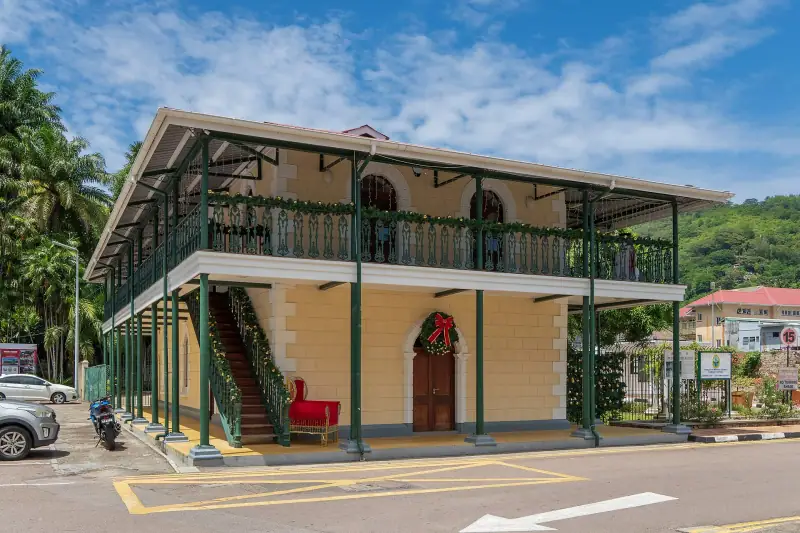
Victoria, Seychelles: the highlights of the world's smallest capital
What to do in Victoria, Seychelles? Market, Clock Tower, cathedral, museums and restaurants: a complete guide to the highlights of the Seychellois capital.
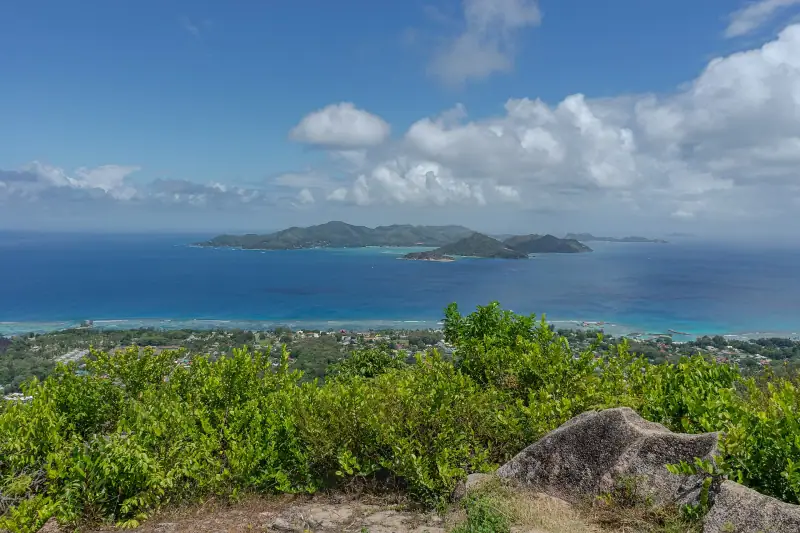
Visiting Praslin: a complete guide to the second island of the Seychelles
A complete guide to Praslin, Seychelles: Vallée de Mai, Anse Lazio, beaches, activities, places to stay and practical tips for a perfect stay.
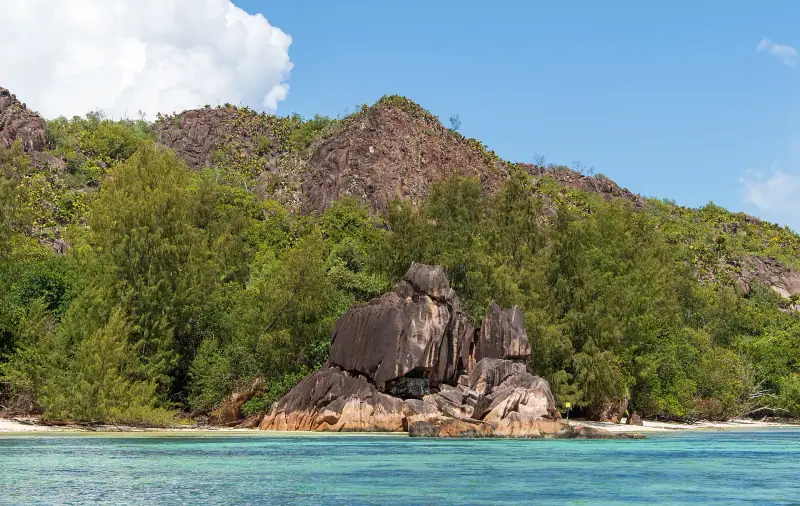
Visiting Curieuse Island in the Seychelles: giant tortoises, mangroves and unspoiled nature
A complete guide to Curieuse Island, Seychelles: Aldabra giant tortoises, the Baie Laraie trail, the Doctor's House, snorkeling and practical tips.
Ready-made
Seychelles itineraries
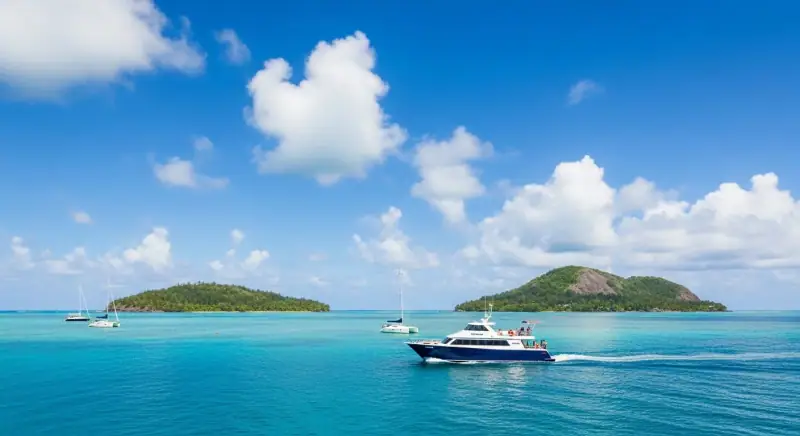
7 days
Island hopping in the Seychelles: a complete guide to visiting several islands
MahéPraslinLa Digue
10 days
Seychelles in 10 days: a complete itinerary with Silhouette and Curieuse
MahéAnse VolbertLa Digue
7 days
Seychelles in 7 days without a car: a realistic itinerary by bus, ferry and bike
Beau VallonAnse VolbertLa Digue