What to see
Complete guide to visiting Rhodes: regions, highlights and tips
We may earn a commission when you book through links on this page, at no extra cost to you. We don't visit or try the places we cover: we summarize published sources. How we work
In short
- Rhodes is about 80 km (50 mi) long; plan five to seven days for the old town, Lindos, a few beaches, an ancient site on the west coast and, ideally, a trip to Symi.
- The east coast is sheltered with calmer sea and most sandy beaches; the west coast and the south are windier and wilder.
- May, June, September and early October combine warm sun, pleasant sea and fewer crowds than July and August.
- Rhodes Diagoras Airport (RHO) is about 14 km (9 mi) southwest of Rhodes Town, a 20 to 30 minute taxi ride; a car is very useful for the west coast and the south.
Rhodes is one of the great Greek islands of the Aegean, the largest of the Dodecanese, in the far southeast of the archipelago, only a few kilometers from the Turkish coast. For centuries it was a crossroads: an ancient city famous for its Colossus, a fortress of the Knights of St John, an Ottoman then Italian possession before joining Greece in the mid-20th century. This history can be read everywhere, in the ramparts, the mosques, the facades of the new town and the ancient ruins by the sea.
The island, about 80 km (50 mi) long, brings together in one trip what many destinations scatter: a UNESCO-listed medieval city, a white village at the foot of an acropolis, beaches of sand and pebbles, archaeological sites, mountain villages and neighboring islands reachable by boat. It suits couples, families, history lovers and those who mostly want to get a tan.
This complete guide is the pillar article of the site: it presents the regions, the highlights, the seasons, transport, accommodation and budget, and points to our detailed guides on each topic. Treat it as a roadmap: read it through once, then follow the links to the articles that match your plans.
Rhodes at a glance
Before planning, a few landmarks to place the island. Rhodes is about 80 km (50 mi) long and some forty kilometers (25 mi) wide at its widest. It runs northeast to southwest, with the capital, Rhodes Town, at the northern tip. A coastal road nearly circles the island, and a few roads cross the interior, which is more mountainous and covered in pines.
Two main fronts contrast. The east coast, facing Turkey, is sheltered from the prevailing wind: the sea is generally calmer and sandy beaches are most numerous there. The west coast, facing the open Aegean, takes the north wind more directly: cooler in summer and rougher, it appeals to wind-sport fans and lovers of wild scenery.
The climate is Mediterranean and very sunny: hot, dry summers and mild but rainy winters. The island depends largely on tourism, with a season running from April to October. Greece is in the Schengen area and the currency is the euro; entry rules depend on your passport, so check the official travel advice of your government before you book: travel.state.gov (US), GOV.UK (UK), travel.gc.ca (Canada), Smartraveller (Australia) (checked November 2026).
For practical organization, it all comes down to five choices: the period, how you arrive, your base, how you get around and the budget. The following sections go through them all.
Rhodes Town: the medieval city and the new town
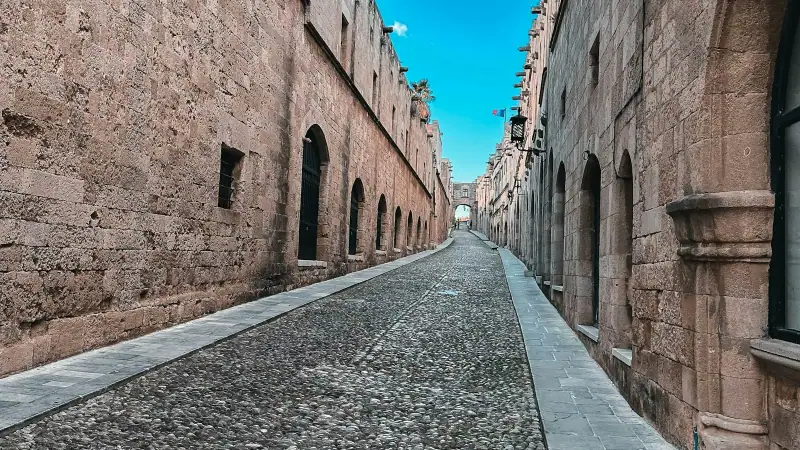
The capital is the island’s gateway and its first stop. It has two distinct parts: the old town, enclosed in its ramparts, and the new town, to the north, with its urban beaches, marina and restaurants.
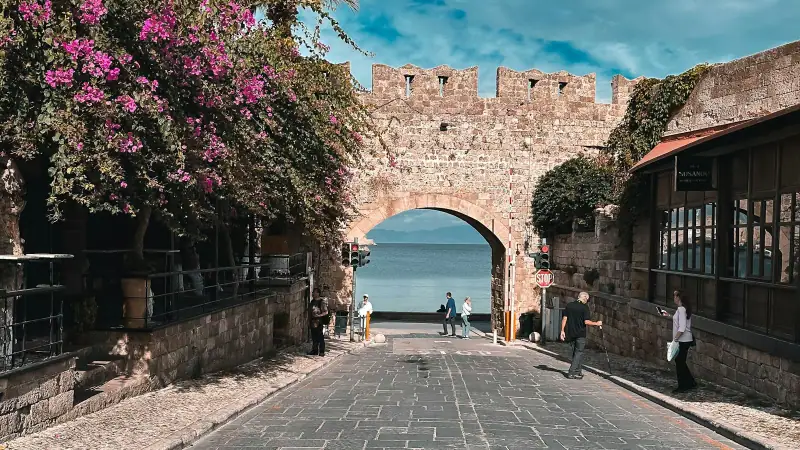
The old town, a UNESCO World Heritage site, is one of the best-preserved medieval ensembles in Europe. You enter through great fortified gates, follow the Street of the Knights lined with the order’s former inns, visit the Palace of the Grand Master and get lost in a tangle of lanes mixing churches, mosques, shops and terraces. In the evening, once the cruise groups have left, the mood changes and becomes much more peaceful.
Allow at least half a day, ideally a whole day if you like to take your time. We detail the route, the sites not to miss and advice on hours in our guide to visiting the old town of Rhodes.
The new town is also worth a look. Mandraki harbor, whose entrance is marked by two columns topped with statues of deer, is associated by tradition with the location of the famous Colossus of Rhodes, one of the seven wonders of the ancient world. No trace of the Colossus has been found: you have to imagine it. Farther north, urban beaches such as Elli allow a quick swim after the visit, even though they are pebbly and fairly busy.
Who it suits: history lovers, short stays, those traveling without a car. It is also the ideal base for trips to the neighboring islands, since the harbor is right in town.
Lindos: the white village at the foot of the acropolis
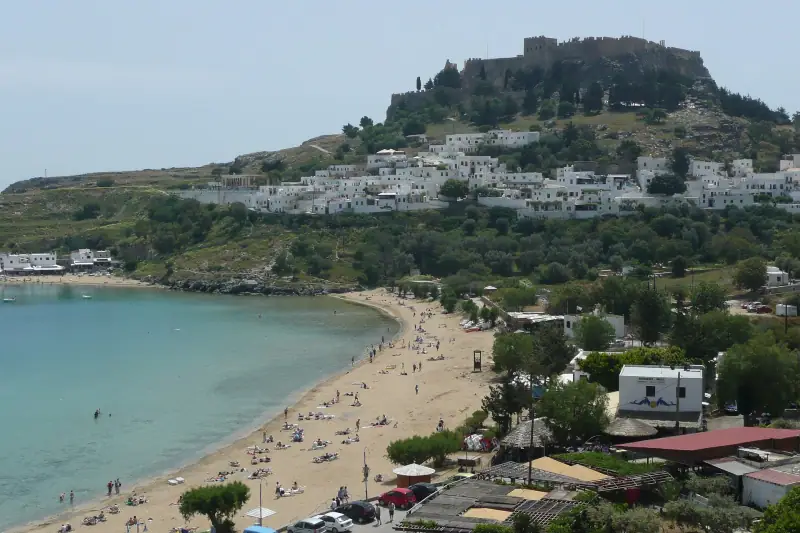
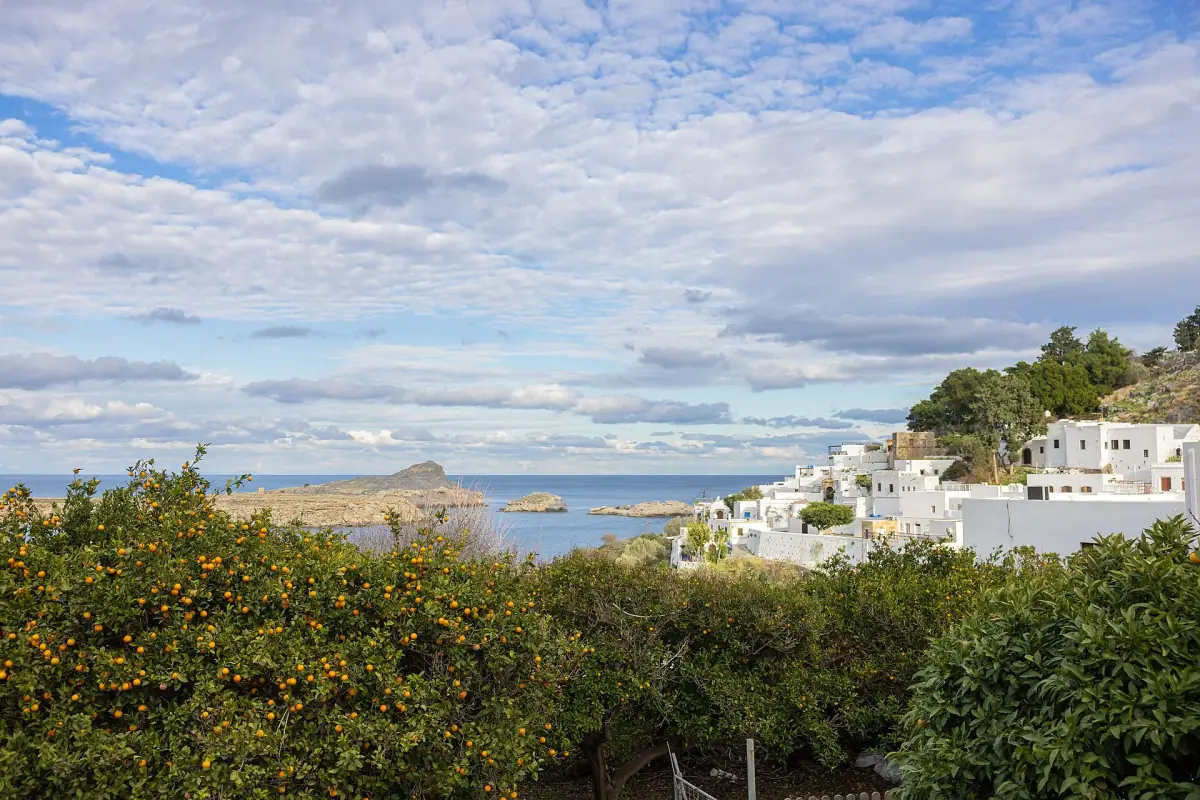
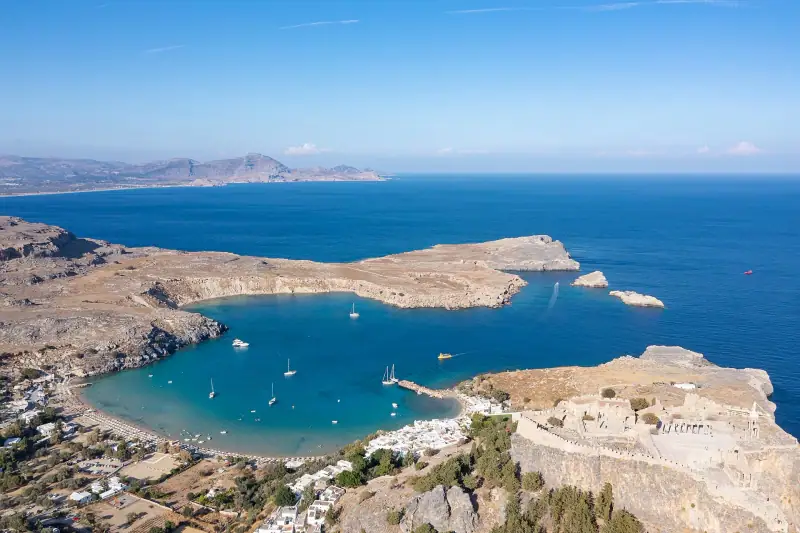
On the east coast, a little under an hour’s drive from the capital, Lindos is the postcard of Rhodes. Its white houses rise at the foot of an ancient acropolis where stand a temple to Athena and a Knights’ fortress. The view of the sea from the top is one of the finest on the island.
The village is a maze of pedestrian lanes lined with old houses, craft shops and terraces. St Paul’s Bay, a small, almost enclosed cove at the foot of the village, is one of the loveliest swimming spots on Rhodes. Legend has it that the apostle Paul landed there, hence the name.
The site is very busy during the day, with the excursion coaches. To enjoy the atmosphere, visit the acropolis at opening time or late in the day, and keep your lane strolls for the evening. All the practical details, from parking to recommended times, are in our guide to visiting Lindos.
The village is also an accommodation destination in its own right, but pricier than its neighbors: many travelers prefer to stay in a nearby resort and come for the day.
Boutique hotels in the old town, places in Lindos or east-coast resorts: compare availability, reviews and distances to the beach.
The east coast: Faliraki, Kolymbia, Tsambika and the southeast
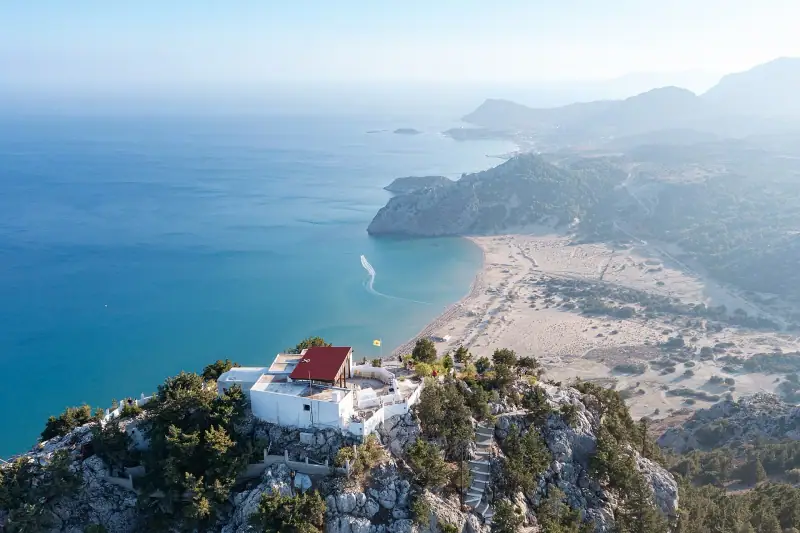
South of Rhodes Town, the east coast is a string of beach resorts and beaches. It is the most developed part of the island and where hotels, all-inclusive packages and water activities are concentrated.
Faliraki, about fifteen kilometers (9 mi) from the capital, is the best known: a long sandy beach, hotels, restaurants, a water park and nightlife in season. Farther south, Kolymbia and Tsambika are calmer and more family-oriented. Tsambika is known for its large golden-sand beach and its small monastery perched on the hill above.
Farther south, Kiotari and Gennadi have large hotels facing long beaches, in a much less built-up setting. People come for calm and the sea, not for village life.
The main advantage of the east coast is its sea, generally calmer when the wind blows from the west and north. It is also the area best served by buses from Rhodes Town. To compare the beaches one by one, see our selection of the best beaches in Rhodes.
The west coast: Ialyssos, Filerimos and Kamiros
The west coast is wilder and windier. Near the capital and the airport, Ialyssos and the Ixia area concentrate many seafront hotels; the wind attracts windsurfing and kitesurfing fans.
Above Ialyssos, Filerimos hill holds a monastery, gardens and a panorama of the region. It is an easy half-day excursion from the capital; price, hours and duration are detailed in our guide to visiting Filerimos.
Farther south, Kamiros is one of the island’s most interesting archaeological sites: the remains of an ancient city are terraced up a hill facing the sea, with the foundations of houses, streets and public buildings. It is a fine visit for those interested in antiquity, especially outside the hottest hours; prices and hours are detailed in our guide to visiting Kamiros.
Beyond, the coast becomes rougher and less populated, with mountain villages inland. A car is almost essential to enjoy this part of the island, and driving on the interior roads takes some care: we detail the conditions in our article on renting a car in Rhodes.
The south of the island: Prassonissi and the wild beaches
At the far south, Prassonissi is a sand isthmus linking the island to an islet, between two seas. The wind is constant, which makes it a place known for kitesurfing and windsurfing. Even if you do not kitesurf or windsurf, the spot is worth the detour for its particular atmosphere and open landscapes.
The south is the least built-up part of Rhodes. You find quiet villages, a few tavernas and long, little-visited beaches. In return, everything is far away: trips from Rhodes Town or Lindos take time, and it is best to plan a car and start with a full tank.
For this reason, the south is best approached as a one-day road trip, or as a stage of a longer loop around the island. Our 5-day itinerary for Rhodes shows how to fit it in without rushing.
The island’s other highlights
Beyond the big stops, Rhodes hides quieter sites that enrich a stay. Here are those that come up most often in itineraries:
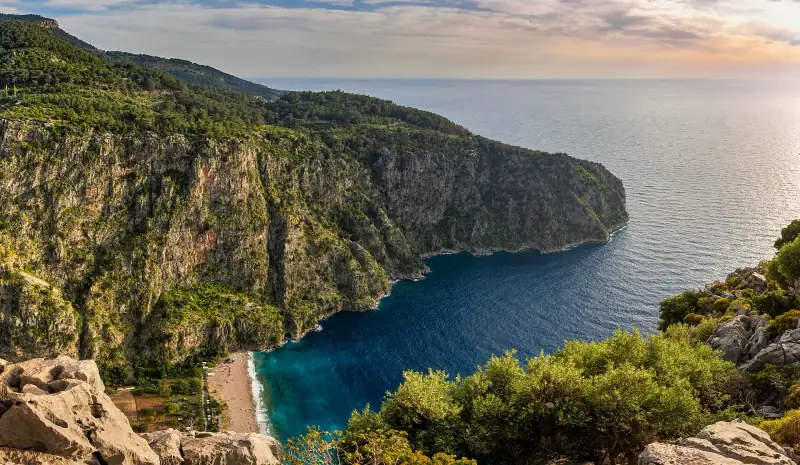
- Butterfly Valley (Petaloudes): a wooded, cool valley, classified as a nature reserve, where butterflies gather in summer. The trails are short and shaded, making it a pleasant family outing.
- Filerimos: a panoramic hill with a monastery and gardens, mentioned above.
- Kamiros: an ancient city facing the sea, best visited in the morning.
- Monolithos: a village in the southwest overlooked by a castle perched on a rock, known for its sunset.
- Inland villages: tavernas, plane trees, springs and quiet lanes, far from the bustle of the coast.
- Boat trips: the neighboring islands of the Dodecanese are within reach by boat from the capital’s harbor.
For paid sites and excursions, it is often simpler to book ahead in high season. Opening hours change from one season to the next and on public holidays: check them on official sites before you go.
A visit to Lindos, an island tour, a sea cruise or a discovery of the old town: compare excursions and book ahead in high season.
Symi, Halki and the neighboring islands
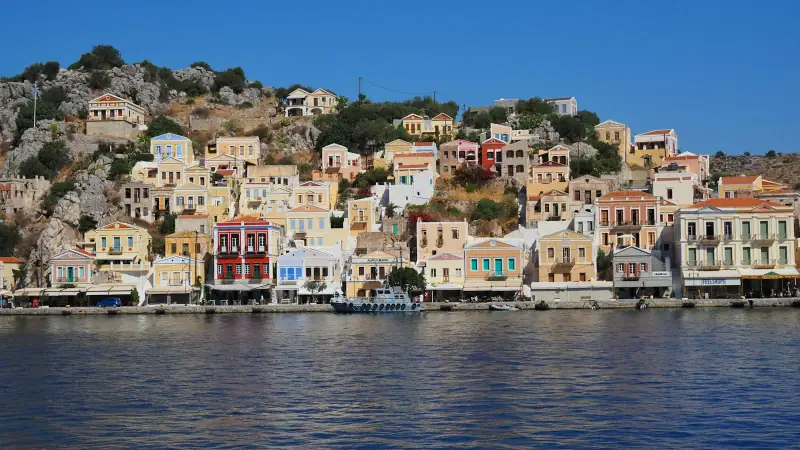
Rhodes is the gateway to the Dodecanese, an archipelago of islands close to the Turkish coast. Several can easily be visited in a day from the capital’s harbor, by ferry or on an organized excursion.
Symi is the most famous: its harbor, ringed by colorful neoclassical houses climbing the hills, is one of the most photogenic in the region. The village of Gialos and the Panormitis monastery are among the classic stops. We devoted a full article to this trip, with transport options and a typical day: day trip to Symi from Rhodes.
Halki, smaller and quieter, appeals to those looking for a fishing village away from the crowds. Boats and schedules vary by season: ask the companies or agencies at the harbor ahead of time, or read our guide to getting to Halki from Rhodes.
If you stay only a week, a day in Symi is the best investment: it changes the pace and adds a maritime side to a stay already rich in visits.
When to go to Rhodes
Rhodes has one of the sunniest climates in Greece, but each season has its personality.
Spring (April to early June): the island is green and in flower, and the days are ideal for visits and hiking. The sea stays cool in April but becomes pleasant from May-June. Seasonal businesses open gradually.
Summer (June to August): heat, clear skies, warm sea, but also peak season: prices climb, beaches and sites fill up. The meltem, a north wind, tempers the heat but stirs up the west coast. If you travel in July-August, plan visits early in the morning or late in the day.
Fall (September-October): the sea keeps the summer’s warmth, crowds thin and rates drop. It is often the best compromise for mixing swimming and sightseeing.
Winter (November to March): mild, but rainy; many businesses are closed outside the capital. It suits quiet cultural visits.
Our recommendation: May, June, September and early October. We detail the trade-offs in our guide on when to go to Rhodes, with the differences between the east and west coasts.
How to get to Rhodes
A plane is the most practical way for the great majority of travelers. Outside the season, or if no direct flight serves your region, you have to connect, most often through Athens, with a final flight of about an hour.
Diagoras International Airport (RHO) is about 14 km (9 mi) southwest of Rhodes Town. Taxi, public bus and rental car get you to your lodging; a taxi is simplest for the capital, with a trip of about 20 to 30 minutes.
The ferry also exists: services link Rhodes to Piraeus, near Athens, but the crossing is long, often more than twelve hours. This option mostly appeals to those combining several islands or who prefer to avoid flying.
All the details, from companies to transfers and booking tips, are in our guide to getting to Rhodes.
Direct or with a connection, seasonal or year-round: compare schedules and fares for your dates.
Getting around the island
Rhodes is large enough that the choice of transport affects how you organize your stay.
The bus links Rhodes Town to the main destinations on the island, at low prices. Two bus stations serve the east coast and the west coast respectively, from the new town. It is a good solution if you stay in Rhodes Town or Lindos, but schedules are more limited outside high season and to isolated villages: check current timetables before you go.
A rental car gives the freedom to explore the south, the west coast and the interior at your own pace. It is especially cost-effective with several people. The main roads are in good condition, but mountain roads are winding: drive carefully and fill the tank before heading south. Book ahead in season. Our dedicated article details the conditions, pitfalls and suggested routes: renting a car in Rhodes.
Taxis and organized excursions complete the offer. A day excursion to Lindos or around the island is a simple alternative if you do not want to drive.
Two-wheelers (scooters, quads) are rented everywhere, but road conditions and heat call for caution; check your insurance and the license you need.
Where to stay in Rhodes
Choosing your base determines the mood of your trip. Here is our summary, detailed in where to stay in Rhodes:
- Rhodes Town: ideal for a first stay, without a car, with the old town on foot, restaurants and the harbor.
- Lindos: charm and swimming, but pricier and farther away.
- Faliraki and the east coast: families, beaches, all-inclusive hotels, nightlife in season.
- Ialyssos and the west coast: wind, wind sports, proximity to the airport.
- The south (Kiotari, Gennadi, Prassonissi): calm and nature, with a car.
A common solution: split the stay in two. A few nights in Rhodes Town for the heritage, then the rest of the stay on the east coast for the beach. The island is compact enough that changing base does not cost a whole day.
Book early for summer, notably in the old town and Lindos, where supply is limited. In low season, check that the hotel and the restaurants around it are open, as many places close outside the capital.
What to eat in Rhodes
Rhodes cuisine is that of island Greece, with a few local touches: grilled fish and seafood, feta salads, stuffed vegetables, grilled meats, pastries with honey and sesame. Family tavernas, small village restaurants and harbor terraces offer good value when you move away from the most touristy streets.
The island also produces wine and local spirits. Tasting local products, from honey to olives and seasonal specialties, is part of the pleasure of the trip. We gathered the dishes to try, the types of establishments and our tips in our guide to what to eat in Rhodes.
A simple tip: eat like the locals, rather late, share several dishes and let yourself be guided by the daily suggestions.
Organizing your stay: how long, what pace
The ideal length depends on what you want. Here are three typical formats.
3 days: the old town of Rhodes (one day), Lindos and a beach (one day), a free day for the west coast or swimming. It is enough for a first look, but frustrating for those who want more.
5 to 7 days: the format we recommend. It lets you alternate visits and beaches, make an excursion to Symi and devote a day to the south or the interior. Our 5-day itinerary for Rhodes gives you a ready-to-follow plan.
10 days and more: you can slow down, add neighboring islands, hikes and beach days with no plan.
Whatever the length, a few simple rules save time: group visits by geographic area, leave early for sites, keep beach days for the afternoon heat, and do not overload driving days.
What budget to plan
Rhodes remains an accessible destination, but the budget can vary threefold depending on season, lodging and how you get around. The flight and lodging weigh the most; meals are the easiest item to control thanks to tavernas, bakeries and markets.
As a guide, published estimates give about €60 to 100 per day (about $70 to 115) for a tight to moderate budget and €120 to 180 (about $140 to 210) for a comfortable stay, flight excluded. These amounts are orders of magnitude: prices change from one season to the next.
To pay less: travel in May, June, September or October, book early, compare flights and favor lodging outside the most sought-after areas. Cards are widely accepted, but keep a little cash for small tavernas and remote beaches.
The item-by-item breakdown, with our saving tips, is in our guide to the Rhodes budget.
A trip at sea to the neighboring islands is one of the best ways to vary a stay: compare options and schedules.
Practical tips
Travel insurance remains useful to cover repatriation and costs not reimbursed by your regular coverage; check what your own policy and credit card include. Entry rules depend on your passport (see the official government links above).
A few practical tips:
- Sun protection: the sun is strong from spring on; hat, sunscreen and water are essential, especially at archaeological sites with no shade.
- Dress: bring comfortable shoes for the cobblestones of the old town and Lindos, and covering clothes to visit churches and monasteries.
- Electricity: sockets are of the European type; check whether you need an adapter for your devices.
- Pace: many shops close in the afternoon outside tourist areas; days start early.
- Sea: find out about the day’s wind before choosing a beach: in case of meltem, favor the east coast.
- Respect for places: do not take stones or remains from ancient sites, and respect the visiting rules.
- Phone: check your carrier’s international plan or use a travel eSIM.
Our tips for a successful trip
In short, here are the choices that make the difference:
- Go outside July and August if you can: May, June, September and early October are ideal.
- Spend at least one night in the old town or nearby to enjoy the evening atmosphere.
- Visit Lindos early or late to avoid the excursion crowd.
- Choose the coast according to the wind: east when the wind blows, west for the coolness.
- Reserve a day for Symi or another neighboring island.
- Rent a car for at least one day for the south and the west coast, even if you stay in town.
- Book early for lodging and the car in high season.
Rhodes is an island that suits an active stay as well as a seaside vacation. By following the links in this guide to our detailed articles, you have what you need to prepare a tailor-made trip, without improvising.
Frequently asked questions
How many days do you need to visit Rhodes?
Allow five to seven days to see the essentials: the old town, Lindos, a few beaches, an ancient site on the west coast and, if possible, a trip to a neighboring island such as Symi. A long three-day weekend lets you see the old town and Lindos, but not the south or the west coast.
What is the best time to go to Rhodes?
May, June, September and early October combine well-established sun, pleasant sea and fewer crowds than July and August. Winter suits quiet cultural visits, but many seasonal businesses are closed.
Do you need to rent a car in Rhodes?
It is not essential if you stay in Rhodes Town or Lindos and only do a few excursions. A car becomes very useful for exploring the west coast, the mountainous interior and the south, or if your lodging is isolated.
Where should you stay in Rhodes on a first visit?
Rhodes Town is the simplest choice: walkable old town, many restaurants, buses to the rest of the island, the harbor for boat trips and a nearby airport. Lindos appeals to couples after charm, and the east coast suits families who mainly want the beach.
What are the entry requirements for Rhodes?
Greece is in the Schengen area, and entry rules depend on your passport. Check the official travel advice of your government before you book: travel.state.gov (US), GOV.UK (UK), travel.gc.ca (Canada), Smartraveller (Australia) (checked November 2026).
Is Rhodes suitable for a family trip?
Yes. The more sheltered east coast has many gently sloping beaches and many hotels with pools, notably around Faliraki, Kolymbia and Tsambika. The old town and the ancient sites can also be visited with children, avoiding the hottest hours.
Can you visit Rhodes without speaking Greek?
Yes, the island has lived from tourism for decades: English is widely spoken in hotels, restaurants and shops, and a few words of Greek ("kalimera," "efharisto") are always appreciated.
More Rhodes guides
Keep reading
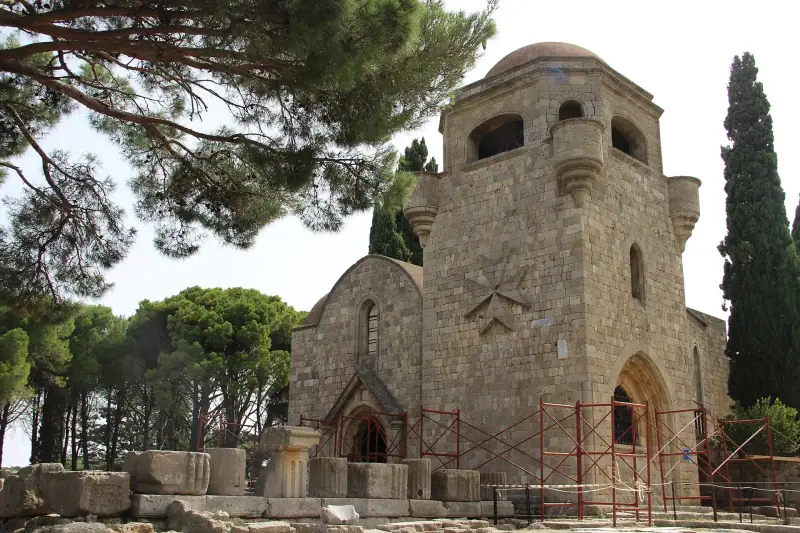
Visiting Filerimos in Rhodes: hours, ticket price and how long it takes
Filerimos in Rhodes: €10 ticket, summer and winter hours, free days, visit time, Way of the Cross, monastery and access from Rhodes Town.
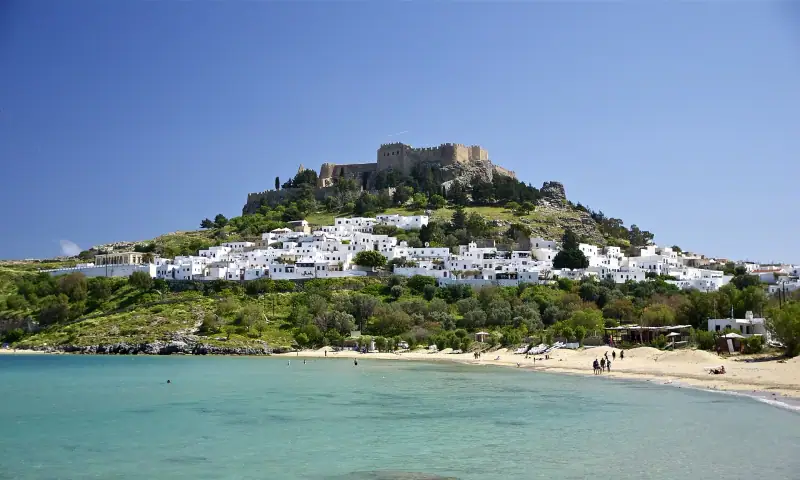
Visiting Lindos, Rhodes: acropolis, lanes and St Paul's Bay
What to see in Lindos? Acropolis and Temple of Athena, white lanes, Panagia church, St Paul's Bay: a one-day plan, access and practical tips.
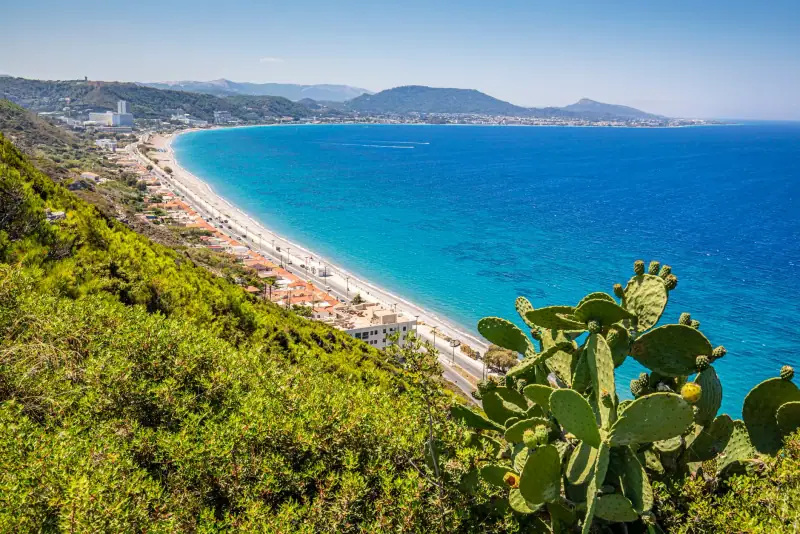
The best beaches in Rhodes: east coast, west coast and south
The best beaches in Rhodes: Tsambika, Anthony Quinn Bay, Faliraki, Prassonissi. Sand or pebbles, wind, families or kitesurfing: how to choose.
Ready-made
Rhodes itineraries
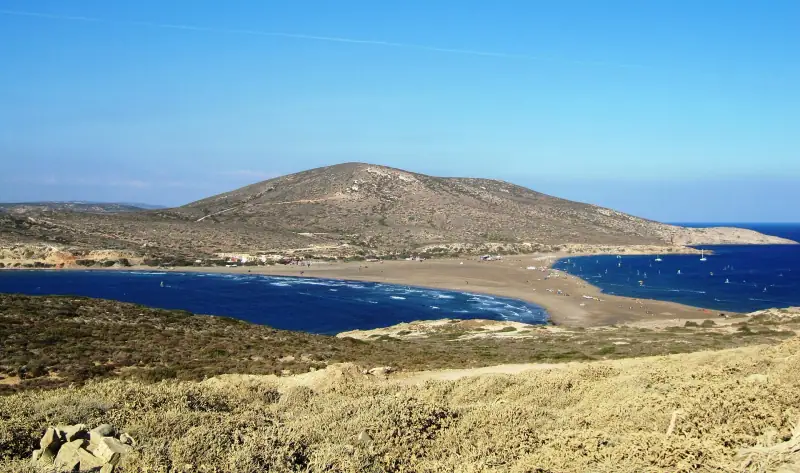
5 days
Rhodes in 5 days: old town, Lindos, Symi and the south
What to do in Rhodes in 5 days? Day-by-day itinerary: old town, Filerimos, Kamiros, Lindos, a trip to Symi and the wild south, with distances and tips.
Can be adapted in the planner
3 days
Rhodes road trip in 3 days: driving around the island
Rhodes road trip in 3 days: a day-by-day itinerary around the island by car, from Lindos to Prassonissi, with distances, stops and tips.
4 days
Rhodes in 4 days without a car: a realistic bus and boat itinerary
Rhodes in 4 days without a car: old town on foot, Lindos by bus (55 km, 1 h 30), Symi by boat and Faliraki beach. Stops, travel times and pitfalls.