What to see
The best beaches in Rhodes: east coast, west coast and south
We may earn a commission when you book through links on this page, at no extra cost to you. We don't visit or try the places we cover: we summarize published sources. How we work
In short
- Orientation is the key: the wind blows mostly from the west and northwest, so the east coast is calmer and the west coast livelier.
- The east coast has most of the well-known beaches (Tsambika, Faliraki, Kallithea) and suits families; Prassonissi, in the south, is for windsurfers and kitesurfers.
- Around Lindos, the village beach and St Paul's Bay fill up quickly in summer, especially when excursions arrive mid-morning.
- The swimming season generally runs from May to October; June and September are a good compromise.
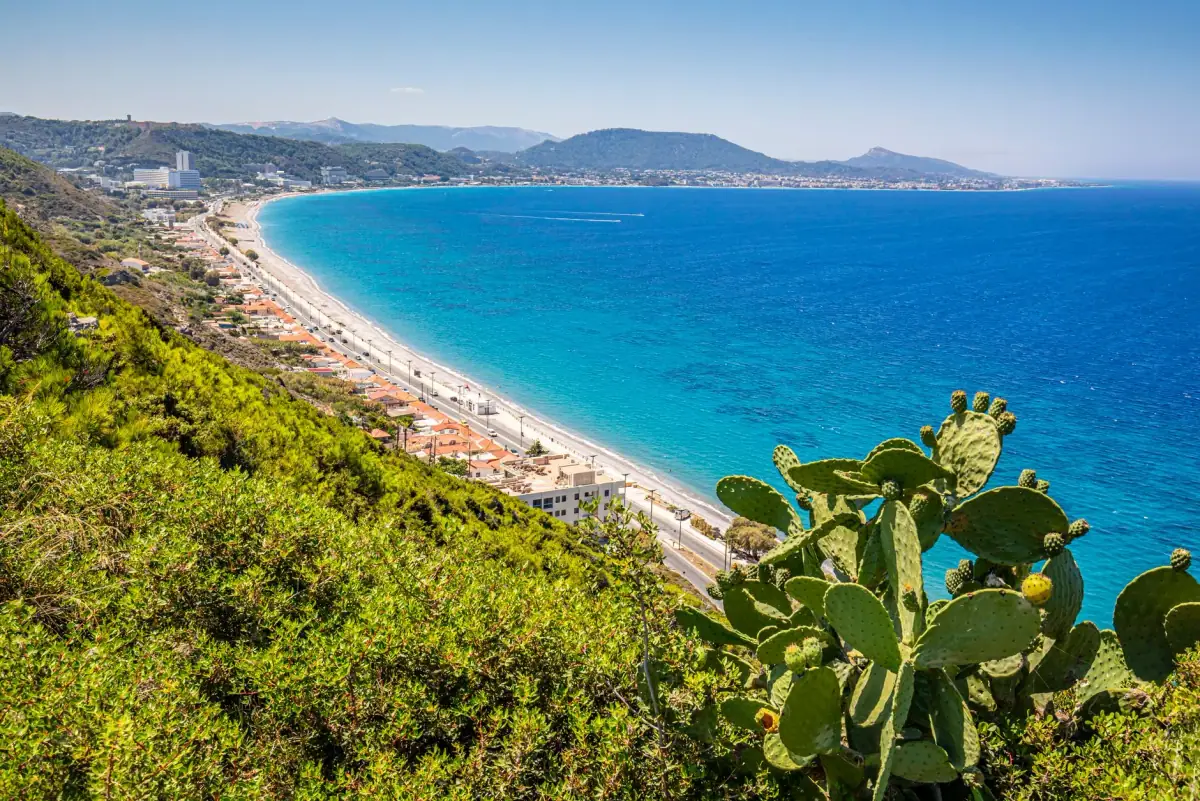
With over 200 km (124 mi) of coastline, Rhodes offers a wide variety of beaches: long busy stretches of sand on the east coast, sheltered coves around Lindos, wind-battered pebbles in the west and wild strips of sand in the south. The secret to choosing well comes down to one word: orientation. The wind blows mostly from the west and northwest, which makes the east coast calmer and the west coast livelier.
This guide presents the most emblematic beaches by area, with their strengths and what to know before you go. To choose your base, also see our comparison of where to stay in Rhodes.
East coast: the calmest sea on the island
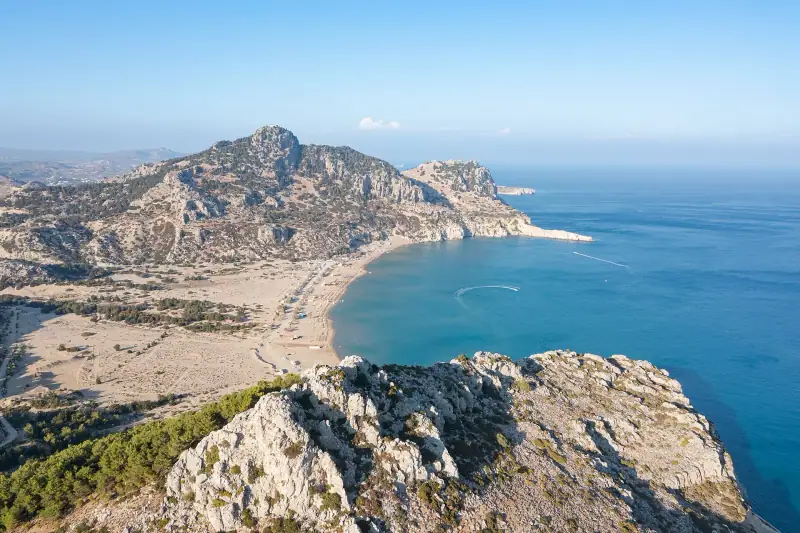
The east coast concentrates most of the well-known beaches and beach resorts. Sheltered from the prevailing wind, it generally enjoys a more peaceful sea, which makes it the favorite area for families. It is also where the most developed facilities are: sunbeds, umbrellas, beach tavernas and water activities.
Tsambika is one of the island’s most famous beaches. Its fine sand, crescent bay and clear water make it a great classic. It is overlooked by a hill with a small monastery, reached by a long staircase: the view of the coast is worth the effort, but it is better to avoid the middle of the day in summer. Like all popular beaches, it fills up quickly in high season, and arriving in the morning gives a better choice of spots.
Faliraki is the liveliest resort: a long, heavily developed sandy beach with many restaurants, bars and water sports. It suits those looking for activity and convenience rather than calm. Access from Rhodes Town is easy, by the coastal road or by bus.
Kallithea, farther north, is known for its restored former Art Deco-style thermal baths and its small rocky coves where you swim from platforms and slabs, with clear water good for snorkeling.
Around Lindos: coves and postcard settings
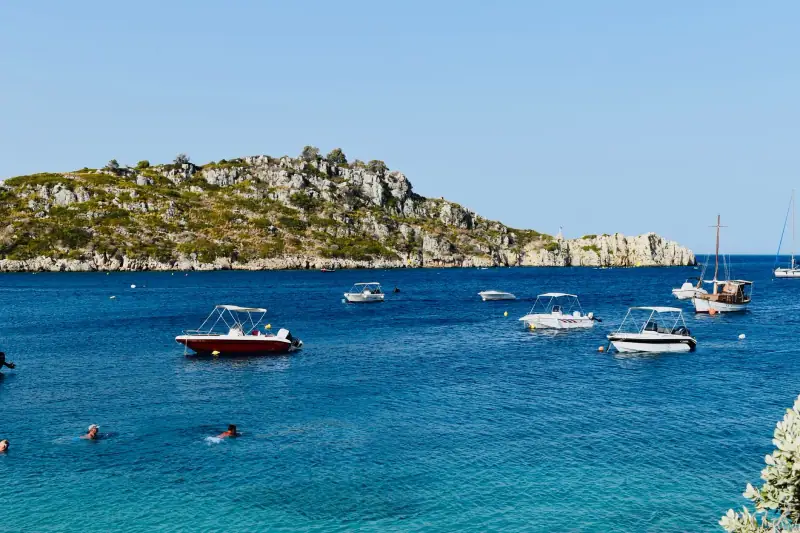
The Lindos area offers some of the best swimming in Rhodes. The white village beneath its acropolis surrounds two main beaches: the Lindos beach, below the village, developed and convenient, and St Paul’s Bay, an almost enclosed cove with turquoise water, much photographed. Both fill up quickly in summer, especially when excursions arrive in mid-morning.
For somewhat less crowded beaches, several neighboring east-coast resorts, such as Haraki or Pefkos, offer stretches of sand or pebbles with a quieter mood. We detail the village and its acropolis in our guide to visiting Lindos.
Seafront hotels, apartments and small places: compare availability and traveler reviews.
Anthony Quinn Bay and the rocky coves
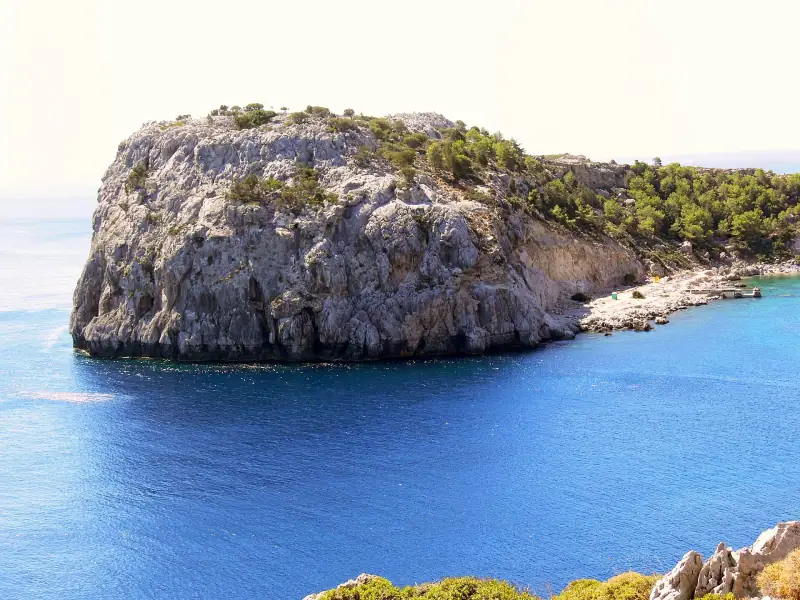
Between Faliraki and Afandou, a few kilometers south of Faliraki on the road to Lindos, Anthony Quinn Bay (Ladiko) takes its name from the actor, who filmed The Guns of Navarone on the island and who, legend has it, fell in love with the place. It is a small bay of rock and pebbles, lined with pines, with deep blue water: a popular spot for snorkeling and jumping into the water.
It is small, often crowded in summer, and entry to the water is over rocks or pebbles: bring water shoes and a mask. If you like clear water and small wild coves, it is well worth a stop on the road between Rhodes Town and Lindos.
West coast: wind, pebbles and sunsets
The west coast, exposed to the wind, is less suited to quiet swimming with young children, but it appeals with its more authentic feel and its sunsets over the Aegean. The beaches are mostly pebbles, and the frequent waves make the sea more demanding.
Around Ialyssos, near the airport, the steady wind attracts windsurfers and kitesurfers, with schools and clubs there. Farther south, the shoreline gets wilder and is visited mostly by car: you can combine a beach with a visit to the ancient site of Kamiros, one of the island’s three ancient cities.
Prassonissi: between two seas
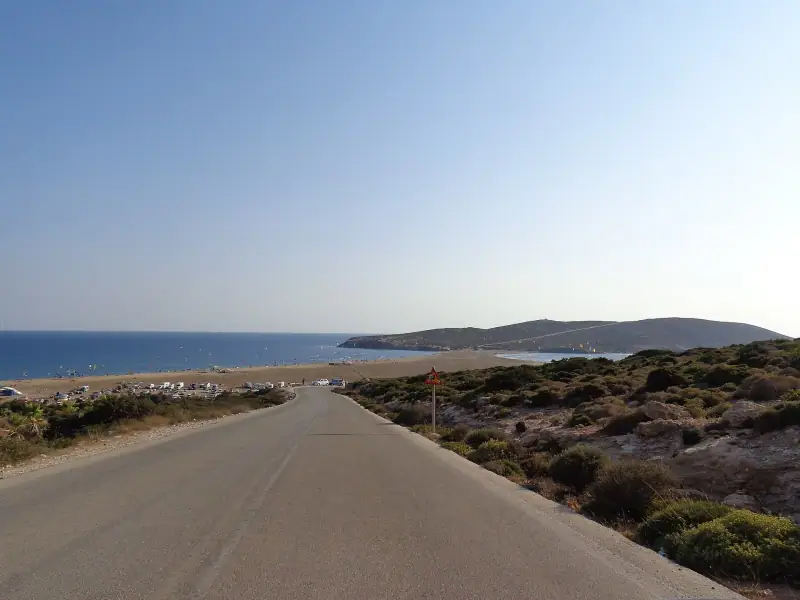
At the southern tip of the island, Prassonissi is a place apart. A narrow strip of sand links the coast to a small island, with sea on each side: generally rough on one side, calmer on the other depending on the wind. This setup makes it one of the best windsurfing and kitesurfing spots in Greece, with schools and rentals there.
Conditions can be very windy: it is a paradise for riders, but less comfortable for simple sunbathing. The site is far from Rhodes Town, and you need to plan a long day on the road there and back, or stay there. Bring water and sun protection, as shade is scarce.
Day cruises, swim stops and visits to the neighboring islands: compare the trips on offer.
The south and southeast coast: sand and quiet
The southeast of the island, around Kiotari, Gennadi and Lachania, offers long beaches of sand and pebbles, less built up than the north. There are large seafront hotels, but also wilder areas where it is easy to find a quiet spot, even in season.
It is the right choice if you want uncrowded beaches and do not mind getting away from the lively centers. A car is almost essential to explore this area, which is better enjoyed from a fixed base than on an excursion from the north.
The beaches of Rhodes Town
Even without leaving the capital, you can swim: Elli beach, in the north of the new town, is a pebble and sand beach easily reached on foot from the center, ideal for a dip after visiting the old town. It is very busy and developed, with tavernas and sunbeds nearby.
On a practical note, at the northern tip of the town the Aegean and the Mediterranean meet: the water there is often rougher on one side than the other depending on the day’s conditions.
How to choose your beach
- With the family: favor the east coast, calmer, with developed beaches such as Tsambika or Faliraki.
- For snorkeling: Anthony Quinn Bay and the coves of Kallithea have clear water.
- For wind sports: Prassonissi and the west coast around Ialyssos.
- For calm: the southeast (Kiotari, Gennadi) and the coves off-season.
- Without a car: Elli, Faliraki and Lindos are reachable by bus.
Practical tips
- Season: from May to October, with a good compromise in June and September. July and August are the hottest and busiest months.
- Gear: beach shoes for pebbles and rocks, sunscreen, water and a hat. Natural shade is scarce on many beaches.
- Wind: check the marine forecast before choosing a side of the island: in strong west wind, the east coast is most often workable.
- Respect for places: take your litter with you, do not collect pebbles or shells, and respect the signs for protected areas.
- Car rental: to explore the remote coves of the south, a car or scooter is by far the most flexible solution.
Frequently asked questions
What is the most beautiful beach in Rhodes?
It depends on what you are after. Tsambika is often cited for its fine sand and clear sea, St Paul's Bay in Lindos for its setting, and Prassonissi for its unique atmosphere between two seas, very popular with windsurfers and kitesurfers.
East coast or west coast: which to choose for swimming?
The east coast, sheltered from the prevailing wind, generally has calmer sea and beaches of sand or sand and pebbles, ideal for families. The west coast is windier, with often rougher sea and pebble beaches, appreciated by wind-sport fans.
Are there sandy beaches in Rhodes?
Yes, notably on the east coast (Tsambika, Faliraki, Lindos, Haraki) and in the south. Many beaches are a mix of sand and pebbles, though: check recent photos and bring beach shoes if needed.
Do you need a car to see the beaches?
The beaches near Rhodes Town and the east-coast resorts are reachable by bus. For remote coves and the south of the island, a car or scooter gives much more freedom.
When can you swim in Rhodes?
The swimming season generally runs from May to October. June and September offer a good compromise between pleasant sea and moderate crowds, while July and August are the hottest and busiest months.
More Rhodes guides
Keep reading
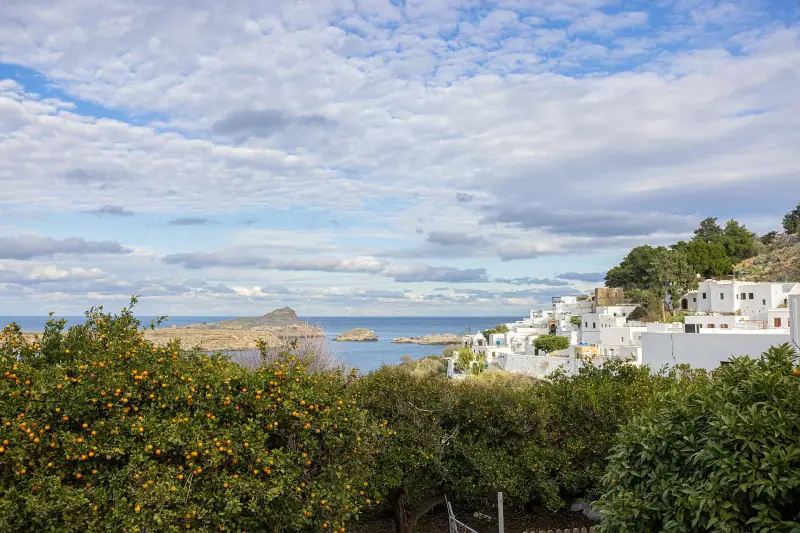
Complete guide to visiting Rhodes: regions, highlights and tips
Everything to plan your trip to Rhodes: towns and regions, must-see sites, when to go, transport, where to stay and budget, with all our detailed guides.

Visiting Filerimos in Rhodes: hours, ticket price and how long it takes
Filerimos in Rhodes: €10 ticket, summer and winter hours, free days, visit time, Way of the Cross, monastery and access from Rhodes Town.
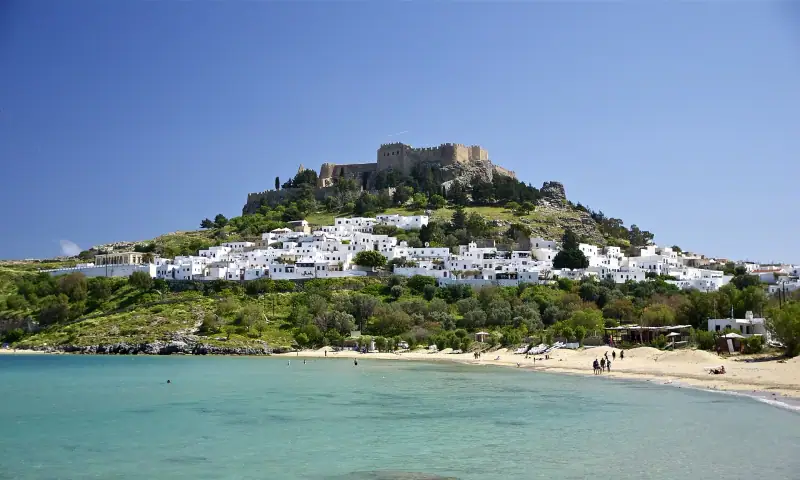
Visiting Lindos, Rhodes: acropolis, lanes and St Paul's Bay
What to see in Lindos? Acropolis and Temple of Athena, white lanes, Panagia church, St Paul's Bay: a one-day plan, access and practical tips.
Ready-made
Rhodes itineraries
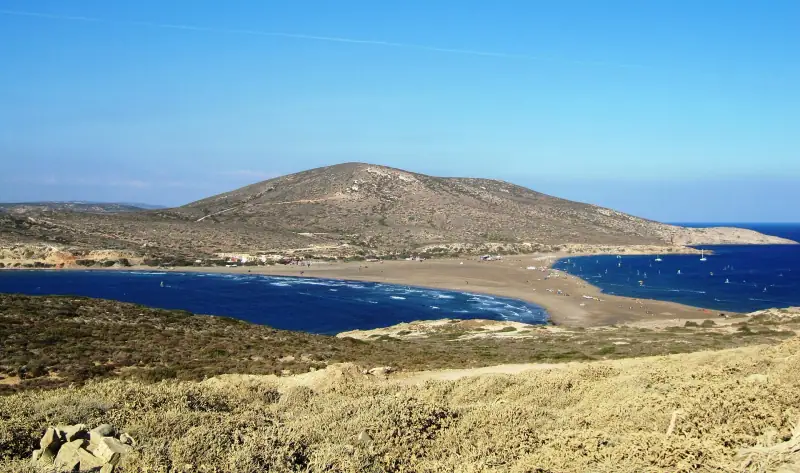
5 days
Rhodes in 5 days: old town, Lindos, Symi and the south
What to do in Rhodes in 5 days? Day-by-day itinerary: old town, Filerimos, Kamiros, Lindos, a trip to Symi and the wild south, with distances and tips.
Can be adapted in the planner
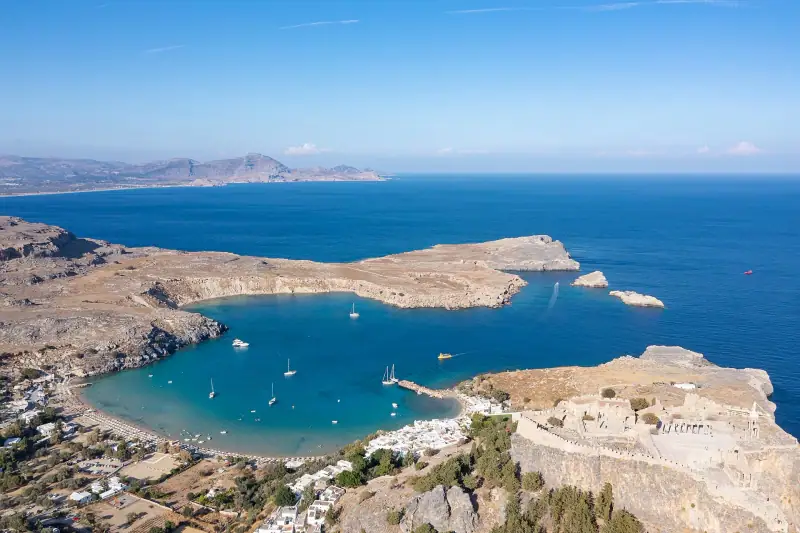
3 days
Rhodes road trip in 3 days: driving around the island
Rhodes road trip in 3 days: a day-by-day itinerary around the island by car, from Lindos to Prassonissi, with distances, stops and tips.
4 days
Rhodes in 4 days without a car: a realistic bus and boat itinerary
Rhodes in 4 days without a car: old town on foot, Lindos by bus (55 km, 1 h 30), Symi by boat and Faliraki beach. Stops, travel times and pitfalls.