Things to do
Things to Do in Gallipoli, Puglia: Activities, Beaches and Excursions
We may earn a commission when you book through links on this page, at no extra cost to you. We don't visit or try the places we cover: we summarize published sources. How we work
In short
- Two full days cover the essentials: the old town, Purità beach and the fish market, then a boat trip to the sea caves and a beach such as Baia Verde or Punta della Suina.
- Best months are May-June and September-October; July and August mean crowded beaches and higher lodging prices.
- Gallipoli is about 37 km (23 mi) from Lecce: 40 to 45 minutes by car, or 1 h 20 to 1 h 45 by FSE train for about €5 (~$6).
- Boat trips to the sea caves leave from the old-town harbor in the morning and cost about €20-35 (~$23-41) per person.
Set on a rocky islet linked to the modern town by a stone bridge, Gallipoli is one of the most beautiful medieval towns in Salento. The Greek settlers who founded it called it Kallipolis, “the beautiful city,” and it lives up to the name: a centro storico of white alleys surrounded by the Ionian Sea, beaches with strikingly turquoise water, and an atmosphere that swings between morning calm and a lively seaside party at night. Here are the best things to do on a stay in Gallipoli.
Exploring the centro storico and its monuments
The Castello Aragonese
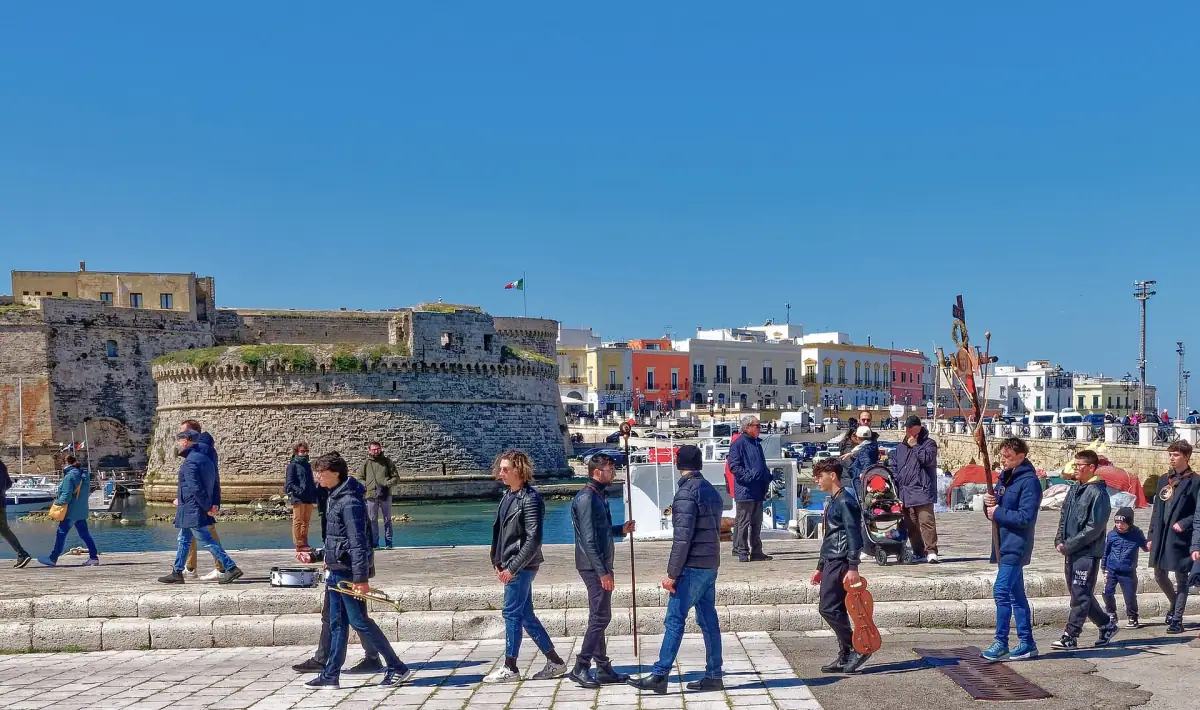
Standing at the entrance to the bridge that links the island to the modern town, the Castello Aragonese is the symbol of Gallipoli. Built on an 11th-century Norman tower and heavily reworked by the Aragonese in the 15th and 16th centuries, it long protected the town from Ottoman raids and Barbary pirates. Its four characteristic round towers overlook the harbor and offer a panoramic view over the Gulf of Gallipoli. The interior is regularly open to visitors (check hours in season) and hosts exhibitions and cultural events.
The Fontana Greca
A few meters from the castle, the Fontana Greca is one of the oldest fountains in Europe still in a good state of preservation. Carved from Salento limestone, it is decorated with bas-reliefs showing mythological scenes and sea figures. Venetian, Genoese and Greek merchants who put in at the port quenched their thirst here before sailing on. It is a stop worth making, often overlooked by hurried visitors who rush straight to the beaches.
The Cattedrale di Sant’Agata
At the center of the centro storico, the baroque cathedral of Sant’Agata was built between the 17th and 18th centuries in the characteristic Salento baroque style. Its golden limestone facade and richly decorated interior, with paintings, polychrome marble and gilded altars, make it a masterpiece of local religious art. It is dedicated to Saint Agatha, martyred in Sicily in the 3rd century, a relic of whom is kept in the cathedral.
Getting lost in the island’s alleys
The real pleasure of the centro storico is wandering without a plan. Narrow whitewashed alleys, arches spanning the passages, balconies flowered with bougainvillea and openings to the sea at every crossing: Gallipoli reveals itself step by step, at the end of a dead end opening onto the rocks or a small baroque church popping up between two houses. Allow at least an hour to explore the island on foot.
🏨 Where to stay in Gallipoli
To enjoy the centro storico in the morning before the day's tourists arrive, choose lodging on the island or a short walk from the bridge.
See places to stay in Gallipoli →Gallipoli’s beaches: a full overview
Gallipoli is surrounded by beaches that rank among the most beautiful in Italy. The Ionian Sea, on the west coast of Salento, is known for its exceptional turquoise and emerald tones and its often sandy seabed.
Spiaggia della Purità
Tucked just below the Aragonese castle, on the west side of the island, Spiaggia della Purità is Gallipoli’s most emblematic beach. It is named after the church of the Purità that overlooks it. Facing due west, it is the ideal spot for sunsets over the Ionian Sea, a daily show that draws locals and visitors alike. Its water is a luminous blue even in midsummer, and the beach’s small size gives it a particular charm.
Baia Verde
About 3 km (2 mi) south of the centro storico, Baia Verde is Gallipoli’s most popular beach, especially with young people and families. Long stretches of white sand and shallow turquoise water make it ideal for swimming. In summer it comes alive with beach clubs, bars and music; at night, several venues in the area become gathering points for partying. Arrive early (before 10 am) to find a spot in peak season.
Punta della Suina
For a wilder, more preserved setting, Spiaggia di Punta della Suina is one of the gems of the Gallipoli coast. Framed by a fragrant Mediterranean pine wood, it lies in a partly protected area that limits fixed structures. The sand is very fine and the water transparent. It is reached by car on a small road from Via Rivabella, with parking nearby.
Lido San Giovanni
North of the centro storico, Lido San Giovanni is a less crowded alternative to Baia Verde, liked by local residents. Its position facing open water brings slightly stronger waves than in the gulf, which suits windsurfers and kitesurfers when the wind picks up.
Baia di Torre Sabea
Quieter still, Baia di Torre Sabea lies a few kilometers north of Gallipoli, at the foot of an old Aragonese watchtower. Its calm water, golden sand and smaller crowds make it a good choice for those looking for peace.
🚗 Rent a car in Puglia
To explore the beaches and Salento at your own pace, a rental car is essential. Compare prices from Brindisi or Lecce.
Compare car rentals in Puglia →Boat trips and water activities
The Ionian Sea around Gallipoli is one of the clearest in the Mediterranean basin. Several water activities let you explore it beyond the beaches.
Boat trips to the sea caves
The sea caves (Grotte Marine) that punctuate the limestone coast around Gallipoli can only be reached by sea. Tour boats leave every morning (usually between 9 and 10 am) from the centro storico harbor and offer 2 to 4 hour trips along the rocky coast, entering caves colored red and orange and stopping in secluded coves for swimming. It is one of the most memorable experiences of any stay in Gallipoli. Book the day before at the harbor or through local agencies.
Snorkeling and scuba diving
The seabed of the Ionian coast, relatively little visited compared with other Mediterranean areas, holds rich underwater life: Posidonia seagrass, octopus, moray eels, sea bream and groupers are regularly seen. Several dive centers offer guided outings for all levels, from introductory dives to certified PADI levels. The clarity of the water here is especially good for underwater photography.
Kayaking and stand-up paddleboarding
For more independent exploration of the coast, rental shops offer kayaks and stand-up paddleboards on most beaches. Sea kayaking is ideal for going around the centro storico island, seeing the cliffs from below and reaching miniature beaches that can’t be reached on foot.
Windsurf and kitesurf lessons
When the wind rises from the southeast, Gallipoli’s northern beaches (Lido San Giovanni, Torre Sabea) become good for kitesurfing and windsurfing. Water sports schools operate in season and cater to beginners and experienced riders alike.
🤿 Book a boat trip in Gallipoli
Sea caves, snorkeling or diving: compare excursions from Gallipoli harbor.
See water activities in Gallipoli →Food and the fish market
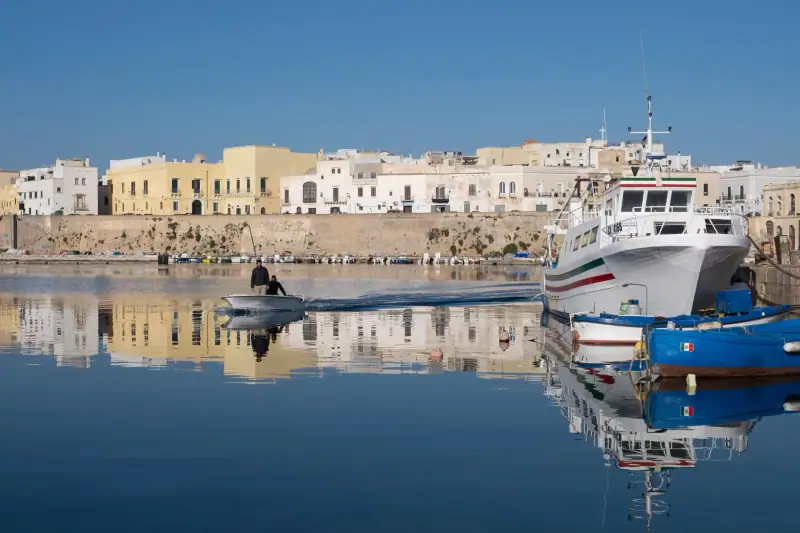
Gallipoli’s bond with the sea goes beyond water activities: local cooking is deeply shaped by the fish catch and the farming traditions of Salento.
The Monday market (Mercato del Lunedì)
Gallipoli’s harbor hosts a fish and local products market (check days and hours with the tourist office, traditionally Monday morning) that is an attraction in itself. Fishermen sell the night’s catch: sea urchins (ricci di mare), octopus (polpi), clams (vongole), shrimp (gamberi) and all kinds of oily fish. The smells, colors and bustle make for a lively, authentic visit, well away from the standard tourist circuits.
Specialties to try
Among the food highlights in Gallipoli:
- Polpo arrosto (grilled octopus), served in bread or off the griddle, is the emblematic street food of the centro storico.
- Fresh sea urchins (ricci), opened to order, to eat on the rocks of the waterfront.
- Pasta con le cozze (pasta with mussels), a Salento classic often made with tomato sauce or olive oil.
- Extra virgin olive oil from Puglia, produced just a few kilometers inland, is of remarkable quality here.
- Pasticciotto leccese, a typical Salento pastry filled with custard, found in every morning café.
Street food in the centro storico
The alleys of the centro storico hold several street food stalls offering fried fish, pizze rustiche and local pastries. The mood is especially lively on summer evenings, when residents gather for the passeggiata on the lungomare.
Day trips by land from Gallipoli
Gallipoli’s location in western Salento makes it an ideal base for exploring the whole peninsula.
Santa Maria di Leuca
About 46-50 km (29-31 mi) southeast of Gallipoli, Santa Maria di Leuca marks the southernmost point of Puglia, where, according to local tradition, the Adriatic and Ionian seas meet. You can visit the Sanctuary basilica and the Belle Époque villas lining the harbor, and, if you’re up to it, climb the 173 steps of the monumental staircase that tumbles down the cliff. Boat trips from the harbor let you discover the sea caves of Cape Leuca, among the most spectacular on the coast.
Nardò and Porto Selvaggio
About 20 km (12 mi) north of Gallipoli, Nardò is a baroque town worth a detour for its central square, Piazza Salandra, surrounded by palaces and a baroque votive column. From Nardò you can easily reach the Riserva Naturale di Porto Selvaggio, a protected nature reserve with crystal-clear water and a Mediterranean scrubland setting. The beach, reached only on foot from a forest parking lot (about 20 minutes’ walk), is among the most beautiful in Salento.
Galatina and Santa Caterina di Alessandria
About 25 km (16 mi) northeast of Gallipoli, Galatina is known for the basilica of Santa Caterina di Alessandria, whose interior is entirely covered in 14th- and 15th-century frescoes, a masterpiece often compared with the Scrovegni Chapel in Padua. The town is also famous for the tradition of the tarantella and tarantism, a fascinating cultural and musical phenomenon.
Otranto, the city of martyrs
About 45 km (28 mi) east of Gallipoli (crossing Salento), Otranto is one of the most historically charged towns in Puglia. Its Romanesque cathedral holds a 12th-century floor mosaic unique in Europe, a giant stone carpet of about 600 m² (6,500 sq ft) depicting the tree of life. The town also keeps the bones of the 800 Christian martyrs of Otranto, killed by the Ottomans in 1480 for refusing to convert to Islam. The ramparts and the Aragonese castle overlook a cove with remarkable water.
Practical information for visiting Gallipoli
Getting there
The nearest airports are Brindisi (70 km / 43 mi) and Bari (155 km / 96 mi).
When to go
The best time for Gallipoli is May-June and September-October. The sea is already (or still) warm enough for swimming, the beaches aren’t overrun and lodging prices are much more reasonable than in July and August. Summer remains the peak tourist and party season, with lively nights but packed beaches.
Outside the beach season (October to April), Gallipoli is much quieter. The centro storico is still magnificent and museums are open, but most hotels and beach restaurants close.
Getting around
The centro storico can be seen entirely on foot in under an hour. For the beaches to the north and south, a bike or scooter is the most practical way to get around in summer. A car is useful for day trips in Salento, but parking can be a problem in the center in midsummer.
Summer shuttles (local orange buses or seasonal municipal services) sometimes link the town center to the most popular beaches. Ask at the tourist office when you arrive.
Approximate budget
- Castle admission: about €7 to 8 (~$8-9); check the price before visiting
- Boat trip (half day): about €20 to 35 (~$23-41) per person depending on length
- Umbrella and loungers on an equipped beach: €15 to 30 (~$17-35) a day for two
- Fish dishes in a centro storico restaurant: €15 to 30 (~$17-35) per person (wine included)
- Street food (polpo arrosto, pizza): €3 to 7 (~$3.50-8) each
Frequently asked questions
How long do you need to visit Gallipoli?
Two full days cover the essentials: one day for the centro storico, Purità beach and the fish market, and a second for a boat trip to the sea caves and a beach such as Baia Verde or Punta della Suina. To enjoy the beaches fully and explore Salento, plan 3 to 4 days.
What are the best water activities in Gallipoli?
Boat trips to the sea caves (Grotte Marine) are the top activity. Boats leave the old-town harbor in the morning for one to two hours along the rocky coast, with swim stops in coves reachable only by sea. Scuba diving and snorkeling are also popular in the clear waters of the Ionian coast.
How do you get from Lecce to Gallipoli?
By car, Gallipoli is about 37 km (23 mi) from Lecce on the SS101, 40 to 45 minutes' drive. By train, the FSE (Ferrovie del Sud Est) line links Lecce and Gallipoli in 1 h 20 to 1 h 45 for about €5 (~$6). The train is a practical way to avoid parking in summer.
Are Gallipoli's beaches suitable for children?
Yes, several Gallipoli beaches are ideal for families. Spiaggia della Purità, facing the centro storico, has a gradual entry and shallow water. Baia Verde has equipped areas (umbrellas, loungers, showers). Children also enjoy boat trips to the coves and sea caves.
Can you rent a bike or scooter in Gallipoli?
Yes, several rental shops offer bikes, scooters and e-bikes in the modern town (lungomare or train station). It is an excellent way to reach the southern beaches (Baia Verde, Punta della Suina) at your own pace while avoiding summer traffic. As a rough guide, expect €10 to 20 (about $12-23) a day for a bike (check with the rental shops).
Is Gallipoli worth the detour compared with Lecce?
Absolutely. Gallipoli and Lecce are complementary, very different visits. Lecce wins you over with monumental baroque and a university-town atmosphere; Gallipoli charms with its medieval islet surrounded by sea, its Ionian beaches with turquoise water and its lively seaside mood. Each deserves at least one night.
More Puglia guides
Keep reading
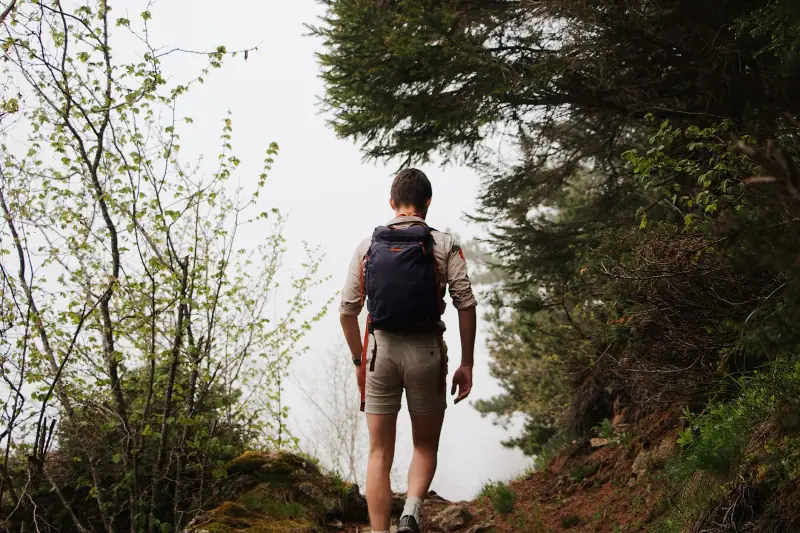
Hiking in the Gargano: The Best Trails in Puglia
The best Gargano hikes: Foresta Umbra, Monte Sant'Angelo, the wild coast and trails between sea and forest in northern Puglia.
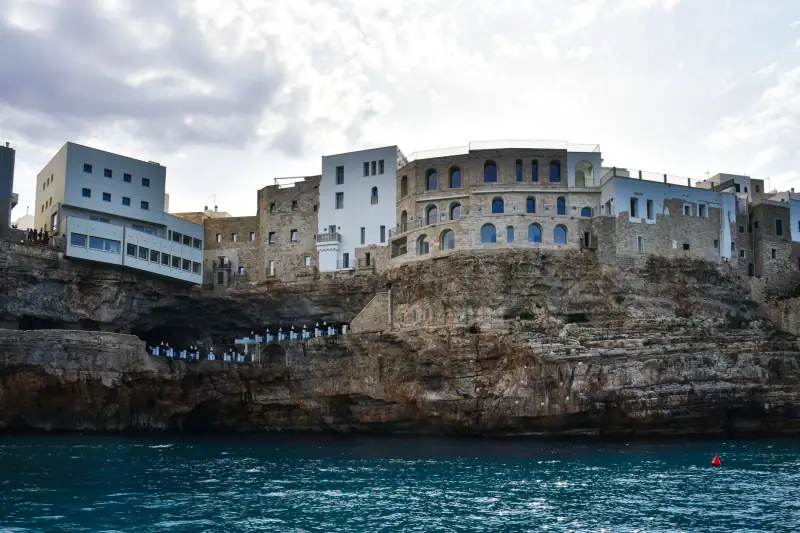
Polignano a Mare sea caves: boat or kayak, prices and booking
Polignano a Mare sea caves by boat or kayak: real prices, duration, best season, booking ahead or on the spot, and tips for avoiding rough seas.
Bari or Brindisi airport: which one to choose for visiting Puglia?
Bari Karol Wojtyła or Brindisi-Salento? Full comparison (flights, distances, prices, shuttles) to pick the right airport for your Puglia itinerary.
Ready-made
Puglia itineraries
4 days
Gargano in 4 Days: A Complete Itinerary for the Promontory
4-day Gargano itinerary: Vieste, Peschici, Foresta Umbra, Monte Sant'Angelo, sea caves and wild beaches. Day-by-day plan with practical tips.
Can be adapted in the planner
3 days
3 days in Salento: a complete itinerary through Lecce, Gallipoli and the secret coves
3 days in Salento: baroque Lecce, turquoise beaches, Gallipoli and Otranto. Detailed plan with transport and accommodation tips.
8 days
Puglia in 8 Days With Kids: Itinerary, Stops and a Relaxed Pace
Itria ValleyGallipoli