Plan your trip
Best time to visit the Philippines: a month-by-month guide
We may earn a commission when you book through links on this page, at no extra cost to you. We don't visit or try the places we cover: we summarize published sources. How we work
In short
- The best time is December to April (dry season): sunny weather, little rain and a calm sea. November offers the best weather-to-price balance.
- Typhoons mainly strike from June to November, peaking in August and September; Luzon is the most exposed, Palawan and the southern Visayas less so.
- Siargao surf is best from August to November; Banaue rice terraces look best in March-May.
- For a first trip, aim for mid-November to the end of March.
The Philippines stretches more than 1,800 km (1,120 mi) from north to south and has more than 7,600 islands: there is no single Philippine weather, but dozens of microclimates. Understanding the archipelago’s climate is essential to planning a successful trip. Here is your complete guide to choosing the best time for your destinations and activities.
The two main seasons in the Philippines
The dry season: tag-araw (November to May)
The dry season, called tag-araw in Tagalog, runs from November to May. It is the high tourist season, marked by:
- Clear, sunny skies most of the time
- Rare, brief rain
- A calm sea, ideal for water activities
- Temperatures between 24 and 32 °C (75-90 °F) depending on the region and month
- Better underwater visibility
November to January are the coolest and most pleasant months. From February to May temperatures climb, with April and May the hottest months (up to 38 °C / 100 °F in some parts of Luzon).
The rainy and typhoon season: tag-ulan (June to October)
The rainy season (tag-ulan) runs from June to October. It is marked by:
- Heavy rainfall, often in intense but brief tropical downpours
- Typhoons that can be violent, especially from July to September
- A rougher sea that makes some boat trips difficult or canceled
- Stable temperatures (27-30 °C / 81-86 °F) but very high humidity (80-90%)
- Much lower lodging prices and fewer tourists
The Philippines is one of the countries hit hardest by typhoons worldwide (20 to 30 typhoons a year on average). The north of the country, especially Luzon, is particularly vulnerable.
Month-by-month calendar
January
Rating: 5/5
January is one of the best months to visit the Philippines. The weather is sunny, cool and pleasant (24-28 °C / 75-82 °F). The sea is calm. The New Year festivities are over and the crowds thin out. It is the ideal time for Palawan, Boracay and the Visayas. The only drawback: prices stay high after the holidays until mid-January.
February
Rating: 5/5
February is excellent. Ideal weather, a perfect sea, and the dry season is in full swing. Some rain in the Cebu and Bohol area but nothing bothersome. It is the most popular period for divers and island-hopping fans. Prices are reasonable outside Valentine’s Day.
March
Rating: 5/5
March is ideal for Banaue (green rice terraces), Palawan and all of the Visayas. Temperatures start to rise but stay pleasant. It is still high season with good weather conditions across the country. Holy Week (Semana Santa) brings heavy local crowds.
April
Rating: 4/5
April is hot (30-35 °C / 86-95 °F) and sunny. It is the driest month of the year for Manila and Luzon. Ideal for beaches but tiring for hikes and land excursions. Boracay is packed during the Philippine school holidays. Best month for diving at Tubbataha Reef (season roughly mid-March to mid-June, by dive cruise only; check dates with operators).
May
Rating: 3/5
May is the pivot month. Hot and humid in the north (Luzon), still pleasant in Palawan and the southern Visayas. The first rains begin in Manila. Prices drop slightly at the end of the month. Still a good time for Palawan and Siargao.
June
Rating: 2/5
The start of the rainy season. Rainfall intensifies over Luzon and the northern Visayas. Palawan remains acceptable. The first tropical depressions can disrupt inter-island flights. Prices drop significantly. Siargao starts to get good waves for surfers.
July
Rating: 2/5
Active typhoon season. Avoid Luzon and the northern Visayas. Palawan enjoys milder weather thanks to its geographic position. Siargao attracts surfers with its powerful waves.
August
Rating: 2/5
The most active month for typhoons. Strongly discouraged except for Siargao (exceptional surf) and southern Palawan. Inter-island transport is frequently disrupted. Prices are at their lowest of the year.
September
Rating: 2/5
Still risky for typhoons, especially on Luzon. Rain remains heavy. However, some seasoned travelers take advantage of rock-bottom prices for beach stays in Palawan or the southern Visayas, accepting the weather risk.
October
Rating: 3/5
The rainy season starts to calm down. Typhoons become less frequent. Cebu and Bohol become accessible again. Prices are still attractive. It is a transition period, with splendid days alternating with showers.
November
Rating: 4/5
November marks the start of the dry season on most islands. Excellent for Palawan, Cebu, Bohol and Siargao. The sea gradually calms. Prices stay reasonable before the holidays. This is the month with the best balance of weather and price.
December
Rating: 4/5
December is excellent up to the end-of-year holidays. The climate is ideal (cool, sunny). Christmas festivities are very lively in the Philippines (the country starts decorating in September!). Prices generally rise around December 20 for the holidays. The east coast of Luzon and Samar can still get rain early in the month.
The best time by destination
El Nido and Palawan
Ideal: November to May. Palawan has a microclimate sheltered by its mountains. The dry season is very pronounced: the sky is blue, lagoons are clear and boat excursions run in perfect conditions. The rainy season (June-October) disrupts sea excursions and the famous lagoon tours, often canceled in bad weather. Avoid July-August.
Boracay
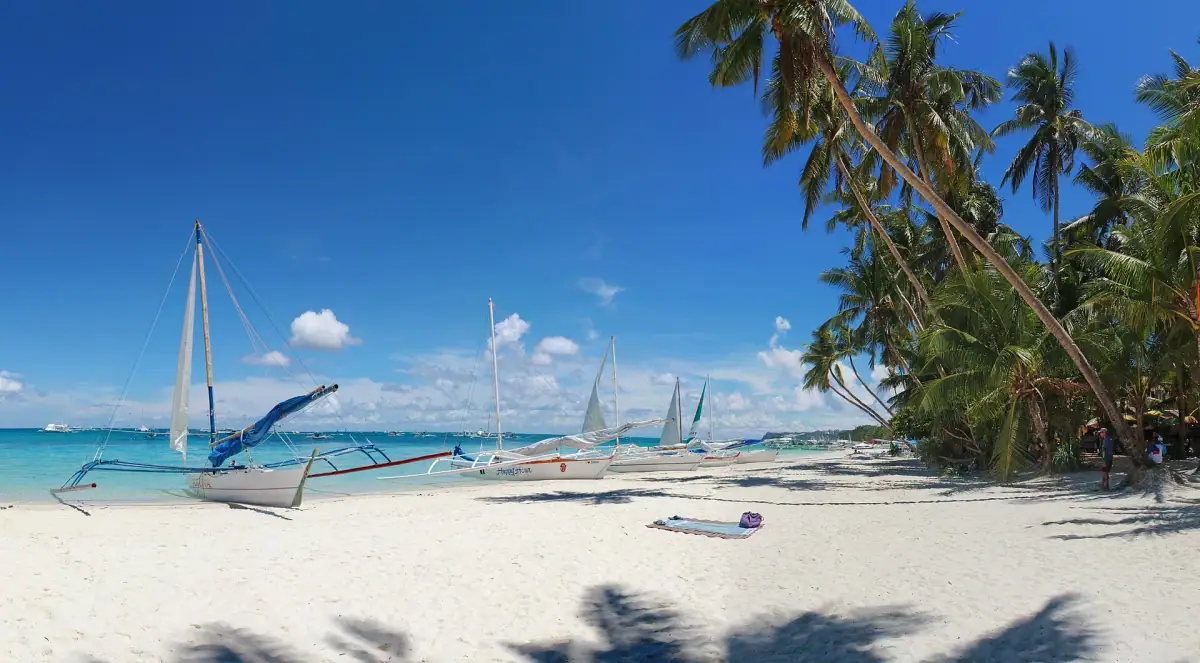
Ideal: November to May (especially December to March). White Beach faces west: the sea is calm and ideal for swimming in the dry season. In the rainy season, wind and waves make swimming difficult on the main beach. On the other hand, the east coast (Bulabog Beach) is perfect for kitesurfing from October to March thanks to the trade winds.
Cebu and the Visayas
Ideal: December to May. Cebu is relatively well protected from typhoons thanks to the geography of the Visayas. December to April are excellent months for diving, island hopping and visiting Bohol’s Chocolate Hills. The whale shark experience in Oslob is available all year but better in the dry season.
Siargao
Ideal for surfing: August to November (powerful waves). Ideal for non-surfers: March to May. Siargao is the surf capital of the Philippines. The best waves at Cloud 9 arrive with the northeast wind from August to November. The rest of the year, the sea is calmer for snorkeling and island hopping.
Banaue and the rice terraces (Luzon)
Ideal: March to May. The terraces are green and the planting season is often visible. December to February can be misty and cool. The rainy season (June-October) makes access roads difficult.
Manila
Ideal: November to January. The capital is livable in the cool dry season (24-28 °C / 75-82 °F). Avoid May-October because of the stifling heat and occasional typhoons. Manila is rarely a destination in itself but a transit point.
Hotels in the Philippines
Book with free cancellation, pay at the property.
Festivals and events worth planning around
Sinulog Festival (Cebu, third Sunday of January): the most colorful and lively festival in the Philippines. Thousands of dancers parade in dazzling costumes through the streets of Cebu to honor the Santo Niño. An unforgettable experience.
Panagbenga Festival (Baguio, February): Baguio’s flower festival in the Cordillera mountains. Flower floats and traditional dances fill the city.
Semana Santa (March-April): Holy Week is celebrated with unique fervor in the Philippines, especially in Pampanga (processions and re-enactments of the Passion of Christ) and in Cutud, where devotees have themselves crucified (a practice disapproved of by the Catholic Church; check with local authorities whether it is allowed in the year of your trip).
Pahiyas Festival (Lucban, May): houses in the village of Lucban in Quezon are decorated with kiping (colored rice wafers) and vegetables as an offering to Saint Isidore the Farmer.
Kadayawan Festival (Davao, August): Mindanao’s festival of nature and ethnic diversity, with tribal dances and impressive flower displays.
Average temperatures and rainfall in Manila
| Month | High | Low | Rainfall | Sunshine |
|---|---|---|---|---|
| January | 28 °C (82 °F) | 21 °C (70 °F) | 15 mm (0.6 in) | ⭐⭐⭐⭐⭐ |
| February | 29 °C (84 °F) | 22 °C (72 °F) | 12 mm (0.5 in) | ⭐⭐⭐⭐⭐ |
| March | 31 °C (88 °F) | 23 °C (73 °F) | 18 mm (0.7 in) | ⭐⭐⭐⭐⭐ |
| April | 33 °C (91 °F) | 25 °C (77 °F) | 22 mm (0.9 in) | ⭐⭐⭐⭐ |
| May | 33 °C (91 °F) | 26 °C (79 °F) | 130 mm (5.1 in) | ⭐⭐⭐ |
| June | 32 °C (90 °F) | 25 °C (77 °F) | 250 mm (9.8 in) | ⭐⭐ |
| July | 31 °C (88 °F) | 25 °C (77 °F) | 430 mm (16.9 in) | ⭐ |
| August | 30 °C (86 °F) | 25 °C (77 °F) | 420 mm (16.5 in) | ⭐ |
| September | 30 °C (86 °F) | 24 °C (75 °F) | 350 mm (13.8 in) | ⭐ |
| October | 30 °C (86 °F) | 24 °C (75 °F) | 210 mm (8.3 in) | ⭐⭐ |
| November | 29 °C (84 °F) | 23 °C (73 °F) | 100 mm (3.9 in) | ⭐⭐⭐ |
| December | 27 °C (81 °F) | 22 °C (72 °F) | 40 mm (1.6 in) | ⭐⭐⭐⭐ |
Bottom line
For a first trip to the Philippines, aim for mid-November to the end of March. You get the best of the dry season, with:
- Beautiful weather on all the main islands
- A calm sea for water activities
- Prices still accessible (outside the end-of-year holidays)
- All islands accessible and operating
If your budget is tight and you can accept a bit of rain, May and October are transition months with good weather at prices often below high season (roughly 20 to 40% lower; check current rates).
See our complete Philippines guide to prepare your trip in detail.
Frequently asked questions
What is the best time to go to the Philippines?
The best time is December to April (dry season). The weather is sunny, rain is rare and the sea is calm. November and early December offer an excellent weather-to-price balance before the holidays.
When should you avoid the Philippines because of typhoons?
Typhoons strike mainly from June to November, peaking in August and September. Northern Philippines (Luzon) is the most exposed. Palawan and the southern Visayas are less affected by typhoons.
Can you visit the Philippines in July-August?
Yes, but with risks. Palawan (El Nido, Coron) and Siargao are relatively spared. Avoid Luzon and the northern Visayas. Prices are much lower and sites less crowded. Build in flexible days for inter-island transport.
When should you go to see whale sharks in Oslob?
Whale sharks are present in Oslob (Cebu) all year, but the experience is best from November to May with a calm sea and good visibility (sightings are not guaranteed and local rules change: check with the municipality of Oslob). The December to March season is especially recommended.
When is the best time for the Banaue rice terraces?
Visit Banaue in March-April for green terraces in full cultivation. July-August also has lovely greenery. Avoid February, when the terraces can look dull. The dry season (December-April) is better for access roads.
More Philippines guides
Keep reading
Philippines travel budget: what a trip costs in 2026
How much does a trip to the Philippines cost? A budget by category: flights, lodging, food, transportation and activities.
Diving in the Philippines: the best dive sites and wrecks
Guide to diving in the Philippines: best dive sites, wrecks, marine life, seasons and tips for divers of all levels.

Where to stay in Cebu: the best lodging by area
Where to stay in Cebu City and nearby? Hotels and resorts for every budget, from downtown to the beaches of the south coast.
Ready-made
Philippines itineraries

10 days
The Philippines in 10 days with kids: stops, pace and travel times
Cebu (Mactan)Bohol (Panglao)Boracay
12 days
The Philippines in 12 days without a scooter or car: a realistic itinerary
ManilaEl NidoCoronManila
10 days
Cebu, Bohol and Siargao: 10 Days in the Visayas
Cebu CityPanglaoGeneral Luna