Where to stay
Where to stay in Inari: the best accommodation in the heart of wild Lapland
We may earn a commission when you book through links on this page, at no extra cost to you. We don't visit or try the places we cover: we summarize published sources. How we work
In short
- Inari village suits travelers without a car; the lake shores and wilderness lodges (10 to 30 km / 6 to 19 mi out) are darker but need a car.
- Expect about €70-130 a night (~$80-150) for a simple cottage or hotel room, €150-350 (~$175-405) for a cabin with private sauna, and €400-900 (~$465-1,045) for premium aurora cabins.
- Inari is about 335 km (208 mi) north of Rovaniemi (about 4 hours by car); the nearest airport is Ivalo (IVL), about 50 km (31 mi) away.
- Book 6 to 9 months ahead for Christmas and New Year; supply is much smaller than in Rovaniemi or Levi.
Inari is one of the wildest and most authentic destinations in all of Lapland. Far from the bustle of Rovaniemi and the crowds of Levi, this small Finnish village on the shore of the lake of the same name, one of the largest in Finland, offers total immersion in Arctic nature and Sámi culture. Choosing your accommodation well in Inari means securing a truly out-of-the-ordinary Lapland experience.
In this remote region, accommodation is more limited than elsewhere, but often of remarkable quality. From lakeside lodges to cabins designed for the northern lights, and wooden cottages with a private sauna, here is everything you need to know to find the ideal place to stay in Inari.
Where to stay in Inari: the areas
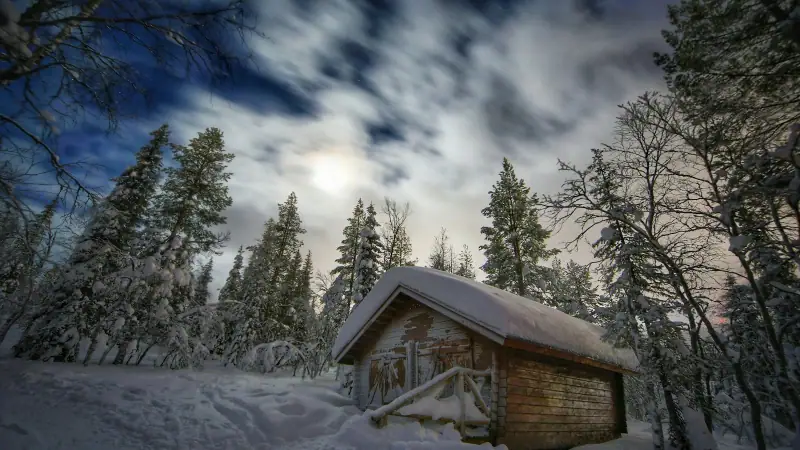
Inari is a compact village, and the question of area matters less than in Rovaniemi or Levi. Still, some important distinctions exist between the different sectors.
Inari village (center)
The village center groups the few services available: a supermarket, restaurants, the Siida museum, the lake jetty and a few accommodations. Staying in the heart of the village lets you walk to the main attractions and do without a car for short outings.
Best for: travelers without a car, those who want to be near the Siida museum and excursions organized from the village, families with young children. Drawback: less privacy, skies slightly brighter than in the open countryside (although light pollution remains minimal in Inari).
The shores of Lake Inari
A few kilometers from the center, on the lake’s banks, several lodges and cottages offer direct access to the water. In summer, it means kayaking, fishing and swimming. In winter, you enjoy the frozen lake for snowmobile rides or ice fishing, with the lake shimmering under the northern lights.
Best for: nature lovers, couples, anglers, photographers looking for breathtaking landscapes. Drawback: a car is needed to reach the village, smaller choice.
The wilderness areas (forests and fells)
Within 10 to 30 km (6 to 19 mi) of Inari, a few isolated lodges sit deep in the boreal forest or at the foot of the tunturi hills. These exceptional places guarantee total darkness for watching the aurora, far from any artificial light.
Best for: aurora chasers, photographers, lovers of absolute Arctic silence. Drawback: total isolation (bring supplies), a car is essential, sometimes hard to reach in winter without a suitable vehicle.
Accommodation in Inari
Compare lodges, cottages and aurora cabins by Lake Inari, with free cancellation available.
Types of accommodation in Inari
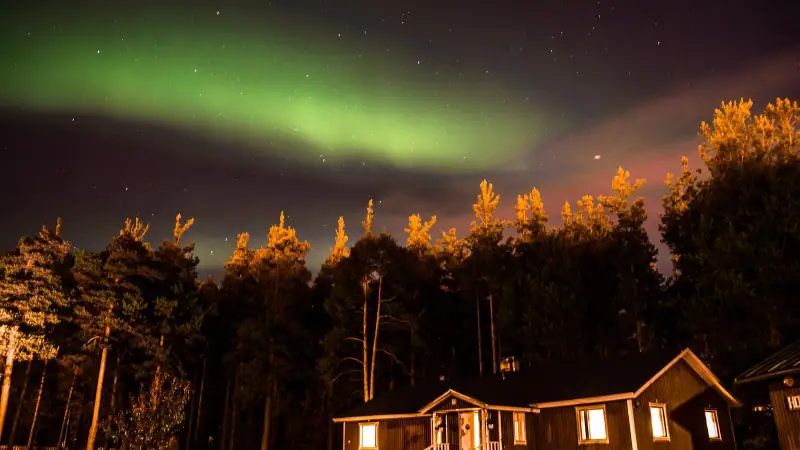
Lakeside lodges and cottages
This is Inari’s iconic accommodation. These wooden chalets, often in traditional Finnish style, are built a few meters from the lake and almost always have a sauna, standard in this region. Some even offer a savusauna (a traditional Finnish smoke sauna with no chimney, where smoke fills the room before being vented) or a sauna floating on the water, for a truly authentic experience.
These lodges are generally run by small local operators or families who live there. Human contact is often part of the stay, and the owners are usually excellent guides to local activities.
Strengths: total immersion, private sauna, direct lake access, authentic atmosphere, ideal for the aurora. Watch out for: book early, as the number of cottages is limited. Check the kitchen equipment if you plan to cook for yourself.
Village hotels
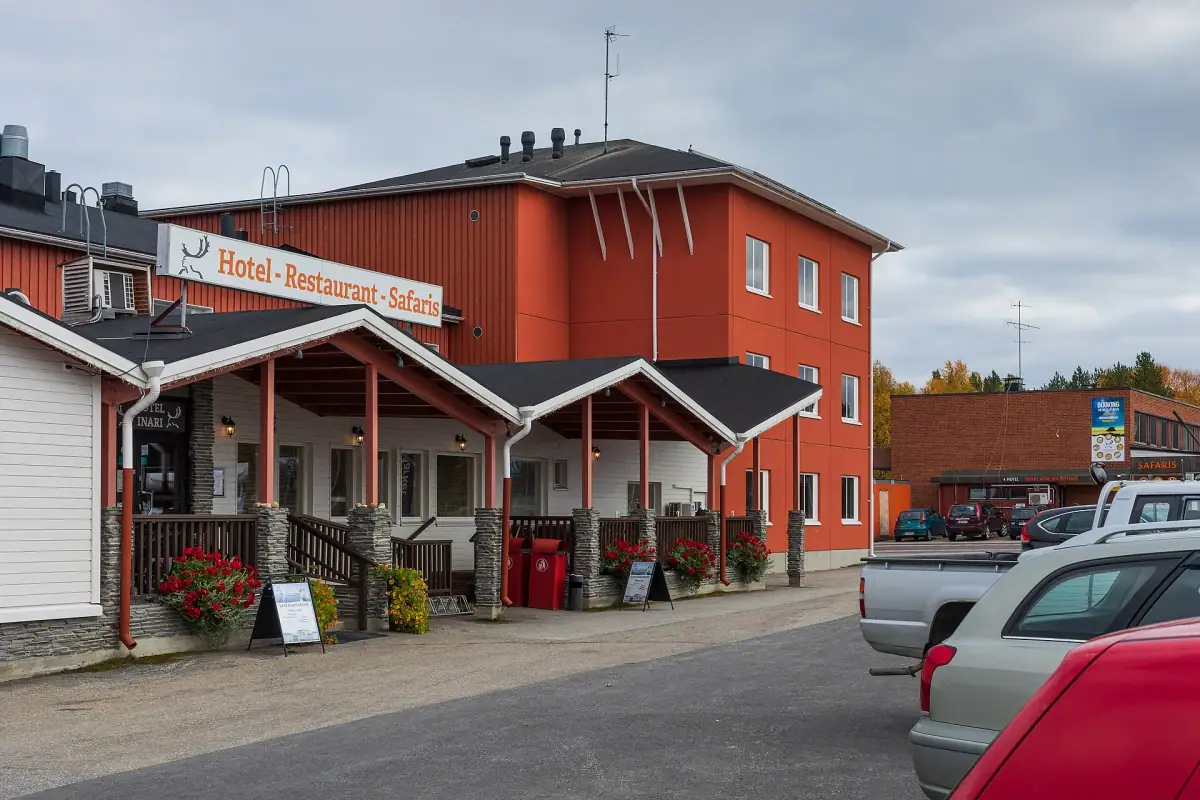
Inari has a few hotels in the village itself, offering standard rooms with services included. They suit travelers who prefer the convenience of a reception, a restaurant on the premises and organized services.
They often serve as a base for organized excursions: reindeer safaris, ice fishing, snowmobile trips and guided visits of the Siida museum. Rates are generally more accessible than at high-end lodges.
Strengths: classic comfort, restaurant often of good quality with Lappish cuisine, easy excursion booking. Watch out for: less immersion in nature, an experience that is sometimes more “conventional”.
Aurora cabins and glass cottages
Several premium places around Inari offer cabins specially designed for watching the northern lights, with a transparent roof or large windows opening straight onto the northern sky. Some also include an outdoor hot tub or a sauna to warm up between viewing sessions.
These exceptional experiences are especially popular for honeymoons, romantic trips or simply for those who want to experience Lapland in all its magic.
Strengths: unique experience, stunning setting, unforgettable memories, careful design. Watch out for: very high rates (often €400 to €900 a night, ~$465-1,045), limited availability to book several months ahead.
Sámi stays and cultural accommodation
A handful of operators offer stays directly tied to Sámi culture: siidas (traditional family groupings of reindeer herders, the Sámi social unit), kotas (conical tents), or accommodation within reindeer farms. These immersive stays often include traditional meals, accounts of the Sámi people’s culture and activities linked to reindeer herding.
Strengths: deep connection with local culture, authenticity, educational experience. Watch out for: limited and often seasonal supply, booking needed well in advance.
Activities in Inari
Reindeer safaris, ice fishing, aurora outings and cultural visits from Inari.
Accommodation budget in Inari by season
Winter high season (December to March)
The most popular season, driven by the northern lights, snow, ice activities and the Christmas atmosphere. It is also the most expensive, with a marked peak over the year-end holidays.
- Simple hotel room: €80-150/night (~$93-175)
- Cottage or chalet (2-4 people): €150-350/night (~$175-405)
- Premium lodge or aurora cabin: €400-900/night (~$465-1,045)
Tip: for Christmas and New Year (Dec 20 to Jan 5), book 6 to 9 months ahead. Because Inari is less known than Rovaniemi, there is sometimes still availability, but high-end lodges go fast.
Autumn (September to November)
September marks the start of the northern lights (after the equinox) and brings the spectacular colors of ruska, the Lapland phenomenon in which foliage, heather and birches turn ocher, orange and red for about ten days. Rates are more accessible than in midwinter, and the area is less busy.
- Hotel room: €70-130/night (~$80-150)
- Cottage: €100-250/night (~$115-290)
Summer (June to August)
The midnight sun turns Inari into an entirely different destination, bright and lively. Lake Inari lends itself to boating, fishing and kayaking. Some lodges close in June-July, but the supply of lakeside cottages remains good.
- Hotel room: €60-120/night (~$70-140)
- Cottage: €80-180/night (~$93-210)
How to get to Inari
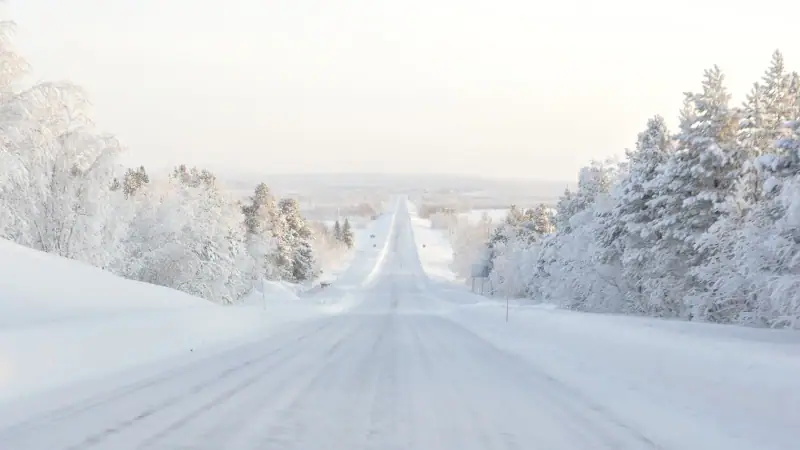
Inari is quite isolated. That is part of its charm, but it takes a little organization for lodging.
By air: the nearest airport is Ivalo (IVL), about 50 km (31 mi) from Inari (40-45 minutes by car). Ivalo is served from Helsinki with direct flights in winter, and sometimes from other Finnish cities. In the high tourist season, charter flights from several European countries land at Ivalo.
By car: from Rovaniemi, allow about 335 km (208 mi) on route 4 (E75), about 4 hours of driving (more in winter conditions with studded tires). Winter driving on icy roads requires studded tires, so check that your rental car has them.
By bus: bus lines link Rovaniemi to Inari, but frequencies are limited and the trips long. A car remains by far the most practical way to get around this region.
Car rental in Ivalo
Essential for exploring Inari and deep Lapland. Compare the offers.
Choosing your accommodation by priority
Priority: northern lights
Choose accommodation away from the village, preferably on the lake side or in a forest area. Cabins with a glass roof are the ideal solution, but well-insulated ordinary cottages with a large deck or direct lake access work very well too. The Inari area has some of the best dark skies in Finland.
Tip: book at least 3 nights to maximize your chances of seeing the aurora, because clear skies do not come on demand.
Priority: Sámi culture
Staying in or very near Inari village gives you easy access to the Siida museum (the best Sámi museum in Europe), Sámi handicraft shops and operators offering authentic cultural activities. Some accommodations offer themed stays in partnership with Sámi families.
Priority: nature and hiking
Urho Kekkonen National Park is one of the largest wilderness areas in Finland. Its main entrances (Saariselkä, Kiilopää) are about 70 km (43 mi) south of Inari village. Choose accommodation on the Saariselkä side for direct access to the hiking trails.
Priority: fishing and lake activities
Lake Inari, with its thousands of islands and fish-rich waters, is a paradise for anglers. Cottages directly on the shore with a jetty let you cast a line from your accommodation. In winter, ice fishing is widely practiced from the frozen shores.
When to book your accommodation in Inari
Accommodation supply in Inari is significantly smaller than in Rovaniemi or Levi. Premium lodges and aurora cabins are often full several months ahead for the winter season. Here is a rough guide:
- December-January (Christmas, New Year): book 6 to 9 months ahead.
- February-March (peak aurora season): book 4 to 6 months ahead.
- September-October (ruska + early aurora): book 2 to 3 months ahead.
- Summer (June-August): book 1 to 2 months ahead.
Tip: if you travel as a family or group, cottages are booked for a minimum period (often 2 or 3 nights). Check the booking and cancellation conditions carefully when you reserve.
What not to forget during your stay in Inari
Don’t skip the sauna! In Finland, the sauna is not a luxury but a deeply rooted cultural tradition. In Inari, many cottages have a private sauna, so do not hesitate to use it every evening, especially after a day of outdoor activities. If your accommodation has a lakeside sauna, the cold plunge (or into the ice in winter) after the sauna is an experience that will stay with you.
Plan your groceries ahead. If you stay in an isolated cottage, know that Inari’s shops are limited (one supermarket, a few grocery stores). Stock up before you arrive, especially if you arrive on a weekend or in the evening.
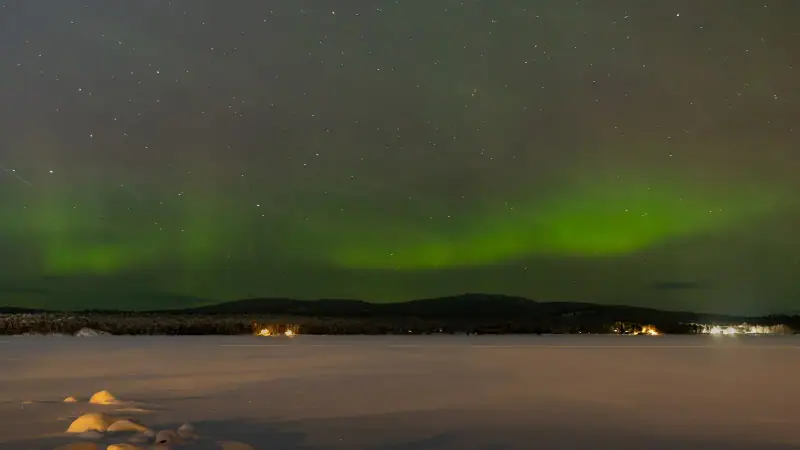
Silence and stars. Inari offers a darkness and silence that are rare in Europe. Take advantage of it to look at the night sky, even without northern lights; the stars are stunning in this Arctic sky free of light pollution.
Distances are greater than they look. On the map, Inari may seem close to Saariselkä or the Norwegian border. But roads in Lapland are often slow, and winter conditions lengthen trips. Plan your travel well.
Inari is a destination that rewards those who take the time to linger. Far from commercial Lapland, this is where the true wild soul of the Finnish Far North lies, and well-chosen accommodation will be its ideal gateway.
To go further on Inari and Finnish Lapland, see our guides Visiting Inari, Finnish Lapland and Sámi culture.
Frequently asked questions
Where should you stay in Inari to watch the northern lights?
The best accommodation for the northern lights in Inari is isolated lodges and cabins on the edge of the village, away from the few artificial lights. Look for places with a glass roof or large windows facing north. The Inari area has some of the darkest skies in all of Finland, with active aurora nights from September to March.
What budget should you plan for accommodation in Inari?
Expect €70-130 a night (~$80-150) for a simple cottage or basic hotel room, €150-350 (~$175-405) for a comfortable cabin with private sauna, and €400-900 (~$465-1,045) for a premium lodge or high-end aurora cabin. Prices are highest in December-January and March, slightly lower in September-October.
How do you get to Inari from Rovaniemi?
Inari is about 335 km (208 mi) north of Rovaniemi on route 4 (E75), about 4 hours by car. A rental car is strongly recommended because public transport is very limited in this remote region. Buses exist but run rarely. The nearest airport is Ivalo (IVL), about 50 km (31 mi) from Inari.
Is there accommodation with direct access to Lake Inari?
Yes, several lodges and cottages sit right on the shore of Lake Inari, one of the largest lakes in Finland. These places offer a private jetty, kayaking, lake swimming in summer or a cold plunge from the sauna in winter. Search for the keywords 'lakeside', 'ranta' (lakeshore in Finnish) or 'Lake Inari' when booking.
When should you book accommodation in Inari?
For the winter season (December to March), book 3 to 6 months ahead, especially for premium lodges and aurora cabins. For September and October (early autumn, start of the aurora), 2 to 3 months ahead is usually enough. Accommodation supply in Inari is much smaller than in Rovaniemi or Levi, so the earlier you book, the better.
Is it better to stay in Inari or Saariselkä?
Inari offers a more authentic immersion in Sámi culture and immediate proximity to the Siida museum and the lake. Saariselkä, about 70 km (43 mi) to the south, has a ski resort and more tourist infrastructure. If you want wild nature and local culture, choose Inari. If you want to ski or have more entertainment, Saariselkä is better suited.
Is there a sauna in the accommodation in Inari?
Yes, a sauna is almost standard in Inari's cottages, cabins and lodges, an essential Finnish tradition. Most places have a private or shared sauna. Some offer a savusauna (a traditional Finnish smoke sauna with no chimney, where smoke fills the room before being vented) or a floating sauna on the lake, particularly memorable experiences.
More Lapland guides
Keep reading
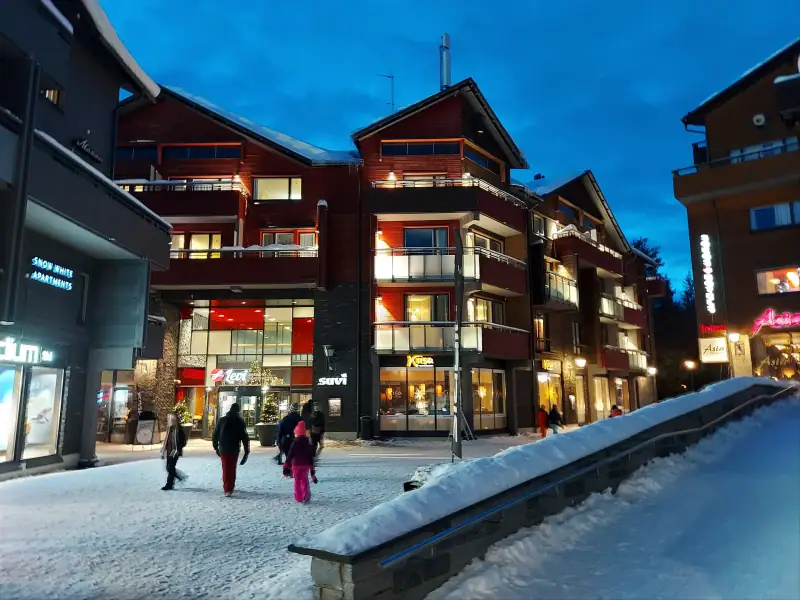
Where to stay in Levi: the best accommodation for skiing and the northern lights
Where to stay in Levi? Ski-in/ski-out chalets, hotels, aurora cabins: a complete guide to the best lodging at Lapland's ski resort.
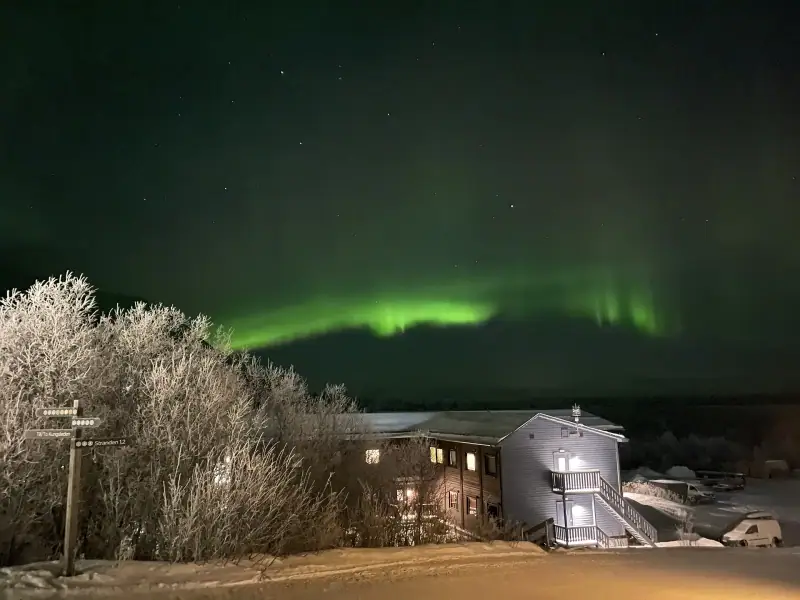
Staying in Abisko for the northern lights without a car: where to sleep from Kiruna
Abisko without a car: where to stay for the northern lights, how to get there from Kiruna by train, STF Turiststation or lodging near the station.
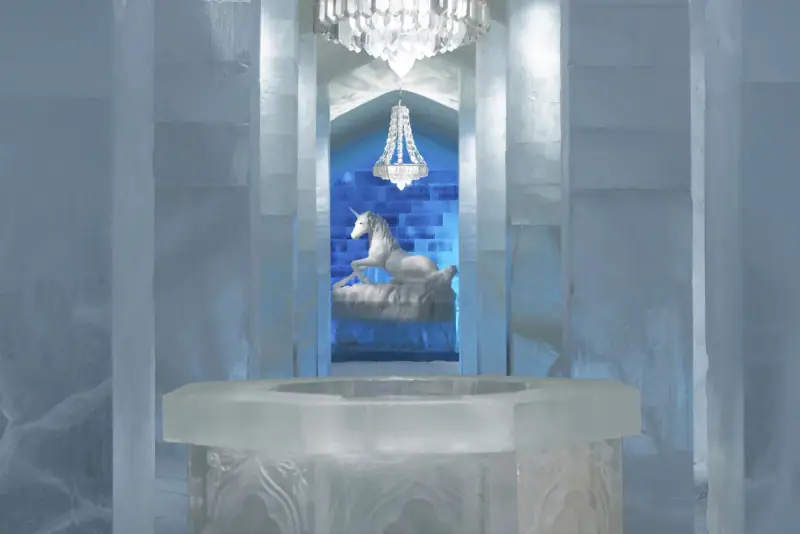
Where to stay in Kiruna: the best accommodation in Swedish Lapland
Where to stay in Kiruna? Town-center hotels, the Jukkasjärvi ICEHOTEL, aurora cabins: a complete guide to the best lodging in Swedish Lapland.
Ready-made
Lapland itineraries
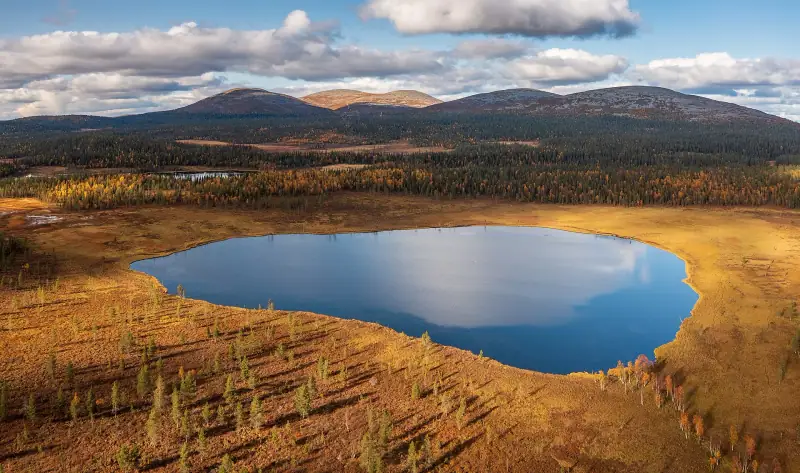
7 days
Lapland in 7 days: a complete one-week itinerary
RovaniemiSaariselkäRovaniemi
7 days
Rovaniemi and Tromsø in one week: is it doable? A realistic itinerary
RovaniemiKilpisjärviTromsø
14 days
Lapland road trip: a 10 to 14-day itinerary by car
RovaniemiSaariselkäInariKarasjokAltaTromsøKiruna