Things to do
Jordan's Desert Castles: Qasr Amra, Kharanah and Azraq
We may earn a commission when you book through links on this page, at no extra cost to you. We don't visit or try the places we cover: we summarize published sources. How we work
In short
- The classic Desert Castles loop from Amman is about 200-250 km (124-155 mi) and takes a full day by rental car: Qasr al-Hallabat, Azraq, Qasr Amra, then Qasr al-Kharanah.
- Qasr Amra, UNESCO-listed since 1985, is the highlight for its 8th-century frescoes; allow at least 1 h to 1 h 15.
- Qasr Amra is included in the Jordan Pass; the other castles are generally free or charge a few dinars (as of October 2026).
- Leave Amman around 7:30-8 am, carry at least 2 liters (about 68 oz) of water per person, and avoid midday heat in summer.
East of Amman, where the roads thin out in a basalt and ochre desert, lies one of Jordan’s most unusual experiences: the Umayyad desert castles. Neither military fortresses nor simple ruins, these 8th-century hunting lodges, caravanserais and leisure retreats reveal a young Islamic world that was refined and open to cultural exchange. Qasr Amra, UNESCO-listed for frescoes of astonishing modernity, Qasr al-Kharanah with the silhouette of a medieval fortress, black Azraq with its volcanic stones, Hallabat with its repurposed Byzantine mosaics: each site tells a different side of Umayyad civilization.
This guide gives you everything you need to plan your trip to the Jordanian desert castles: a presentation of each site, an optimized driving route, practical tips and logistics.
The Umayyad desert castles: historical context
The castles of Jordan’s eastern desert were built mainly under the Umayyad caliphs between the late 7th century and the mid-8th century, a period when Islamic civilization was going through its first great artistic and architectural flowering. The term “castle” is actually a bit misleading: these structures were more leisure palaces, hunting lodges and relay stops on the caravan routes than military strongholds.
The Umayyad caliphs, based in Damascus in Syria, used these retreats in the Jordanian desert to hunt gazelle and onager, negotiate with Bedouin tribal chiefs, and take rest away from court life. The interior decoration of these pavilions (frescoes, mosaics, stucco reliefs) shows multiple influences: Byzantine art, Persian Sassanid art, Arab traditions. These buildings are among the first examples of early Islamic art and, as such, of considerable historical and artistic value.
The fall of the Umayyad caliphate in 750, replaced by the Abbasids who moved the center of power to Baghdad, marked the gradual abandonment of these Jordanian desert residences. Their isolation in arid areas paradoxically helped their partial preservation to this day.
Car rental in Amman
A car is essential for the desert castles circuit. Compare offers from Queen Alia airport or from central Amman.
Qasr Amra: the UNESCO jewel
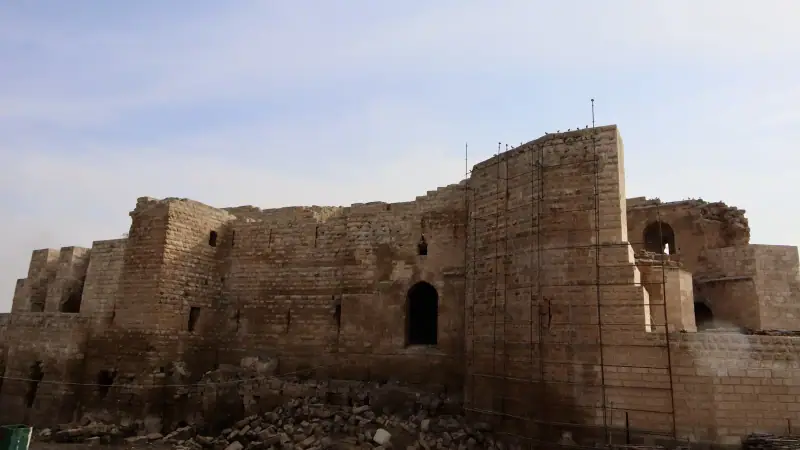
Qasr Amra is without question the centerpiece of the desert castles circuit. This small Umayyad hunting lodge, built between 723 and 743 under the responsibility of Walid ibn Yazid (the future caliph Walid II), then crown prince of Caliph Hisham, has been on the UNESCO World Heritage list since 1985 for frescoes of exceptional preservation and artistic quality.
The frescoes: a window on the 8th century
The interior of Qasr Amra is entirely covered with wall paintings that form one of the best-preserved collections of early Islamic art. The scenes shown are strikingly varied: hunting scenes, bathing scenes (naked women in a hammam, a rare subject in Islamic art), athletes, musicians, and even a depiction of the night sky with Greek constellations in the star room (the apse vault bears what may be the oldest known depiction of the starry sky in Islamic art).
The fresco known as the “Six Kings” shows the great rulers of the world known in the 8th century (you can recognize the Byzantine emperor, the Visigothic king, the Sassanid Persian shah, the Negus of Ethiopia, and others) submitting their attributes of power to the Umayyad caliph. This political iconographic program is strikingly modern for its time.
Architecture of Qasr Amra
The structure is relatively modest in size: a reception hall with three barrel vaults, followed by the semicircular apse, and a few side rooms including the baths (hammam). A well with a water-lifting system completed the whole, ensuring water supply to this desert retreat. The whole is built of pale yellow limestone, which contrasts with the black blocks of volcanic sites such as Azraq.
Access: Qasr Amra is about 85 km (53 mi) east of Amman, on Route 40 toward Zarqa then the desert road east. The trip takes about 1 h 15 to 1 h 30 from central Amman.
Desert castles tours from Amman
Guided visits including Qasr Amra, Kharanah and Azraq are offered from Amman, with transport and a guide who specializes in Islamic art.
Qasr al-Kharanah: the false fortress
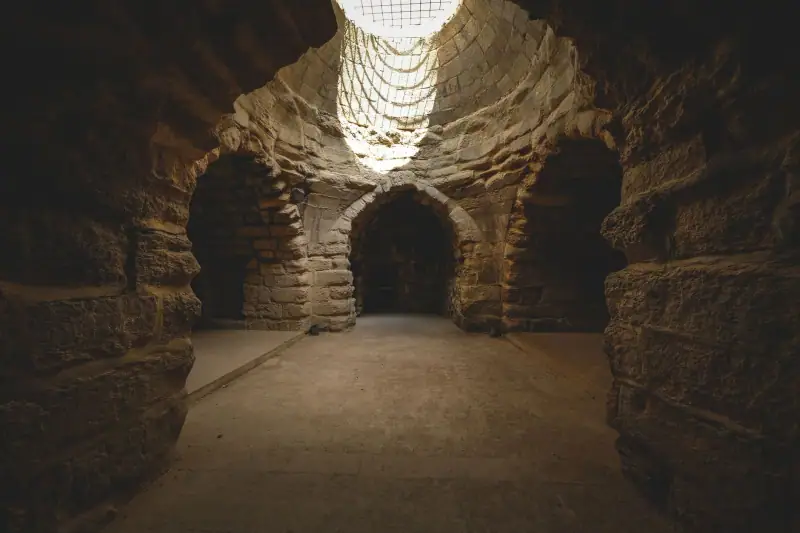
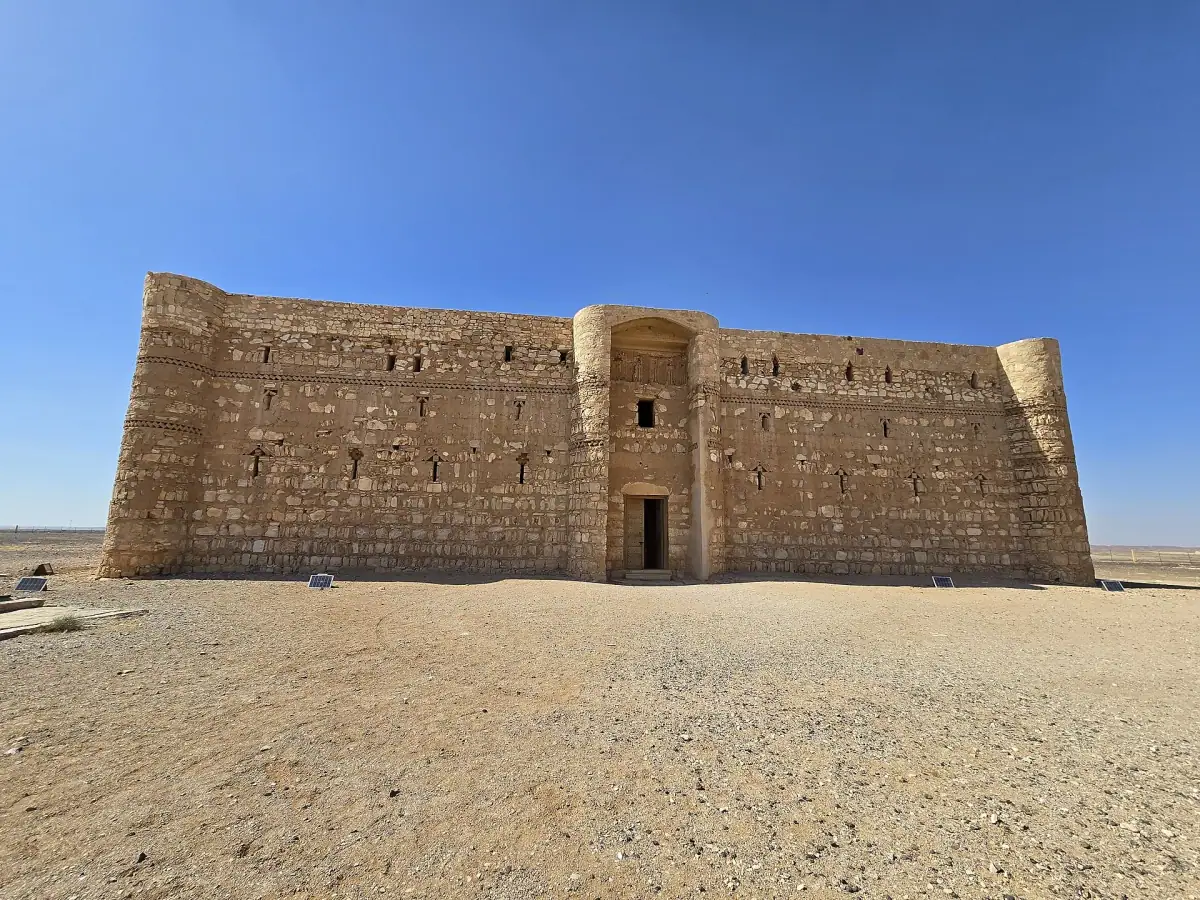
About 16-20 km (10-12 mi) west of Qasr Amra on the same desert road, Qasr al-Kharanah is the desert castle that looks most like a medieval fortress in the traditional sense. Its four round corner towers, arrow slits and thick walls of brownish limestone blocks give it an imposing military look, but specialists agree that Kharanah was not designed for military defense.
Function and architecture
The precise dating of Kharanah is still debated, but an Arabic inscription found inside mentions the year 710 CE, which places the building in the Umayyad period. The interior reveals a two-story layout around a square central courtyard, with many rooms arranged in a row, an organization closer to a caravanserai or a place of meeting and negotiation with Bedouin tribal chiefs than to a leisure palace.
The slits, which look defensive from the outside, would in fact be ventilation and lighting windows that are not functional for defense. The near absence of wells or internal cisterns sufficient to sustain a siege reinforces this interpretation. Kharanah was probably a diplomatic and commercial meeting point between the Umayyad authorities and the desert tribes.
The interior visit is free and lets you explore both floors at will. The roof offers a panoramic view of the surrounding desert plain, spectacular at sunset.
Qasr Azraq: the black basalt fortress
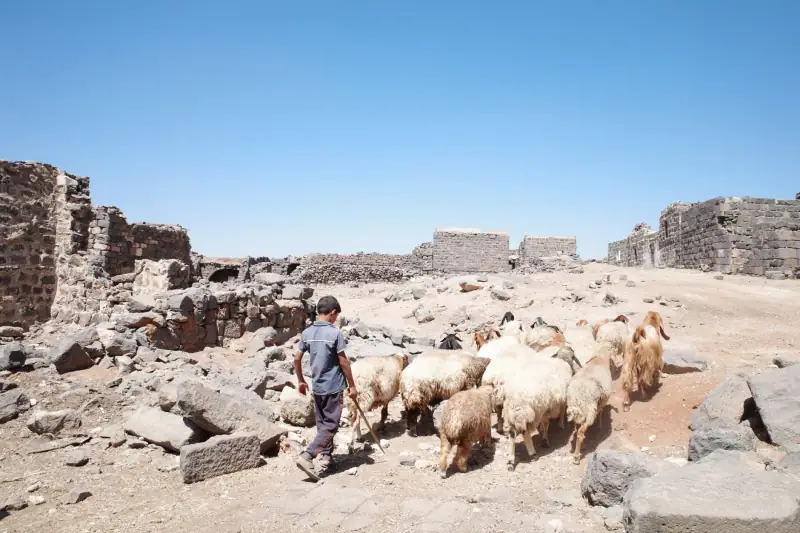
Azraq stands out radically from the other castles on the circuit by its raw material: built entirely of black volcanic basalt, this castle gives the whole a dark, powerful atmosphere that contrasts with the golden tones of Kharanah or Hallabat. It is about 100 km (62 mi) east of Amman, in the Azraq oasis, a unique wetland in this eastern desert, once an important crossroads for caravans and migratory birds.
From ancient Rome to the Ayyubids, then the Umayyads
Azraq’s history is especially rich. The site was fortified by the Romans as early as the 3rd century CE to control this strategic water area in the Syrian desert. The Byzantines took it over, then the Umayyads enlarged it and used it as a water point and relay on the caravan route to the Hejaz. Later, the Ayyubids and Mamluks also occupied or repaired the fortifications; the rebuilding of 1237 is notably attributed to the Ayyubid emir ‘Izz ad-Din Aybak.
The great basalt entrance gate, with its monumental stone doors (not wood as in European castles, but basalt slabs set on stone hinges), is a spectacular and unique architectural element.
T.E. Lawrence, Lawrence of Arabia, set up his headquarters in Azraq Castle during the winter of 1917-1918, during the Great Arab Revolt against the Ottoman Empire. A room is attributed to his stay, which adds a modern chapter to the site’s long history.
The Azraq oasis
Beyond the castle, the Azraq oasis is worth a detour. This wetland, managed by the RSCN as a nature reserve, is a major stopover for migratory birds on the Eurasia-Africa flyway. During spring migration (March-May) or autumn migration (September-November), hundreds of bird species stop at Azraq, including species rare for the region. An RSCN visitor center lets you rent observation hides.
Qasr al-Hallabat: the Byzantine-Umayyad conversion
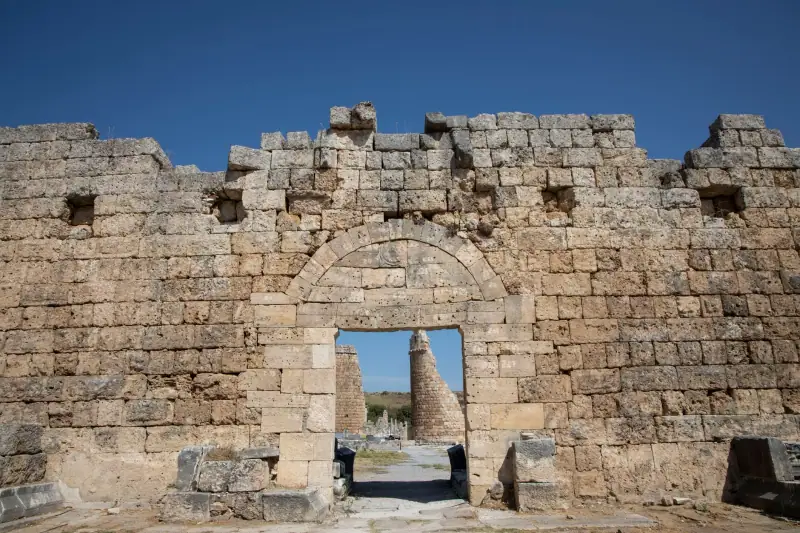
The least visited of the four main castles, Qasr al-Hallabat nonetheless offers a particularly interesting historical reading. About 35 km (22 mi) northeast of Zarqa (so roughly 60-70 km / 37-43 mi from Amman), it stands out for its double architectural identity: a 2nd-century Roman fort, enlarged into a Byzantine monastery in the 6th century with mosaics and Greek inscriptions, then turned into an Umayyad palace in the 8th century with a mosque added.
The different historical layers are visible in the stones themselves: reused Roman blocks, partly erased Byzantine Greek inscriptions, Umayyad additions in differently cut limestone. It is an open book of stone on four centuries of successive civilizations in the Transjordanian desert.
Right next to Hallabat is Hammam al-Sarah, a small 8th-century Umayyad bath complex (hammam) that probably accompanied the palace; baths were a constant in these leisure residences. The partly preserved mosaics of Hallabat and the stucco decorations of the hammam complete the visit.
Hotels in Amman as your starting base
Amman is the ideal base to explore the desert castles in a day. Compare lodging in every price range.
Optimized itinerary: the desert castles loop
The most efficient way to visit the desert castles is a loop starting and ending in Amman, heading northeast then coming back via the south. Here is the recommended itinerary for a full day.
Early departure from Amman (7:30-8 am)
Leave Amman early to maximize your time at the sites. The castles are often empty (and more photogenic) early in the morning. The morning cool is also a welcome advantage in the desert, especially in summer when temperatures can exceed 35 °C (95 °F) at midday.
Stop 1: Qasr al-Hallabat (around 9 am)
First stop at Qasr al-Hallabat, about 60-70 km (37-43 mi) from Amman (Route 30 toward Zarqa then Route 30 northeast). Allow 45 minutes to 1 hour to visit Hallabat and the adjacent Hammam al-Sarah. From Hallabat, continue east toward Azraq (about 60-65 km / 37-40 mi).
Stop 2: Qasr Azraq (around 10:30 am)
Visit Qasr Azraq and, if the season and time allow, make a detour through the oasis nature reserve to watch birds. Allow 1 h to 1 h 30 for the castle and oasis. You can have lunch in Azraq town, where a few local restaurants and cafes serve simple meals.
Stop 3: Qasr Amra (around 1:30-2 pm)
Head to Qasr Amra, about 21 km (13 mi) west of Azraq on Route 40. Allow at least 1 h to 1 h 15 for the frescoes; it is the site that deserves the most time and attention. If the light is good in the late afternoon, Amra is especially photogenic.
Stop 4: Qasr al-Kharanah (around 3-3:30 pm)
Finish with Qasr al-Kharanah, about 16-20 km (10-12 mi) west of Qasr Amra on the desert road toward Amman. Allow 30 to 45 minutes for the visit, plus time to climb to the roof for the panoramic view.
Return to Amman (around 5-6 pm)
From Qasr Kharanah, follow the road west to Amman: about 60 km (37 mi), 45 min to 1 hour depending on traffic at the entrance to the capital. You arrive in Amman in the early evening, in time for dinner in the Weibdeh or Rainbow Street area.
Total loop distance: about 230-250 km (143-155 mi) starting and ending in central Amman.
When to go: seasons and weather
Spring (March to May): ideal
The ideal period for the desert castles is spring, particularly April to early May. Temperatures are mild (15-25 °C / 59-77 °F by day), the desert can show touches of ephemeral vegetation after winter rains, and the light is good for photography. Crowds at the sites are moderate.
Autumn (October to November): very good
Autumn offers conditions similar to spring. Temperatures come back down after summer (20-28 °C / 68-82 °F in October), and the end of the high tourist season often means fewer people at the sites.
Winter (December to February): cold but possible
Winter in the Jordanian desert can be cold and windy, with nights close to 0 °C (32 °F). Days often stay sunny and pleasant (10-15 °C / 50-59 °F), but the castles are practically deserted, which can be an experience in itself. Some castles reduce their opening hours.
Summer (June to August): hot but doable early in the morning
Summer is the least recommended period for the desert castles: temperatures regularly exceed 35-38 °C (95-100 °F) at midday in this basalt desert. If you travel in summer, leave very early in the morning (7-7:30 am) to visit the first two castles before the afternoon heat, and plan a break at the hotel from noon to 4 pm before visiting Amra in the late afternoon.
Practical tips for the visit
What to bring
Jordan’s eastern desert is sparsely populated and services are limited. Prepare your day before leaving:
- Plenty of water: Bring at least 2 liters (about 68 oz) of water per person for the day, more in summer. Supply points are rare between the castles.
- Food: Snacks and light meals. The only place with decent dining options is Azraq town, midway.
- Sun protection: High-protection sunscreen, hat, sunglasses. The desert offers little shade.
- Closed shoes: The sites have uneven ground, worn steps and areas of volcanic stones. Avoid flip-flops or slippery city shoes.
- Cash in Jordanian dinars: Entry fees (where applied) are often paid in cash. Bring a few dinars.
Jordan Pass
The Jordan Pass (jordanpass.jo) is a pass that includes entry to about forty tourist sites, including Qasr Amra (as of October 2026). If you plan to visit Petra and several other sites, the Jordan Pass generally represents significant savings compared with separate tickets. Whether it also covers an entry visa depends on your passport: check the official site and your government’s travel advice before you book.
Driving in the desert
The roads connecting the desert castles are paved roads in good condition. A standard car (no need for a 4x4) is enough for the circuit. Signage to the main castles is present from the main roads, but a GPS or offline navigation app (Maps.me or downloaded Google Maps) is recommended for the last kilometers.
Photographing the Qasr Amra frescoes
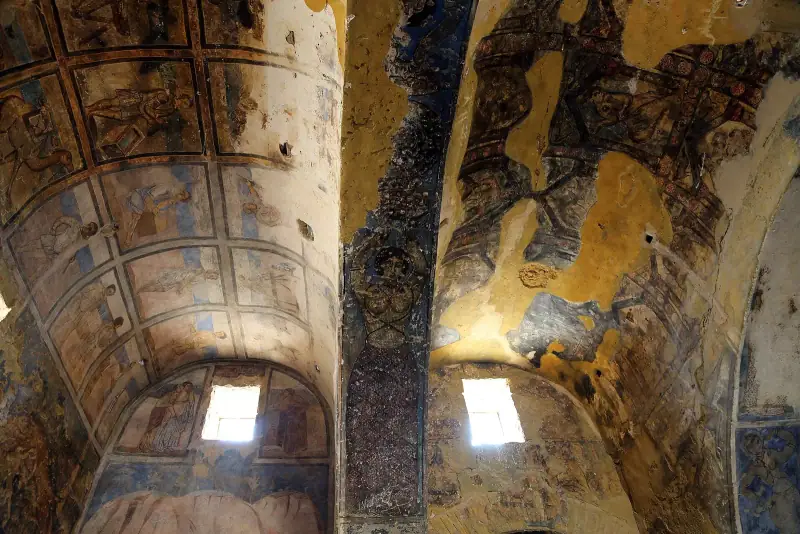
Photography is allowed inside Qasr Amra, but the interior light is low. A tripod or good high-ISO capability is needed to capture the frescoes properly. Avoid flash, which can damage the ancient pigments over the long term. Natural light filters through the small windows and creates dramatic effects in mid-morning.
Fitting the desert castles into your Jordan circuit
The desert castles fit naturally as a day trip from Amman, at the start or end of a stay, before taking the road to Petra or the Dead Sea. Here are a few classic setups:
Option 1: Active arrival day. If you arrive in Amman early in the morning, head straight from Queen Alia airport terminal to the castles circuit. Pick up your rental car at the airport and complete the castles before settling into your hotel in the evening.
Option 2: Northern extension after Jerash. If you visit Jerash (about 50 km / 31 mi north of Amman), you can continue to Hallabat and Azraq in the afternoon, then finish the next morning with Kharanah and Amra before heading down to Amman or the Dead Sea.
Option 3: Dedicated full day. For fans of Islamic history and heritage, a whole day devoted to the castles is the most satisfying. It avoids rushing the sites and lets you take time to read the information signs, observe architectural details and enjoy the changing light on these desert landscapes.
Our guide to the road trip in Jordan places the desert castles in a full 10-day itinerary, and our guide to visiting Amman will help you organize your base in the Jordanian capital. For hikers, hiking in Jordan offers other ways to explore the Jordanian landscape.
Jordan’s desert castles are one of those experiences that surprise even the most seasoned travelers: you expect ruins and you find frescoes of striking modernity, science-fiction-like black basalt fortresses in the desert, and Umayyad structures that have survived fourteen centuries in one of the most stable countries in the Middle East. The half day of driving through this basalt desert is part of the trip, and the solitude of these often little-visited sites is a rare luxury in a world where UNESCO sites draw crowds.
Frequently asked questions
Is Qasr Amra really UNESCO-listed?
Yes. Qasr Amra has been on the UNESCO World Heritage list since 1985, recognized for its exceptionally well-preserved 8th-century Umayyad frescoes. It is one of the few early Islamic art monuments to keep an almost intact painted decoration.
Do you need a guide to visit the desert castles?
No, the desert castles are easy to explore on your own with a rental car. Information signs are present at each site, often in Arabic and English. However, a local guide can enrich the visit to Qasr Amra by explaining the symbolism of the frescoes, which need some historical context to be fully appreciated.
Does the Jordan Pass cover the desert castles?
Qasr Amra is included in the Jordan Pass. The other castles (Kharanah, Hallabat, Azraq) are generally free or charge a modest entry fee (a few Jordanian dinars). Check the current conditions on the official Jordan Pass site (jordanpass.jo) before you leave.
Can you do the desert castles in one day from Amman?
Yes, it is the classic "Desert Castles Loop": a loop of about 200 km (124 mi) from Amman that can be done in one full day with a rental car. The recommended order is Qasr al-Hallabat → Azraq → Qasr Amra → Qasr al-Kharanah → back to Amman, an eastward loop then a return via the castles in geographic order.
When are the desert castles open?
Qasr Amra is generally open daily from 8 am to 6 pm (summer hours) or 8 am to 4 pm (winter hours). Qasr Azraq follows similar hours. Kharanah is often accessible without formal entry fees. Hours vary by season and may change: check locally when you arrive in Jordan or with the Department of Antiquities (doa.gov.jo).
How do you reach the desert castles without a car?
Local agencies offer organized excursions from Amman covering the main castles, with guide and transport. Taxis can be negotiated by the day from central Amman (expect a flat fee for the day). The castles are hard to reach by regular public transport because they are scattered across the desert east of the capital.
More Jordan guides
Keep reading
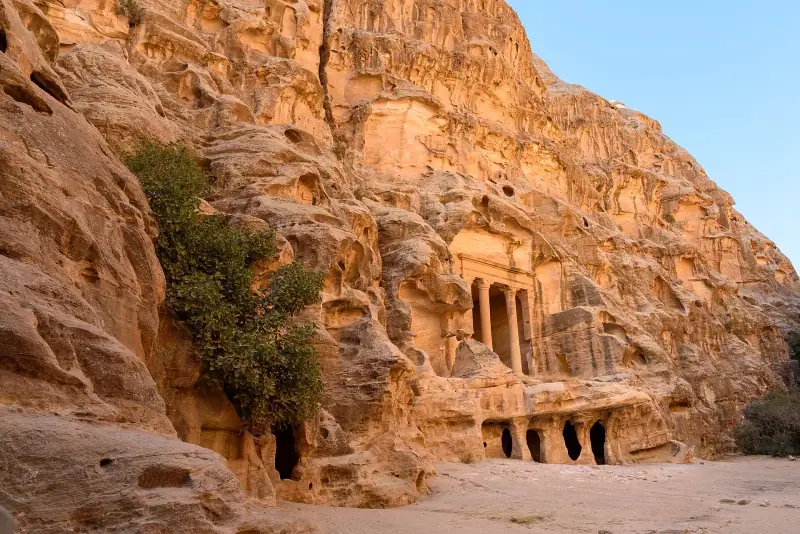
Little Petra (Siq al-Barid): Getting There Without a Car, Prices and Visit Time
Little Petra is 9 km from Wadi Musa: taxi or walk, ticket, official hours, visit time, the Painted House and the trail to the Monastery.
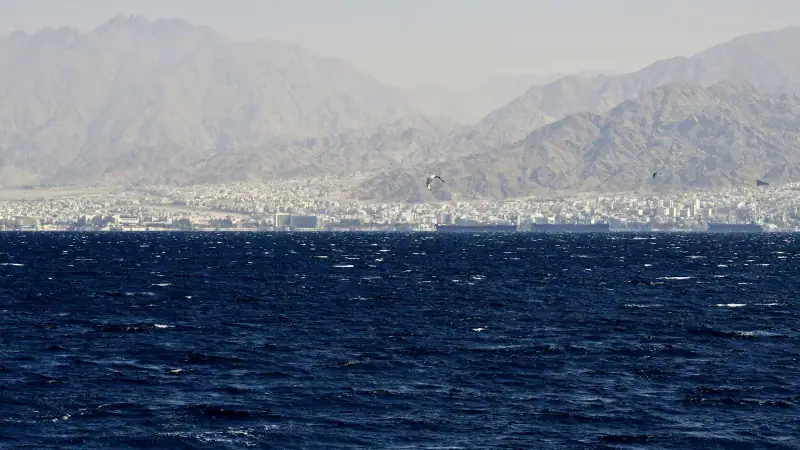
Diving in Aqaba: The Complete Guide to Jordan's Red Sea
All about diving in Aqaba: best sites, dive centers, snorkeling, conditions and tips for exploring the Red Sea reefs in Jordan.
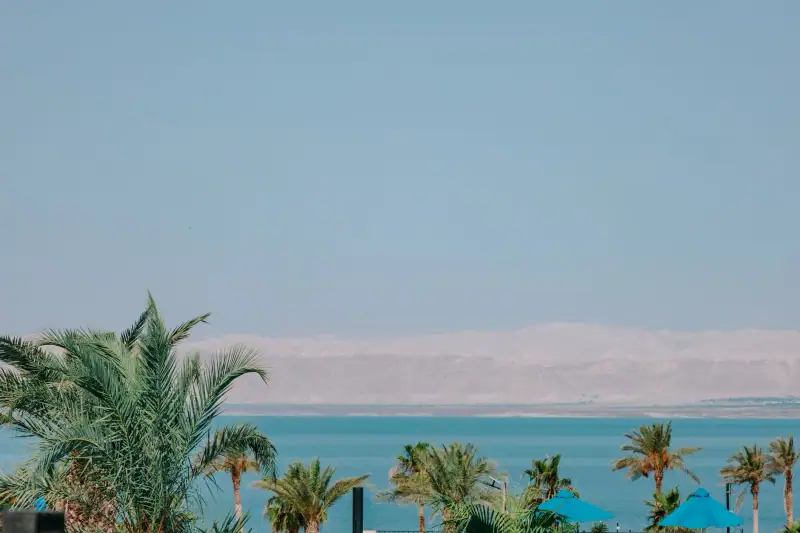
Where to Stay Near the Dead Sea: Best Resorts and Lodging
Where to stay near the Dead Sea in Jordan: luxury resorts, budget alternatives in Madaba, private beaches and practical tips.
Ready-made
Jordan itineraries
3 days
Northern Jordan Road Trip: Amman, Jerash and Ajloun
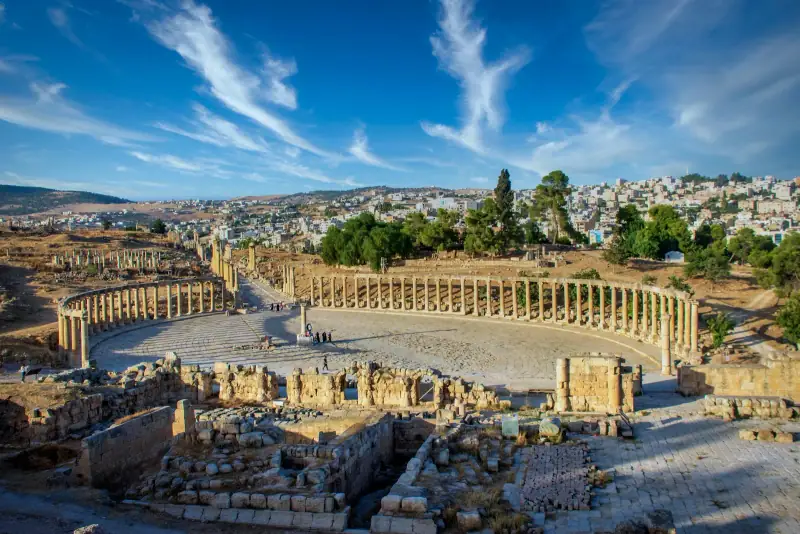
A complete northern Jordan road trip: Amman, the Roman city of Jerash, Ajloun Castle and Umm Qais in 3 to 4 days.
10 days
Road Trip in Jordan: The Self-Drive Guide
Plan your Jordan road trip: King's Highway, Desert Highway, Wadi Rum and Aqaba. Itinerary, driving tips and rental car basics.
5 days
Jordan in 5 Days Without a Car: A Realistic Bus and Taxi Itinerary
Jordan in 5 days without a car: Amman, Petra, Wadi Rum and Aqaba by JETT bus, minibus and taxi. Distances, travel times, schedules and a realistic budget.