Where to stay
Where to Stay in Nicosia: Areas, Hotels and Practical Tips
We may earn a commission when you book through links on this page, at no extra cost to you. We don't visit or try the places we cover: we summarize published sources. How we work
In short
- The walled old town is the best base for most visitors: Ledra Street, the museums and the old town are all on foot.
- Expect about €55 to 90 (~$64 to 105) for a good 3 to 4-star hotel; summer prices are often lower than on the coast.
- Nicosia is the hottest city in Cyprus (peaks of 40 to 42 °C / 104 to 108 °F in July-August); spring and fall are the best seasons.
- Larnaca Airport (LCA) is about 45 km (28 mi) away, 40 to 50 minutes by taxi or shuttle.
Nicosia, or Lefkosia in Cypriot Greek, is a capital unlike any other in the Mediterranean. The only EU capital still divided by a dividing line, it brings together inside its five-century-old Venetian walls an old town of fascinating lanes, leading museums and a food and cultural scene often overlooked in favor of the beach resorts. Staying in Nicosia means choosing an authentically Cypriot experience, far from the crowded summer beach hotels. This guide helps you choose the right area and the right accommodation for your budget, the length of your stay and your sightseeing priorities.
Understanding Nicosia’s geography
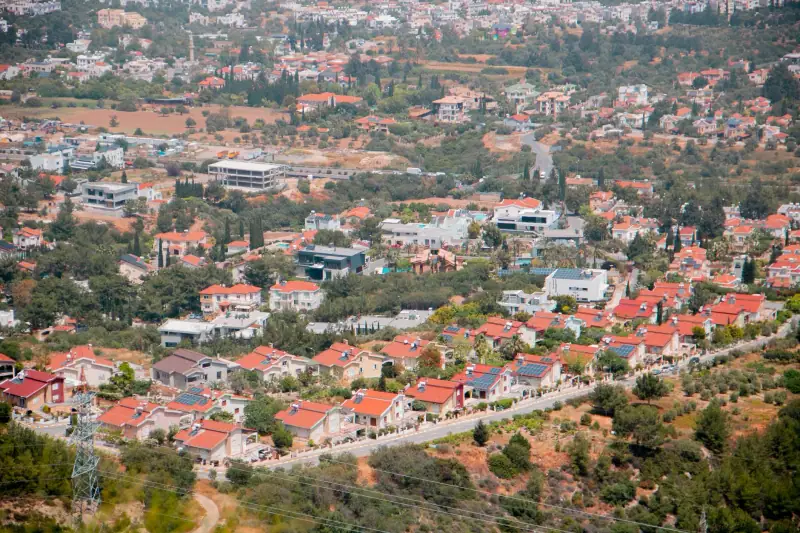
Nicosia is organized around its famous 16th-century Venetian walls, which form an almost perfect circle about 5 km (3 mi) around. Inside is the old town (intra-muros), the historic and tourist center of the capital. Outside stretch the modern, residential districts.
The city is also split in two by the Green Line, the buffer zone set up in 1963-1964 and formalized by the UN, which separates the southern part (Republic of Cyprus) from the northern part (Turkish administration). The Turkish invasion of 1974 extended this line across the whole island. The main pedestrian crossing is in the middle of Ledra Street, in the center of the old town. This geopolitical feature is unique in Europe and makes Nicosia a destination in its own right, beyond its role as an administrative capital.
For a tourist stay, the vast majority of visitors choose to stay in the southern part, which is better developed for hotels and better connected to the rest of the island.
The historic center inside the walls
This is the most popular area with travelers. Inside the Venetian walls, the old town holds almost all the tourist sights: pedestrian Ledra Street (Odos Ledra), the restored Laiki Yitonia district with its colorful Cypriot houses, St. John’s Cathedral (Agios Ioannis), the Archbishop’s Palace, the Cyprus Museum (one of the most important in the country) and the Byzantine Museum.
In the evening, the old town’s lanes come alive around cafés, tavernas and bars set in renovated colonial and Ottoman buildings. The Laiki Yitonia district is particularly pleasant for dinner in a traditional atmosphere.
Best for: first stays, culture-minded travelers, couples, walkers Budget: varied (€60 to 200, ~$70 to 230) Atmosphere: historic, lively in the evening, central
Around the walls and the bastions
Just outside or on the walls themselves, several hotels have views of the fortifications and the old moats, now turned into parks and public gardens. This area, slightly calmer than inside the walls, is still five minutes’ walk from Ledra Street and the main museums.
You find mid-size hotels with modern facades, a few aparthotels and short-term apartments that give you more space for a price comparable to hotels.
Best for: travelers looking for calm and immediate proximity to the center Budget: mid-range (€65 to 150, ~$75 to 175) Atmosphere: relaxed, steps from the sights
Strovolos and the modern southern districts
Strovolos is the most populous residential municipality in the Nicosia urban area, south of the historic center. It has many business hotels, weekly-rate aparthotels and functional apartments, often cheaper than inside the walls. The area is ideal if you have a vehicle or are staying mainly for work.
Without a car, however, the tourist sights are harder to reach on foot from Strovolos: allow about fifteen minutes by taxi or local bus to reach the historic center.
Best for: business travelers, long stays, tight budgets Budget: budget to mid-range (€40 to 100, ~$46 to 115) Atmosphere: residential and modern
Engomi and the university areas
Northwest of the center, Engomi is home to the University of Nicosia (a private institution) and several higher-education institutions; the University of Cyprus (public) is in Aglantzia, to the southeast. It is a lively district with cafés, bookshops and restaurants aimed at students. A few small hotels and furnished apartments have developed here, offering good value in a more local atmosphere.
Best for: young travelers, extended stays, a local neighborhood feel Budget: budget to mid-range (€35 to 90, ~$41 to 105) Atmosphere: university, lively, multicultural
Hotels in Nicosia
Best current rates, free cancellation available.
Accommodation by budget
Budget (€35 to 55 a night, ~$41 to 64)
Nicosia is not the cheapest destination in Cyprus for accommodation, but affordable options exist if you know where to look.
Short-term rental apartments: this is the best budget option in Nicosia. In the residential areas near the center (Engomi, Agios Dometios, Pallouriotissa), studios and functional apartments are available at rates often below those of hotels. With an equipped kitchen, you also save on meals.
Small family hotels in the old town: a few no-frills guesthouses offer clean rooms inside or near the walls. They are often well located but minimally equipped. The location more than makes up for the lack of a pool or restaurant.
Shared accommodation: options are limited in Nicosia compared with the beach towns, but a few guesthouse-type places offer shared rooms, notably for travelers staying several days.
Tip: in July and August, prices often stay lower than in Limassol or Paphos, because Nicosia is not a beach destination. Paradoxically it is one of the cheapest cities in Cyprus at that time, even though temperatures are the highest on the island.
Mid-range (€60 to 130 a night, ~$70 to 150)
This is the largest and most interesting category in Nicosia. Mid-range hotels offer excellent value in the capital.
3 and 4-star hotels in the old town: several modern or renovated places are inside or just outside the walls. Rooftop pool, restaurant, bar and concierge are often on offer. These hotels give the most direct access to the historic sites.
Boutique hotels in historic houses: for about ten years, British colonial buildings and restored Ottoman houses have been converted into lodgings with a unique atmosphere, with particular attention to decor and welcome. This type of hotel is often in the old town’s lanes, steps from Ledra Street.
Aparthotels with a kitchen: very popular with business travelers, they give you a full apartment (living room, kitchen, bedroom) with hotel services. Practical for stays of a week and ideal for families with children.
Luxury (€140 and up, ~$160+)
Nicosia has upscale hotels aimed mainly at business travelers and diplomats, but it suits tourists perfectly well.
5-star hotels in the center: a few top hotels offer a spa, fitness center, heated indoor pool and fine dining. They are generally right next to the walls or in the modern districts of the south, close to the ministries and embassies.
Charming suites in the old town: for a more intimate and authentic experience, restored mansions and historic residences offer spacious suites with an inner courtyard and period furniture. These very rare addresses offer something the big hotels cannot reproduce: the feeling of sleeping in the living history of the city.
Upscale hotels in Nicosia
Spa, panoramic terrace and 5-star service in the Cypriot capital.
Choosing by type of stay
Cultural stay (2-3 nights)
If you mainly come to discover the capital’s treasures (the archaeological collection of the national museum, the Byzantine icons at the Archbishop’s museum, Hadjigeorgakis Kornesios House, once the home of a dragoman and now an ethnological museum, the old town and its Ledra Street checkpoint), stay in the historic center inside the walls. All these sights are on foot from the old town hotels, and an evening stroll through the lit lanes is part of the experience.
To prepare your visit, see the guide to Nicosia’s must-sees and the article on visiting Nicosia.
Recommended length: 2 to 3 nights
A central base for the whole island
Nicosia’s position in the middle of the island makes it an ideal base for exploring if you have a rental car. From the capital, all the main Cypriot destinations can be reached in a day:
- Larnaca and its airport: about 45 km (28 mi) southeast, 50 minutes
- Limassol: about 85 km (53 mi) south, 1 hour
- Troodos: about 80 km (50 mi) southwest, 1 h 30 to 1 h 40 (mountain road)
- Paphos: about 145 km (90 mi) west, 1 h 45
- Ayia Napa: about 85 km (53 mi) east, 1 h 05 to 1 h 10
This option is particularly effective for travelers who want to see a lot of Cyprus in a few days, without changing hotels every night.
To organize your stops, the Cyprus road trip and the 7-day itinerary give concrete ideas from the interior.
Business trip
Nicosia is above all an administrative and financial capital. For business travelers, the 4 and 5-star hotels in the modern districts (Strovolos, Engomi) offer all the professional amenities: meeting rooms, business center, shuttles and quick access to ministries and companies. Parking is easier than in the old town.
Car rental in Cyprus
Essential for exploring the island from Nicosia. Compare offers from Larnaca or Paphos airports.
When to stay in Nicosia: the impact on accommodation
Nicosia is the hottest city in Cyprus. Without the sea breeze that tempers the coast, summer temperatures are significantly higher than at the shore. In July and August, the thermometer regularly exceeds 38 to 40 °C (100 to 104 °F) during the day. This geographic fact directly affects prices and availability.
High season (July-August)
Unlike the beach resorts, Nicosia is less crowded and cheaper in summer. Tourists favor the coast, and the intense heat deters leisure visitors. It is therefore an interesting window for travelers who want to discover the capital without paying a seasonal surcharge.
Tip: if you come in summer, make sure your accommodation has effective air conditioning. It is an absolute necessity, not an optional comfort.
Shoulder season (April-June and September-November)
This is the best time to visit Nicosia. Temperatures are ideal for walking in the old town (20 to 28 °C / 68 to 82 °F), accommodation is available without booking far ahead, and the light is beautiful on the Venetian walls and the Byzantine mosaics in the museums.
Booking: two weeks ahead is generally enough. Popular boutique hotels can fill up faster; for those specific places, book three to four weeks ahead.
Winter (December-March)
Nicosia is pleasant in winter for cultural tourism: museums, restaurants, galleries and cafés stay open year-round, and temperatures rarely fall below 10 °C (50 °F). Hotels offer their lowest rates. It is also the season when snow covers the Troodos peaks, an hour’s drive away.
Practical tips before booking
Air conditioning: essential
In Nicosia, air conditioning is essential from May to October. Almost all hotels of 3 stars and above have it, but always check if you are considering a budget apartment or a stay in a traditional house. A night without A/C in July in Nicosia can be hard.
Parking and rental car
If you arrive with a rental car (or rent one from Nicosia), check parking availability. The historic center inside the walls is largely pedestrian. Most old town hotels give directions to public parking lots within 5 minutes’ walk, often paid but accessible. Hotels in the modern districts (Strovolos, Engomi) generally have their own private parking.
The Ledra Street checkpoint
If your accommodation is in the old town, the crossing to the northern part of Nicosia is a few minutes’ walk away. It is a unique experience: in a few meters, you go from the Republic of Cyprus (an EU member) to the Turkish administration. What you need to cross depends on your passport: check the official travel advice of your government before you go (travel.state.gov (US), GOV.UK (UK), travel.gc.ca (Canada), Smartraveller (Australia), checked November 2026).
Transport from Nicosia
Nicosia is the hub of the Intercity bus lines that link all the main cities on the island. The main bus station (Solomos Square Bus Station and the nearby Intercity terminals) is reachable from the historic center in under 15 minutes on foot or by taxi (€5 to 8, ~$6 to 9). For flights, Larnaca Airport is the nearest (45 km / 28 mi, about 40 to 50 minutes by taxi or shuttle).
Nicosia’s areas at a glance
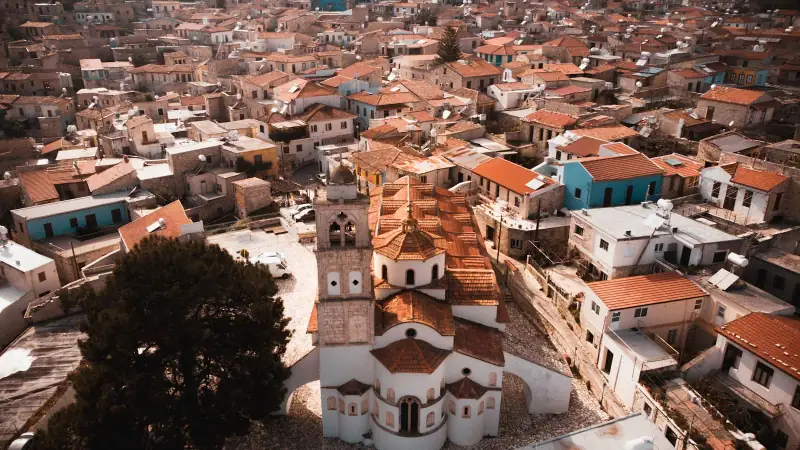
| Area | Atmosphere | Budget | Best for |
|---|---|---|---|
| Historic center (inside the walls) | Historic, lively | €60-200 (~$70-230) | Cultural tourism |
| Around the walls | Calm and central | €65-150 (~$75-175) | Balance of center and calm |
| Strovolos | Modern and residential | €40-100 (~$46-115) | Business, car |
| Engomi | University, local | €35-90 (~$41-105) | Long stay, budget |
Picks by type of traveler
Best choice for a first stay
A 3 to 4-star hotel inside or right next to the Venetian walls, with breakfast included if possible. You leave each morning to explore the old town on foot, and return to your central base to rest at midday if the heat gets to you. Expect €80 to 130 (~$93 to 150) a night in shoulder season.
Best value for money
A well-rated short-term rental apartment in the Laiki Yitonia or Engomi area, around €55 to 75 (~$64 to 87) a night. With an equipped kitchen, you save on breakfasts and lunches, and you enjoy a bigger living space. It is also the most practical option for stays of more than three nights.
Best family option
An aparthotel with a separate living room and kitchen in the quiet residential areas south of the center, reachable by car. Two bedrooms for 4 people with a shared pool often costs about the same as two standard hotel rooms, while offering much more comfort and flexibility for meals.
Best choice for atmosphere
A boutique hotel in a renovated Cypriot house in the old town, with a flowered inner courtyard and decor drawing on Byzantine or colonial references. These rare addresses, with 6 to 20 rooms, offer an immersion in Nicosia’s history that international hotel chains cannot reproduce.
Nicosia is a capital that deserves much more than a simple stop. The capital of an island, it is paradoxically the only city in Cyprus that is not by the sea, and that is precisely what makes it unique. Its Venetian walls, archaeological and Byzantine museums, divided old town and lively lanes make it a destination in itself. To complete your planning, see the complete guide to Cyprus and the article on Nicosia’s must-sees.
Frequently asked questions
What is the best area to stay in Nicosia?
The historic center inside the Venetian walls is the best choice for most travelers: all the major sights (Ledra Street, museums, the old town) are on foot. The atmosphere is lively in the evening, with many cafés and traditional Cypriot restaurants.
Is Nicosia expensive for accommodation compared with the rest of Cyprus?
Nicosia is the Cypriot city most geared to business travel. In the high summer season (July-August), prices are slightly lower than in Limassol or Paphos, because the city does not get the same influx of beach tourists. Weeknights can be more expensive during trade fairs and conferences. On average, expect €55 to 90 (~$64 to 105) for a good 3 to 4-star hotel.
Can you manage without a car if you stay in Nicosia?
Completely, if you stay in the historic center. The capital's main sights, including Ledra Street, the Cyprus Museum, Hadjigeorgakis Kornesios House and the Byzantine Museum, can all be reached on foot. To explore the island, though, a rental car is recommended.
Is it possible to visit northern Nicosia from accommodation in the south?
Yes, there is a pedestrian crossing point on Ledra Street, open daily (as of October 2026); check opening hours before you go, as they can vary on public holidays. What you need to cross depends on your passport, so check the official travel advice of your government before you go. Most hotels in the historic center are less than 10 minutes' walk from the checkpoint.
Are there hostels in Nicosia?
A few budget places and hostel-type properties exist in the historic center and around Ledra Street. There are fewer than in Larnaca or Paphos. Short-term rental apartments are often the cheapest alternative in Nicosia.
How do you reach other Cypriot cities from Nicosia?
Intercity buses run regularly to Larnaca (about 45 km / 28 mi, 50 min), Limassol (about 85 km / 53 mi, 1 h), Paphos (about 145 km / 90 mi, 1 h 45) and Ayia Napa (about 90 km / 56 mi, 1 h 15). The main bus station is a few minutes from the center. By car, Nicosia is well connected via the A1 highway to the south and the A2/A3 to the east coast.
What is the best time to visit Nicosia?
Spring (April-May) and fall (October-November) are the best periods: pleasant temperatures (20 to 28 °C / 68 to 82 °F), fewer tourists and cheaper accommodation. Summer (July-August) is very hot in Nicosia, the hottest city in Cyprus with peaks of 40 to 42 °C (104 to 108 °F), because it is not on the coast.
More Cyprus guides
Keep reading
Where to Stay in Ayia Napa: Areas, Hotels and Practical Tips
Where to stay in Ayia Napa: the town center, Nissi Beach, Makronissos and Cape Greco, with options by budget and type of trip.
Where to Stay in Larnaca: Areas, Hotels and Practical Tips
Where to stay in Larnaca: Finikoudes, Mackenzie Beach, the old town and the suburbs, with options by budget and type of trip.
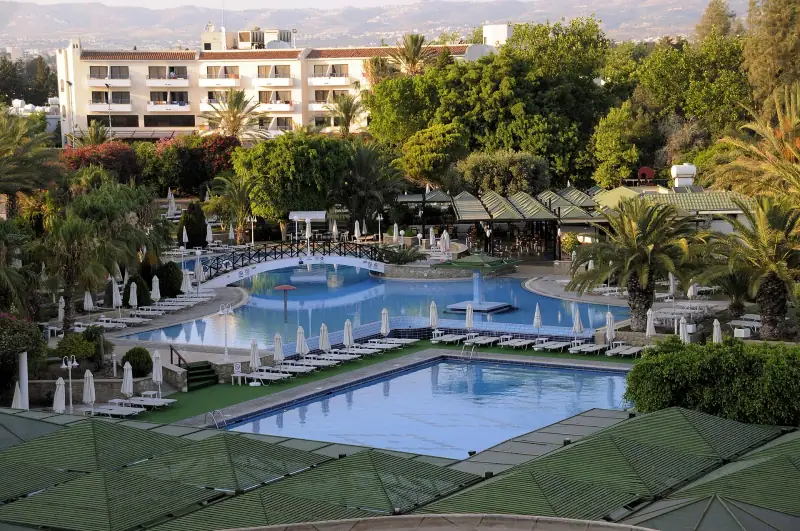
Where to Stay in Paphos: Best Areas and Hotels
Where to stay in Paphos: Kato Paphos, Ktima, Coral Bay and the north coast, with options by budget, car or no car, and season.
Ready-made
Cyprus itineraries
5 days
Cyprus in 5 Days Without a Car: A Realistic Bus Itinerary
LarnacaLimassol
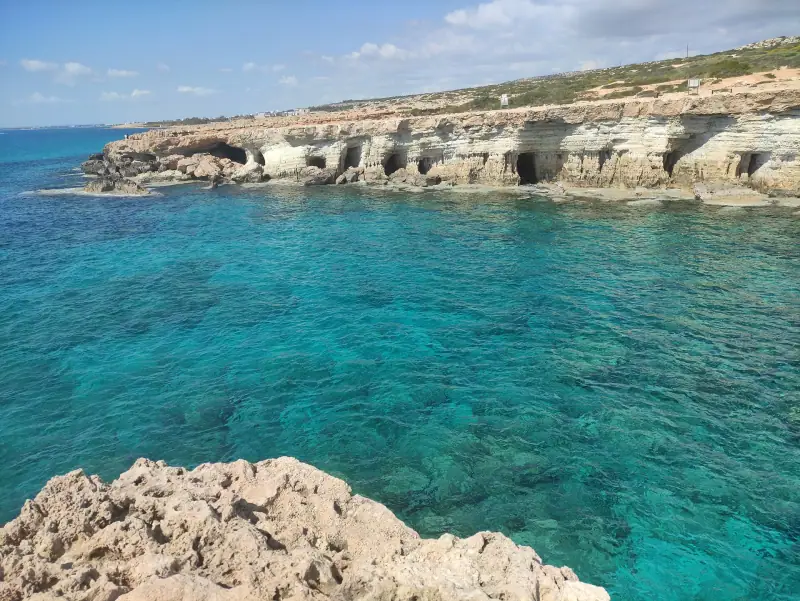
7 days
Cyprus in 7 Days: A Complete Day-by-Day Itinerary
Cyprus 7-day itinerary: the best plan for a full week. From Paphos to Ayia Napa via Limassol, Nicosia and the Troodos, day by day.
Cyprus Road Trip: The Complete Itinerary Around the Island
Drive around Cyprus in 10 to 14 days. Complete itinerary, essential stops and practical tips for an unforgettable road trip.