Things to do
Things to Do in Ayia Napa: Beaches, Cape Greco and Must-Do Activities
We may earn a commission when you book through links on this page, at no extra cost to you. We don't visit or try the places we cover: we summarize published sources. How we work
In short
- Three to four days cover Ayia Napa: Nissi Beach and the monastery, Cape Greco and its sea caves, a boat trip or the water park, and a night out.
- Cape Greco is about 7 to 10 km (4 to 6 mi) from the center, 10 to 15 minutes by car; the sea caves are reached by boat excursion.
- Free: the monastery, the sculpture park and hiking at Cape Greco. A half-day boat trip to the sea caves costs about €25 to 40 (~$29 to 46).
- Nissi Beach is busiest in July and August: arrive before 9 am to find a spot.
Ayia Napa is Cyprus’s best-known beach resort, famous across Europe for its white sand beaches, turquoise water and lively nightlife. But the town offers much more than clubs and infinity pools: a few kilometers away, Cape Greco National Park unfolds spectacular limestone cliffs, sea caves and coastal paths of rare beauty. The medieval monastery in the middle of town is a reminder that this ultramodern resort rests on centuries of history. Here is a complete guide to everything to see and do in Ayia Napa.
Nissi Beach: Ayia Napa’s emblematic beach
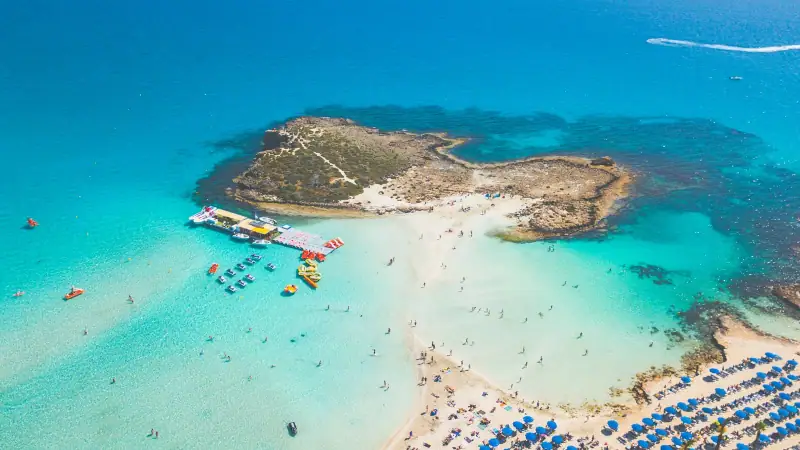
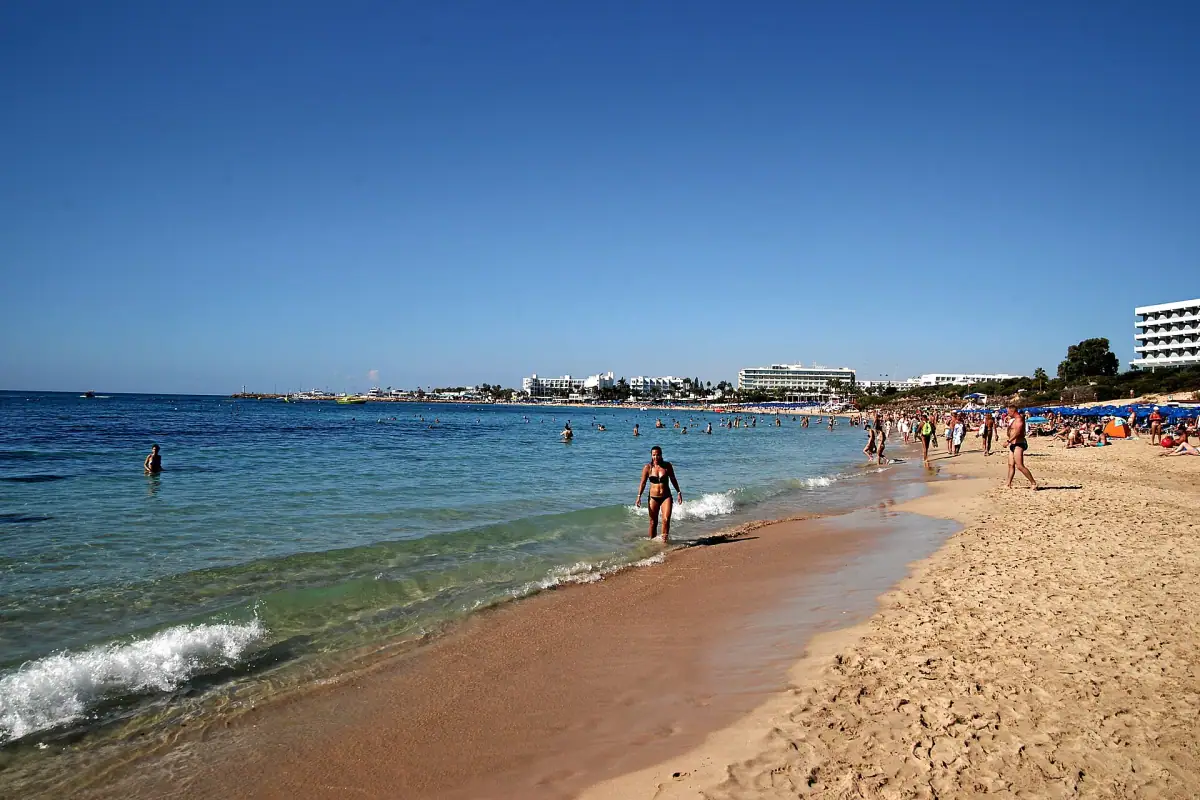
Nissi Beach is arguably the most famous beach in Cyprus, and one of the most photographed in the whole eastern Mediterranean. Its fine white sand, shallow turquoise water and small island (the word nissi means “island” in Greek) linked to the shore by a sandbar at low tide give it an almost tropical look.
About 3 to 4 kilometers (2 to 2.5 mi) west of Ayia Napa’s center, Nissi Beach is set up for big crowds in high season (July-August): loungers and parasols for rent, restaurants and bars on the beach, varied water activities (pedal boats, jet skis, towed tubes, banana boat), showers and changing rooms.
What to know:
- Arrive early in the morning (before 9 am) to find a spot in high season and enjoy the light
- The water is shallow for 30 to 50 meters (100 to 165 ft) from the shore, ideal for families
- The small island is reachable on foot at low tide (the water rises to your thighs), and by swimming or kayak the rest of the time
- In the evening, the beach turns into a party venue with events organized by neighboring establishments
Alternative beaches west of Ayia Napa:
- Makronissos Beach (~5 km / 3 mi west): calmer, several small sand coves separated by rocks, translucent water, a more family atmosphere
- Limnatis Beach: a long beach with a relaxed feel, used by a less touristy crowd
Hotels in Ayia Napa near Nissi Beach
The best accommodation within 5 minutes' walk of Nissi Beach, for ideal access first thing in the morning.
Ayia Napa Monastery: a medieval jewel in the heart of the party
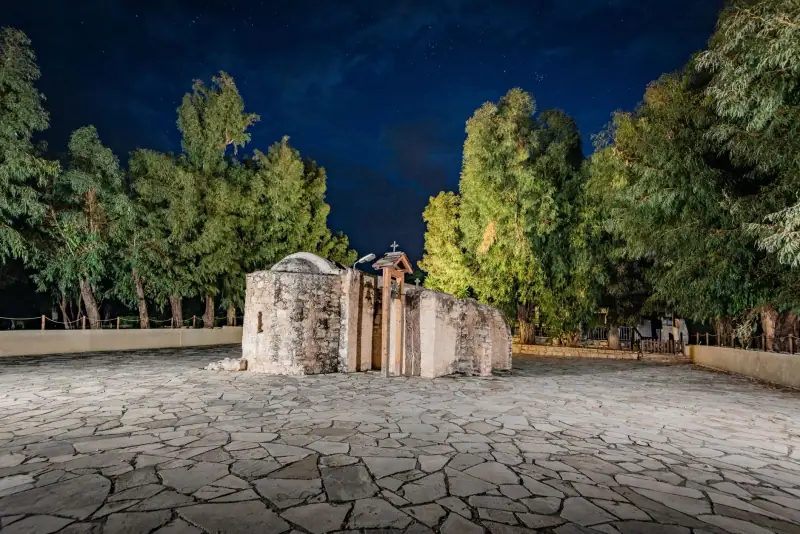
A Cypriot paradox: in the middle of one of Europe’s most festive beach resorts stands a remarkably well-preserved medieval monastery. Ayia Napa Monastery, which gave the town its name, grew up around an older cave chapel where, according to tradition, a miraculous icon of the Virgin Mary had been discovered; the present buildings date from the Venetian period, in the late 15th and 16th centuries.
The monastic complex, built under Venetian and then Ottoman rule, is organized around an inner courtyard shaded by a huge centuries-old sycamore. The octagonal fountain in the middle of the courtyard is one of the town’s symbols. The church cut into the rock, below the courtyard, is particularly moving in its simplicity.
Note:
- The monastery is still active as an Orthodox place of worship; clothing covering shoulders and knees is required
- Entry is free; hours vary with the season and the services
- Next to the monastery, Ayia Napa’s central square and its cafés are the social heart of the town outside the nightlife zone
Cape Greco: wild nature and sea caves
About 7 to 10 kilometers (4 to 6 mi) by road from the center of Ayia Napa, Cape Greco (in Greek: Akrotiri Gkreko) marks the southeast tip of Cyprus. It is protected by a national park that preserves one of the last unspoiled natural areas on the island’s east coast. To walk there, see the guide to hiking at Cape Greco (trails, length, difficulty).
Cape Greco National Park
Cape Greco National Park covers about 385 hectares (951 acres) of limestone cliffs, Mediterranean scrubland and an exceptional rocky coastal fringe. The vegetation is dominated by Aleppo pines, Phoenician junipers, mastic trees and tree spurges, a dense scrub that perfumes the dry summer air.
Marked trails run across the cape. The most popular follows the coastal cliffs and offers plunging panoramic views over a deep blue sea. The cape proper is not open to the public because of military installations, but the trails come close enough for exceptional panoramas, especially at sunset.
The Cape Greco sea caves
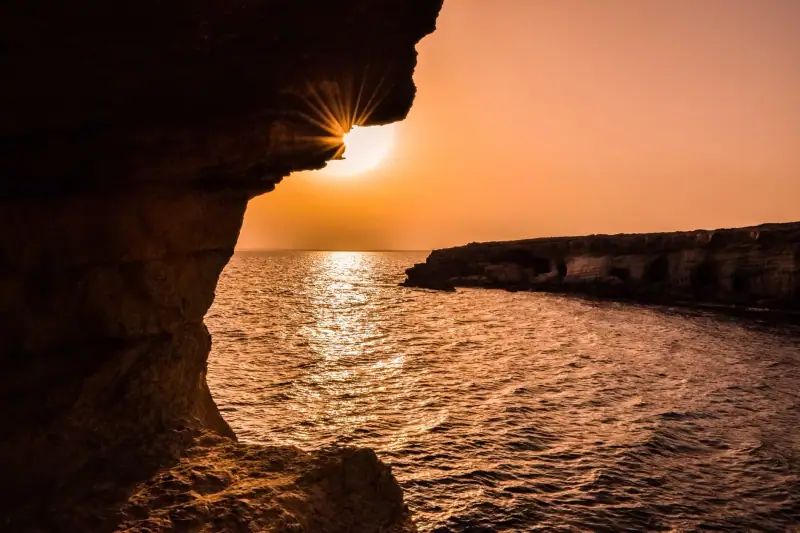
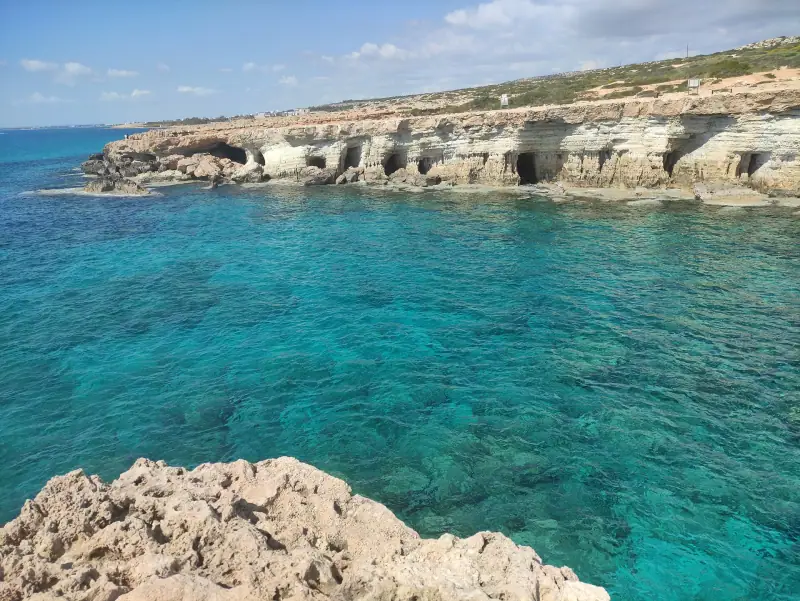
This is the region’s most spectacular natural attraction. The limestone cliffs of Cape Greco are pierced by many caves and natural arches at water level, reachable only from the sea. Boat excursions (half day or full day) leave Ayia Napa harbor every morning to take visitors there.
The most visited caves, including the famous “Lovers’ Cave,” are formations of striking beauty: vaults hollowed by sea erosion, light filtering through the openings, turquoise water of extraordinary clarity. Most excursions include a swimming and snorkeling break.
Konnos Bay: located between Cape Greco and Protaras, on the east coast (north of the cape), this enclosed bay bordered by wooded hills is one of the most beautiful coves in Cyprus, popular for snorkeling thanks to its clear water and rocky bottom full of fish.
Cape Greco and sea cave boat excursions
Half day or full day: discover the Cape Greco sea caves from the sea, with swimming and snorkeling included.
Scuba diving and water sports
Ayia Napa is one of the most renowned diving destinations in the eastern Mediterranean, thanks to the exceptional clarity of the Cape Greco waters and the variety of sites.
Cape Greco dive sites
The seabed around Cape Greco is ranked among the finest in Cyprus. Among the most popular sites:
- The cape’s underwater caves, accessible to experienced divers, form a network of tunnels and cavities inhabited by moray eels, octopus and schools of groupers
- Posidonia seagrass meadows off the east coast, with their associated wildlife (seahorses, stingrays, cuttlefish)
- Wrecks of small boats and barges, at depths accessible to beginners
Several PADI-certified dive centers operate in Ayia Napa and Protaras. They offer introductory dives (from about €40 to 50, ~$46 to 58), PADI Open Water courses and guided dives for certified divers.
Other water activities from the harbor
Ayia Napa harbor is the area’s water-sports hub:
- Jet ski and parasailing: offered directly on several beaches in high season
- Sea kayaking: an excellent way to explore the coves and cliffs of Cape Greco independently; rental operators are at Nissi Beach
- Windsurfing and kitesurfing: spots are accessible on the beaches exposed to the east wind, notably toward Protaras
- Sport fishing: sea fishing trips are organized from the harbor, notably trolling over deeper waters
WaterWorld Themed Waterpark
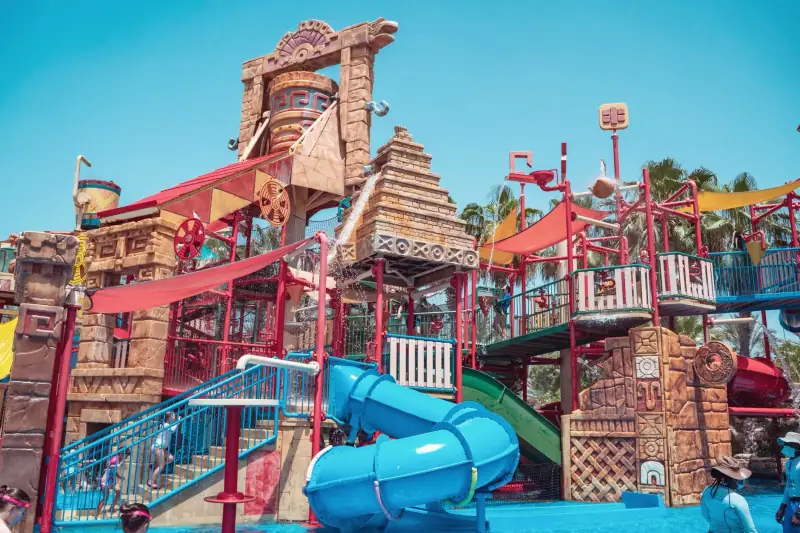
WaterWorld is one of the largest themed water parks in Europe, about 5 kilometers (3 mi) from the center of Ayia Napa (Makronissos area, ~8 minutes by taxi). With its “ancient Greece and mythology” theme, it offers more than 25 slides and water attractions over several hectares, for all ages (from toddler slides to thrill slides for adults).
It is one of the favorite attractions of families on Cyprus’s east coast. In high season, queues can be long in the middle of the day, so arrive when it opens or book online ahead.
Practical information: the park is generally open from May to October, from about 10 am to 6 pm. Prices vary by season and age. Plan a full day.
Ayia Napa Sculpture Park
East of the harbor, Ayia Napa’s open-air Sculpture Park is one of the town’s least known but most interesting cultural attractions. Dozens of works by Cypriot and international artists are on permanent display in a setting of Mediterranean gardens facing the sea.
The park is ideal for a morning walk or in the late afternoon, when the low sun reveals the textures of the sculptures. Entry is free.
Car rental in Ayia Napa
Essential for exploring Cape Greco, Konnos Bay, Protaras and the surroundings at your own pace. Book ahead in high season.
Ayia Napa’s nightlife
Ayia Napa is one of Europe’s summer clubbing capitals, on a par with Ibiza or Mykonos. The nightlife zone is concentrated around the central square and adjacent streets, within a radius of a few hundred meters.
The town’s big clubs offer themed nights and international DJ sets from mid-June to late August, generally from midnight to dawn. Beach bars, sky bars with sea views and more relaxed cocktail bars round out the nightlife for those who want a less intense evening.
Practical tips:
- The atmosphere is at its peak in July and August; in June and September it is calmer and cheaper
- Most clubs are free to enter or charge a modest cover on weekdays, higher on weekends
- Avoid leaving your belongings unattended in bars, as in any big European summer resort
Good to know: if you want a calm atmosphere, choose the hotel zone to the west (toward Nissi Beach) or Protaras (10 km / 6 mi to the north), a much more family-oriented and quiet resort.
Ayia Napa Thalassa Museum
The Ayia Napa Thalassa Museum is devoted to Cyprus’s seabed and the island’s maritime history. It has exhibitions on the underwater flora and fauna of Cape Greco, traditional fishing techniques and underwater archaeology. It is an informative visit of about an hour, particularly interesting for curious children and divers.
Practical tips for your activities in Ayia Napa
Getting around Ayia Napa and its surroundings
On foot: the historic center (monastery, restaurants, bars) and the nightlife zone can be covered on foot. The distance to Nissi Beach (about 3-4 km / 2-2.5 mi) can be covered on foot, by bike or by taxi.
Intercity bus: lines link Ayia Napa to Larnaca (~45 km / 28 mi, about 40-45 min) and Nicosia (~85 km / 53 mi, about 1 h 15). The Ayia Napa-Protaras line is handy and frequent in season.
Rental car: recommended for exploring Cape Greco, Konnos Bay, Protaras and for trips to Larnaca or the interior. You drive on the left in Cyprus.
Bike and scooter: bike and scooter rental operators are in town. The cycle path to Cape Greco is a pleasant option early in the morning.
Activities budget in Ayia Napa
| Activity | Approximate price |
|---|---|
| Ayia Napa Monastery | Free |
| Sculpture Park | Free |
| Cape Greco hike | Free |
| Boat excursion (sea caves, half day) | €25-40 per person (~$29-46) |
| Introductory dive | €40-55 (~$46-64) |
| WaterWorld Themed Waterpark | €35-45 adult (~$41-52), €25-35 child (~$29-41) |
| Sea kayak rental | €10-20/h (~$12-23) |
| Jet ski (30 min) | €40-60 (~$46-70) |
| Car rental/day | €25-45 (~$29-52) |
A good 3-day plan for Ayia Napa
Day 1: Beaches and monastery:
- Early morning: Nissi Beach before the crowds (arrive before 9 am for a lounger)
- Mid-morning: Ayia Napa Monastery and the central square
- Afternoon: Makronissos Beach or the sculpture park
- Evening: dinner in a seafront restaurant with a view of the harbor
Day 2: Cape Greco and water activities:
- Morning: boat trip to the Cape Greco sea caves (leaving ~9:30 am from the harbor)
- Afternoon: hike the coastal trails of Cape Greco (2-3 hours), sunset from the cliffs
- Evening: a night in the nightlife zone or a quiet meal, as you prefer
Day 3: Excursion and water sports:
- Morning: WaterWorld for families, or an introductory dive / sea kayak for adventure seekers
- Afternoon: visit Protaras and Konnos Bay (~10 km / 6 mi north) for a calmer swim
- Evening: back to Ayia Napa, an aperitif at sunset on the harbor
Going further
To prepare your stay, see the guide to visiting Ayia Napa with the must-see sights and basic information on the town. The guide to where to stay in Ayia Napa will help you choose your accommodation according to your budget and preferences (festive atmosphere vs. family calm). And to explore the region as a whole, the article on Cyprus’s east coast presents Ayia Napa, Protaras and Cape Greco in a coherent itinerary.
Frequently asked questions
How many days do you need to visit Ayia Napa?
Three to four days let you make the most of Ayia Napa: one day for Nissi Beach and the monastery, one day for Cape Greco and the sea caves, one day for a boat trip or the water park, and an evening for the town center's nightlife. With less time, two days are enough for the essentials (Nissi Beach + Cape Greco).
What is the best beach in Ayia Napa?
Nissi Beach is the most famous and liveliest, with its white sand, turquoise water and small island linked to the shore at low tide. For a quieter atmosphere, Makronissos Beach (to the west) and Limnatis Beach are less busy. Konnos Bay, near Cape Greco, is ideal for snorkeling thanks to its crystal-clear water and rocky bottom.
How do you get to Cape Greco from Ayia Napa?
Cape Greco is about 7 to 10 kilometers (4 to 6 mi) by road from the center of Ayia Napa, 10 to 15 minutes by car. Cycle paths and footpaths let you reach the cape by bike or on foot from town. Boat excursions from Ayia Napa harbor also let you approach the cape's sea caves from the water.
Is Ayia Napa suitable for families with children?
Yes, despite its party-resort reputation, Ayia Napa offers many options for families. WaterWorld Themed Waterpark is one of the best water parks in the Mediterranean for children. Nissi Beach and Makronissos have shallow water. The seabed museum offers educational activities. Konnos Bay is calm and ideal for young swimmers. Choose the west zone (family hotels) over the nightlife zone.
What is Cape Greco National Park?
Cape Greco National Park (Cape Greco National Forest Park) is a protected nature reserve on the southeast tip of Cyprus. It includes the cape itself, spectacular limestone cliffs, sea caves, underwater rock formations and Mediterranean scrub vegetation. Marked trails let you hike along the cliffs with panoramic sea views. Access to the extreme tip of the cape is restricted because of military installations.
What water activities are available in Ayia Napa?
Ayia Napa is one of the water-sports capitals of Cyprus. From the harbor you can try scuba diving (several wrecks and reefs), snorkeling, jet skiing, parasailing, windsurfing, kitesurfing and sea kayaking. Boat trips to the Cape Greco sea caves (half day or full day) are very popular. PADI dive centers offer introductory dives and courses.
Are there things to do in Ayia Napa apart from the beaches and nightlife?
Yes. Ayia Napa's medieval monastery (Venetian period, late 15th to 16th century) is a remarkable monument in the center of town. The Ayia Napa Thalassa Museum (on Cyprus's seabed) is informative. The open-air sculpture park shows works by international artists. And Cape Greco offers hikes and exceptional nature. Protaras, about 10 km (6 mi) to the north, and its own sights are also worth half a day.
More Cyprus guides
Keep reading
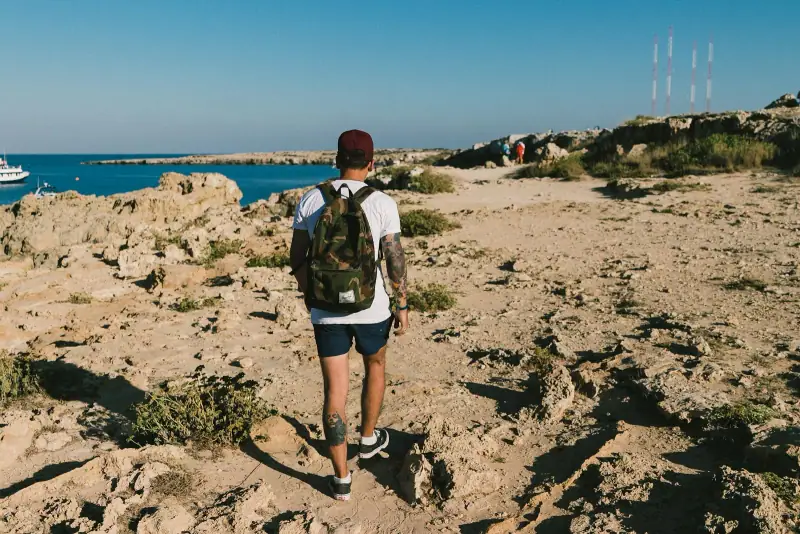
Hiking at Cape Greco: Which Trail to Choose, Length, Difficulty and Access
Hiking at Cape Greco (Ayia Napa, Protaras): the 2 km Aphrodite trail, the 4.8 km loop, length, difficulty, start points, water, shoes and best time.

Hiking in the Troodos: The Best Trails in Cyprus
The best hikes in the Troodos Mountains: marked trails, waterfalls, monasteries and viewpoints. A complete guide to hiking in Cyprus.
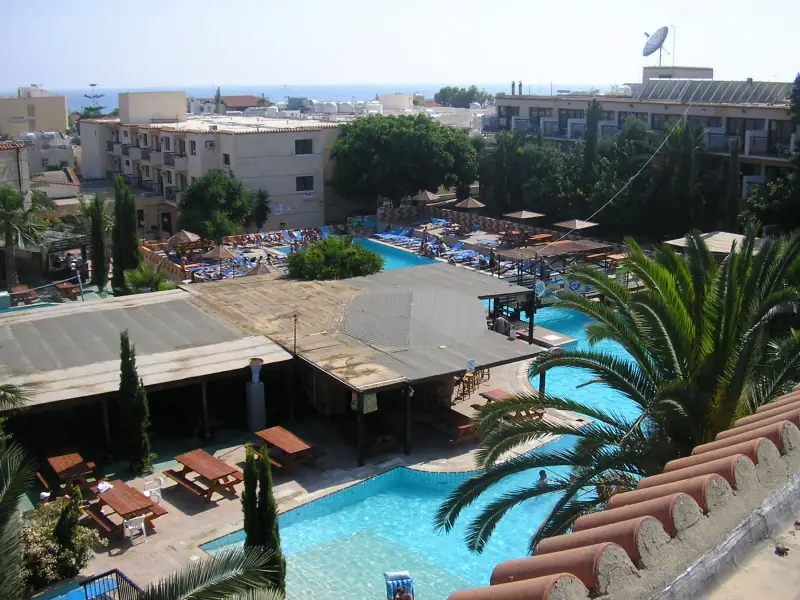
Where to Stay in Ayia Napa: Areas, Hotels and Practical Tips
Where to stay in Ayia Napa: the town center, Nissi Beach, Makronissos and Cape Greco, with options by budget and type of trip.
Ready-made
Cyprus itineraries
5 days
Cyprus in 5 Days Without a Car: A Realistic Bus Itinerary
LarnacaLimassol
7 days
Cyprus in 7 Days: A Complete Day-by-Day Itinerary
Cyprus 7-day itinerary: the best plan for a full week. From Paphos to Ayia Napa via Limassol, Nicosia and the Troodos, day by day.
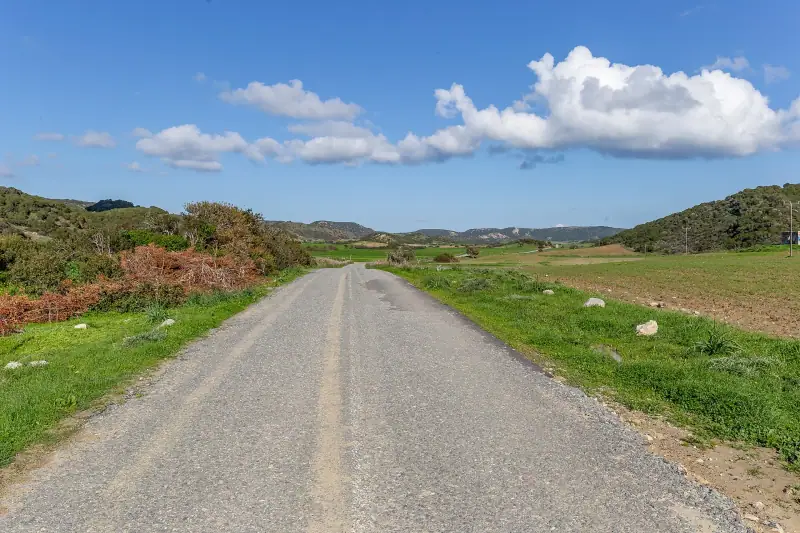
Cyprus Road Trip: The Complete Itinerary Around the Island
Drive around Cyprus in 10 to 14 days. Complete itinerary, essential stops and practical tips for an unforgettable road trip.