Things to do
Water sports in Rhodes: kitesurfing, windsurfing, diving and snorkeling
We may earn a commission when you book through links on this page, at no extra cost to you. We don't visit or try the places we cover: we summarize published sources. How we work
In short
- The meltem, the northwest summer wind, hits the west coast and the south hardest; the east coast is often sheltered and calmer.
- Prassonissi is the southern spot for kitesurfing and windsurfing, about an hour and a half from Rhodes Town; Ixia bay, near Ialyssos, is easier to reach.
- Kallithea, on the east coast, is the site most cited for first dives; the wreck in the south is for experienced divers with a club.
- The wind season generally runs from May to mid-October, peaking in June, July and August.
Rhodes is an island made for the water. Exposed to the northwest wind on its west coast, sheltered on its east coast, ringed by clear rocky seabeds and long beaches of sand or pebbles, it offers very different conditions from one shore to the next. That is what makes it one of the most complete Greek destinations for water sports: people come for the wind, for diving, but also for a simple afternoon of paddleboarding or snorkeling.
This guide helps you choose: where the kitesurfing and windsurfing spots are, how to approach diving, which easy activities suit a family, and how to organize it all without wasting time on the road. To choose your beach by atmosphere rather than by sport, first see our selection of the best beaches in Rhodes.
Understanding the Rhodes wind before choosing a spot
It all starts with the meltem, the summer wind of the Aegean, which blows from the northwest. It does not act the same way across the island: the west coast and the southern tip take it head on, while the east coast is often in its lee, with calmer water. That is the basic rule for organizing your days:
- You want wind (kitesurfing, windsurfing, waves): head west and south.
- You want calm water (snorkeling, paddleboarding, diving, swimming with young children): head to the east coast.
The wind is steadier in the middle of the day and in the afternoon than at dawn. The wind season generally runs from May to mid-October, peaking in June, July and August. Conditions vary from year to year, and local professionals point out that an exceptional season can be followed by a calmer one: do not build your whole stay around a single windy day.
To calibrate your travel dates, also read our guide on when to go to Rhodes, which details weather, water temperature and crowds month by month.
Prassonissi: the southern spot for wind lovers
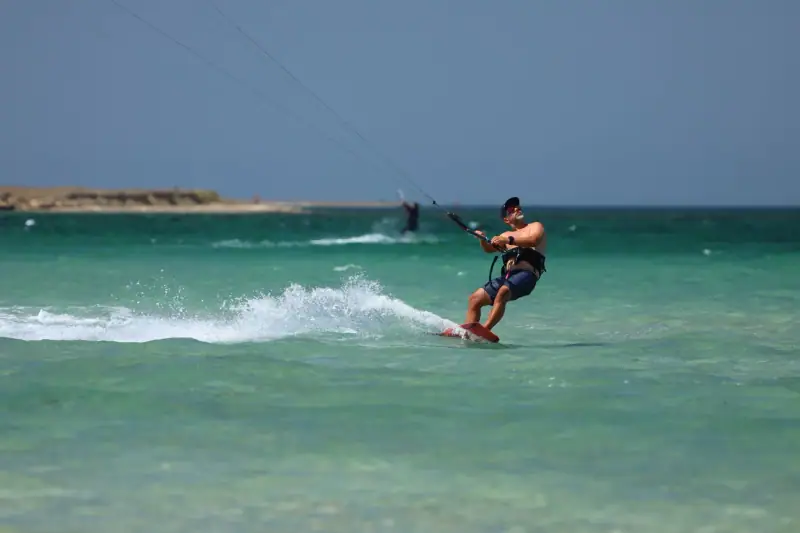
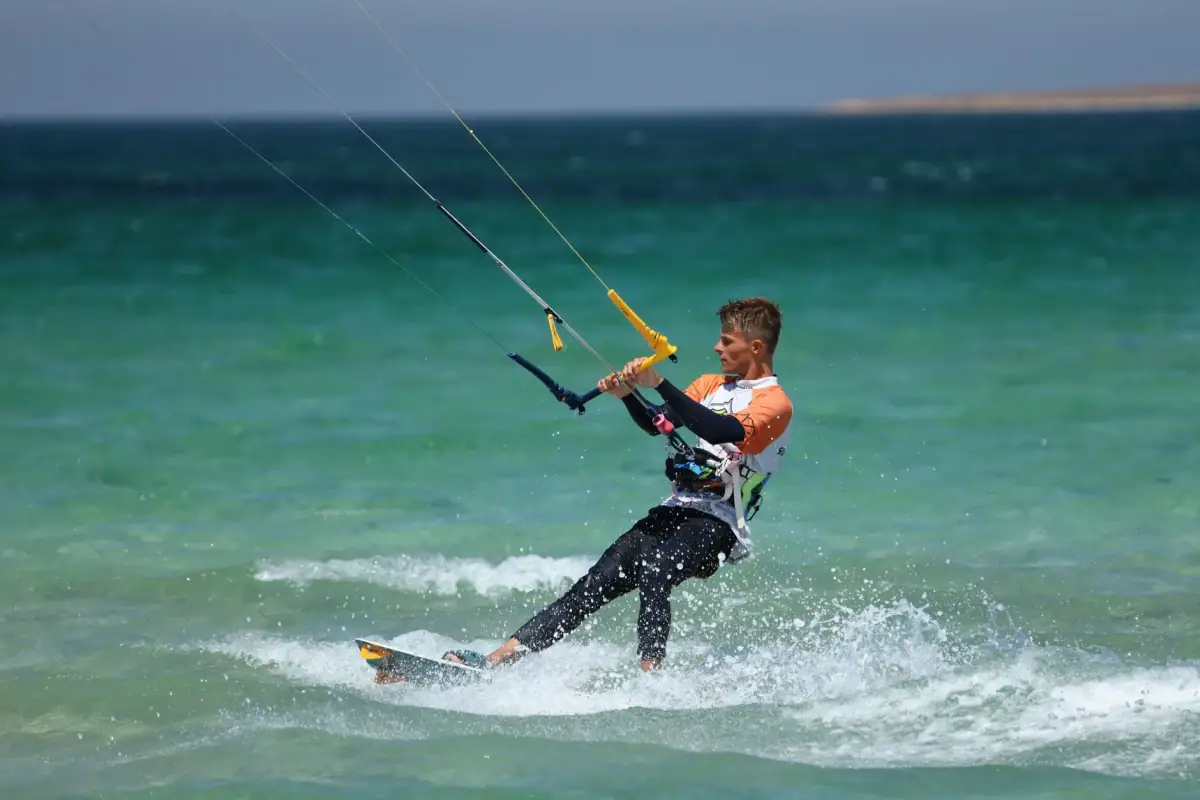
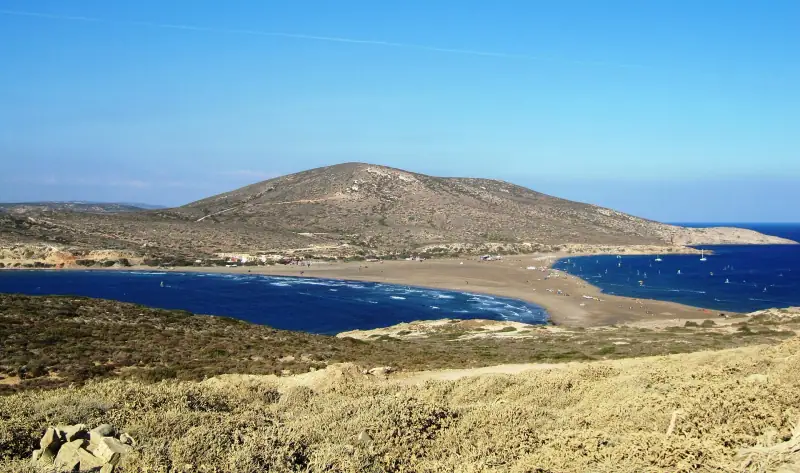
At the southern end of the island, Prassonissi is the great meeting point for windsurfers and kitesurfers. The site is a sandy peninsula, sometimes joined to the land by a narrow strip, which separates two very different bodies of water:
- a flat-water side, with a side-offshore wind, ideal for progressing, working on speed or freestyle;
- a side exposed to waves, with a cross-onshore wind, more committing, which attracts experienced riders.
This double setup is what makes the reputation of the place: it offers both a learning ground and a playground for the most experienced. The wind there is generally stronger than elsewhere on the island, because the terrain accelerates the meltem. In midsummer, conditions around 5 to 6 Beaufort are often mentioned.
A few practical points:
- Access is by car, along the road crossing the south of the island. Allow about an hour and a half from Rhodes Town. It is an excursion in itself: plan to spend the day there rather than make the round trip for one hour.
- Services are limited compared with the beach resorts: centers offer equipment rental and lessons in season, plus a few tavernas and simple lodging nearby. Bring water, sunscreen and a windbreaker.
- Beginners can learn on the flat-water side, but it is better to do so early in the season or in the morning, when the wind is lighter. If you have never sailed, take a lesson rather than renting equipment alone.
- The wind is not guaranteed: if the day you come is calm, fall back on the beach, the lagoon or a walk on the dune.
To reach the south without stress, a car remains the most flexible solution. Our tips for renting a car in Rhodes detail the roads, parking and pitfalls to avoid.
Introduction, improvement or course: compare the options of the island's schools and book online.
Ixia and Ialyssos: accessible windsurfing
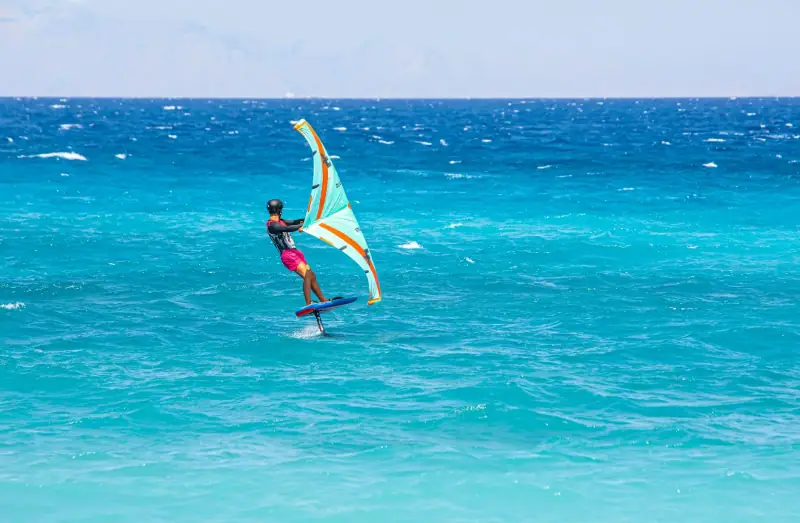
On the northwest coast, near Ialyssos and the airport, Ixia bay is the island’s other major windsurfing site. It is much easier to reach than Prassonissi: you get there in a few minutes from Rhodes Town, and seafront hotels line the bay one after another.
The principle: the meltem blows more gradually there, often lighter in the morning before building in the afternoon to force 5 to 6 in high season. The season is a little longer than in the south, from April to October depending on the operators. These conditions suit all levels, from first steps to sportier sailing, and windsurfing competitions take place in this area. Centers on the beach rent equipment and offer lessons, including for children.
It is a good choice if:
- you travel as a family and want windsurfing without a long drive;
- you stay in the Ialyssos area and like the “hotel right on the water” formula;
- you want to compare several spots in the same week without organizing everything by car.
Note: the wind can be strong in the late afternoon, and the sea rougher than it looks from the beach. Follow the center’s instructions and never go out without a life jacket. If you are looking for a base in this area, our guide to where to stay in Rhodes compares the north and east coast areas.
Diving in Rhodes: rocky bottoms, coves and a wreck
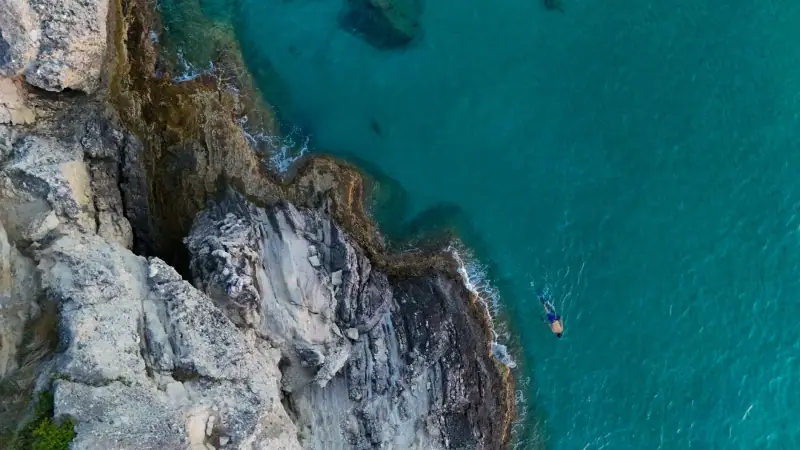
Rhodes is not the most famous diving destination in the Mediterranean, but it offers clear water, rocky reliefs and marine life typical of the Aegean. The season is mostly May to September, with pleasant water and good visibility.
Kallithea: the site for beginners
On the east coast, Kallithea is the site most often cited for first dives. The rocky bottom is carved with small cavities, arches and natural pools, in a limestone setting. You can see rock fish such as wrasse, damselfish or parrotfish, sometimes octopus or moray eels in the crevices. Dive clubs there offer introductory dives, certification courses and outings for certified divers.
The site is sheltered from the meltem by the geography of the island, which makes it workable even when the west and south are windy. For families, the setting is pleasant: you can combine diving and swimming, then enjoy a seaside lunch.
A wreck in the south for experienced divers
For experienced divers, a cargo wreck, the Giannoula K, lies off Plimmiri on the south coast. The ship sank in the 1980s and now sits upright on a sandy bottom. It is a more technical dive, reserved for an advanced level and supervised by a club: never attempt this kind of outing on your own.
How to choose a dive club
- Check the affiliation with a recognized organization (PADI, SSI, CMAS, etc.).
- Ask questions about group size, the equipment supplied and the safety briefing.
- Find out the type of outing: from the shore or by boat, duration, required level.
- Ask about health requirements: some packages require a health questionnaire or medical sign-off; ask the club what it needs.
- Ask about the waiting time before flying: your club will tell you how long to wait after a dive. Plan your dives accordingly before the return flight.
Supervised outings for beginners, with equipment and an instructor, on the east coast of the island.
Snorkeling: the simple option, no lessons or certification
You need no certification or course to discover the seabed of Rhodes. A mask, snorkel, fins and water shoes are enough for a very nice half day.
The best places are the rocky, sheltered coasts, where the sea is clear and fish come close to the rocks. Lindos bay, protected and shallow in places, is a classic for a first try, as are the rocky areas around Kallithea. Always choose a windless day, stay close to the shore and do not stray from supervised swimming areas where there are any.
A few useful habits:
- Wear water shoes: sea urchins are common on rocky bottoms.
- Protect yourself from the sun with a UV shirt, since you quickly lose track of time with your back out of the water.
- Make yourself visible with a signal buoy if you swim far from the shore.
- Respect wildlife: do not touch, feed or collect anything.
To combine snorkeling and sightseeing, a day in Lindos is a good plan: acropolis in the morning, swimming in the afternoon. Find the full program in our guide to visiting Lindos.
Faliraki and the east coast: easy water activities
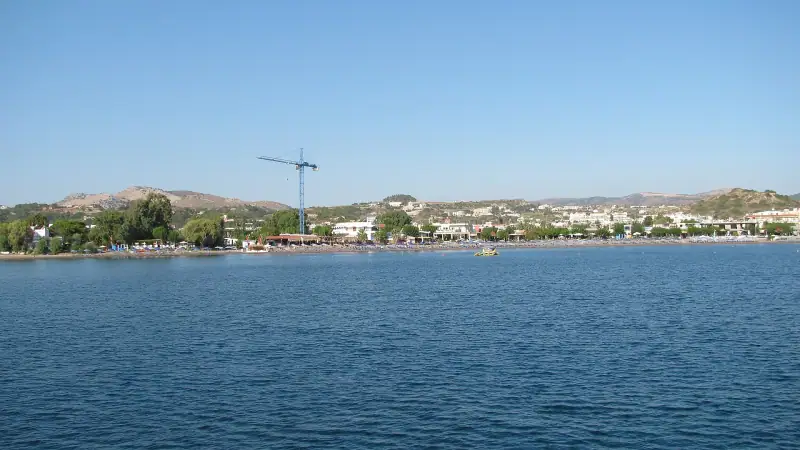
If you are after activities that are more fun than technical, the east coast and especially Faliraki concentrate the water-leisure offerings: towed tube, parasailing, water skiing, wakeboarding, jet ski, pedal boat and paddleboard. Many providers are set up along the beach, and the sea is generally calmer than on the west coast.
These activities suit families and groups well, and they are done by the hour, with no commitment. A few tips to avoid unpleasant surprises:
- Compare prices at several stands before choosing, and ask the exact length of the activity.
- Check the equipment: life jacket in good condition, clear safety briefing, instructor present.
- Ask about rental conditions for a jet ski or boat: photo ID, deposit, any license or certificate requirement depending on the craft. Rules change, so confirm them locally or with the rental company.
- Avoid the hottest hours and protect yourself from the sun.
- Read recent reviews of providers before booking, especially for motorized craft.
Children love the towed tube and paddleboard, but keep motorized activities mostly for those over 12, or according to the operator’s rules.
Boat trips and excursions on the water
The sea is also a way to discover the island and its neighbors. Boat trips reach coves inaccessible by road, with swimming and lunch on board. Depending on the package, you can cruise on a catamaran, rent a small boat or board a sailboat for a day.
For a real discovery of the Dodecanese, the crossing to Symi is the most popular: a pastel harbor, stepped lanes and a seaside monastery. All the details are in our article on the day trip to Symi from Rhodes.
A day on a catamaran or sailboat, with swimming and stops in coves, to compare according to your budget.
Which sport to choose for your profile
| Profile | Suggested activity | Area |
|---|---|---|
| Beginner looking for wind | Windsurfing lesson | Ixia bay, Ialyssos |
| Experienced athlete | Kitesurfing, wave windsurfing | Prassonissi |
| First contact with diving | Supervised introductory dive | Kallithea, east coast |
| Certified diver | Wreck dive | South of the island |
| Family with children | Snorkeling, paddleboard, towed tube | East coast, Faliraki, Lindos |
| Couples, relaxing | Boat trip | Departing from Rhodes Town |
Organizing your water days
Combining spots without wasting time. A simple rule: devote a full day to the south for Prassonissi, half a day to the east coast for diving or snorkeling, and keep a buffer day, since wind that is too strong or too weak can cancel a lesson. Lessons and outings are easier to book for the morning.
Choosing your lodging by sport. Wind enthusiasts tend to stay on the northwest side, toward Ialyssos and Ixia, or near Prassonissi for an all-kite stay. Families and diving fans will do better on the east coast, between Faliraki, Kallithea and Lindos.
Compare accommodation on the northwest coast, in Faliraki and in Lindos for your dates.
Gear to bring. Depending on your activities: rash guard or short wetsuit for wind sports, water shoes, your own mask and snorkel (more hygienic than rented ones), quick-dry towel, waterproof bag for phone and documents, sunscreen. Find more ideas in our list of essential accessories for Rhodes.
Basic safety. Always tell someone about your outing, check the marine forecast and the wind before leaving, do not venture far offshore alone, and respect the flags and instructions of the centers. Also think about your cover: travel insurance that covers water activities is useful if you dive or practice motorized water sports. Check in the policy that your activities are included.
Budget: what to expect
Prices vary with the season, the provider and the duration. In general, a simple introductory dive or lesson costs much less than a multi-day course, and motorized activities such as jet skis are billed by the half hour or hour, often at more than you would expect. Always ask what the price includes (equipment, insurance, transfer, photos) before paying. To estimate the rest of your costs, see our budget for a stay in Rhodes.
Mistakes to avoid
- Booking without looking at the wind: if you come for kiting, keep some flexibility in your schedule.
- Underestimating the road to the south: leave early and plan a lunch stop in the south.
- Renting equipment without training as a beginner: a one-hour lesson changes everything.
- Neglecting the sun: water and wind mask the heat, and sunburn comes quickly.
- Diving just before a flight: leave enough time before the return flight.
In short, Rhodes lets you do almost every Mediterranean water sport within a few hours’ drive. Choose your spot according to the wind of the day, stay flexible, and book lessons on arrival: it is the best guarantee of making the most of the island.
Frequently asked questions
Where can you kitesurf and windsurf in Rhodes?
The two main spots are Prassonissi, at the southern tip of the island, known for its steady wind, and Ixia bay, near Ialyssos in the northwest, easier to reach and sheltered in places. Both have centers offering equipment rental and lessons.
What is the best time for windsurfing and kitesurfing in Rhodes?
The season generally runs from May to mid-October. The meltem, a northwest wind, blows hardest in June, July and August, often at force 5 to 6 on the Beaufort scale. Beginners will prefer the start and end of the season, when it is more moderate.
Can you dive in Rhodes without experience?
Yes. Several dive centers offer supervised introductory dives, notably around Kallithea on the east coast, where the rocky bottom is accessible to beginners. A wreck dive in the south of the island is rather for experienced divers.
Do you need a license to rent a jet ski or a boat in Rhodes?
The rules depend on the type of craft, its power and the length of the rental, and they change. Ask the rental company directly before booking, and bring photo ID. Outings with an instructor avoid the question.
Is snorkeling worthwhile in Rhodes?
Yes, especially along rocky coasts and in calm coves, such as Lindos bay or the Kallithea area. A mask and snorkel are enough. Choose a windless day and always stay near the shore, with water shoes against sea urchins.
Are water sports suitable for children?
Many activities are family-friendly: towed tube, pedal boat, paddleboard, snorkeling introductions. Windsurfing lessons for children exist at some centers, but the wind can be too strong on some afternoons: prefer the morning.
Do you need to book ahead?
In July and August, it is better to book lessons, introductory dives and boat outings a few days ahead. At the start and end of the season you can usually find space locally.
More Rhodes guides
Keep reading
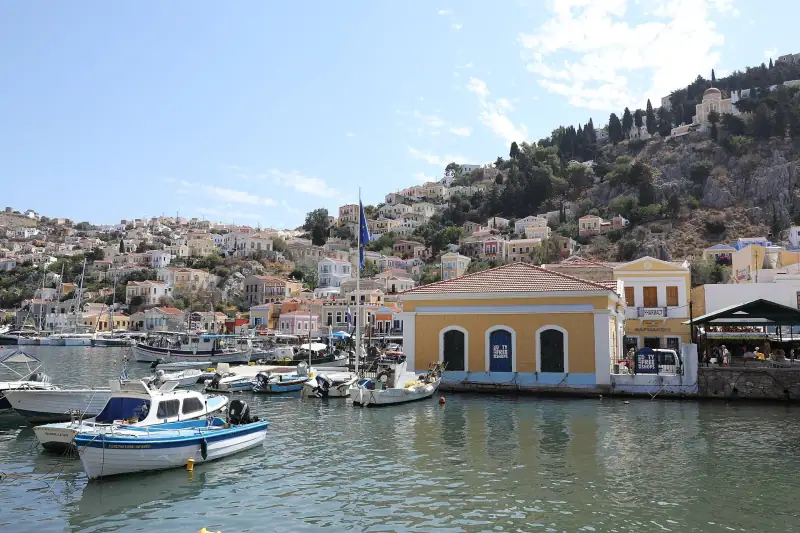
Day trip to Symi from Rhodes: boat, Panormitis and Gialos village
How to do a day trip to Symi from Rhodes? Boat crossing, Gialos village, Panormitis monastery, beaches and tips to organize your day.
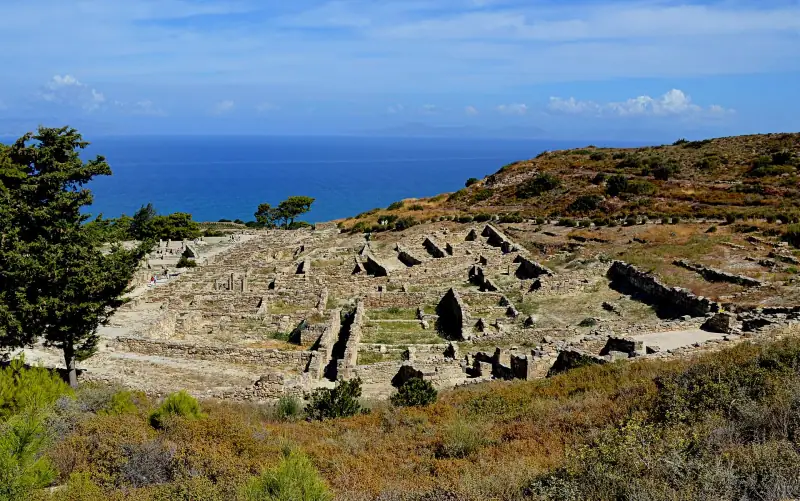
Visiting Kamiros in Rhodes: ticket price, hours and how long it takes
Kamiros in Rhodes: €10 full-price ticket, summer and winter hours, free days, visit time, access from Rhodes Town and tips to beat the heat.
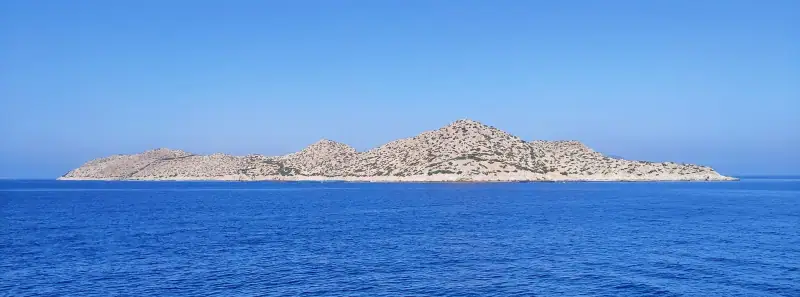
How to get to Halki from Rhodes: boat, schedules and a typical day
Halki from Rhodes: leaving from Kamiros Skala or the main port, crossing time, evening return, Pondamos beach and the abandoned village of Chorio.
Ready-made
Rhodes itineraries
5 days
Rhodes in 5 days: old town, Lindos, Symi and the south
What to do in Rhodes in 5 days? Day-by-day itinerary: old town, Filerimos, Kamiros, Lindos, a trip to Symi and the wild south, with distances and tips.
Can be adapted in the planner
3 days
Rhodes road trip in 3 days: driving around the island
Rhodes road trip in 3 days: a day-by-day itinerary around the island by car, from Lindos to Prassonissi, with distances, stops and tips.
4 days
Rhodes in 4 days without a car: a realistic bus and boat itinerary
Rhodes in 4 days without a car: old town on foot, Lindos by bus (55 km, 1 h 30), Symi by boat and Faliraki beach. Stops, travel times and pitfalls.