Where to stay
Where to stay in the Gobi Desert: camps, yurts and lodging
We may earn a commission when you book through links on this page, at no extra cost to you. We don't visit or try the places we cover: we summarize published sources. How we work
In short
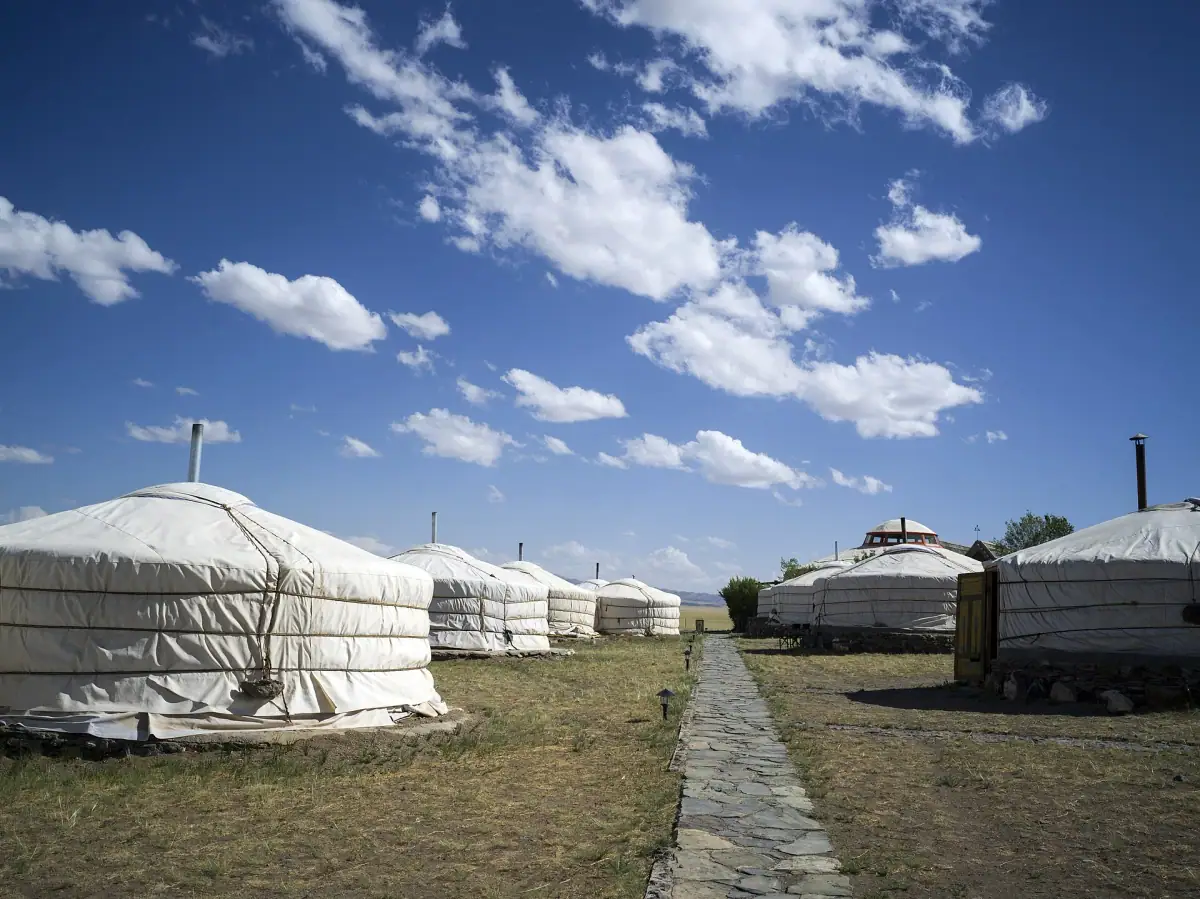
- Conventional hotels are concentrated in Dalanzadgad, the main Gobi town; in the desert itself, lodging is exclusively yurt camps or nomadic families.
- Camps range from about €25 to €40 per night (~$29-46) for basic ones to luxury packages like Three Camel Lodge.
- In July and August, book 2 to 4 weeks ahead where possible; May, June and September usually have room.
- Nights are cool even in summer (10 to 15 °C / 50 to 59 °F); generators in most camps run only about 6 pm to 10 pm.
The Gobi Desert is one of the most spectacular destinations in Mongolia. Orange sand dunes, cliffs streaked with color, dinosaur fossils and wild animals roaming free: the Gobi is a world of its own. Here is where to sleep to make the most of this legendary region.
The geography of the tourist Gobi
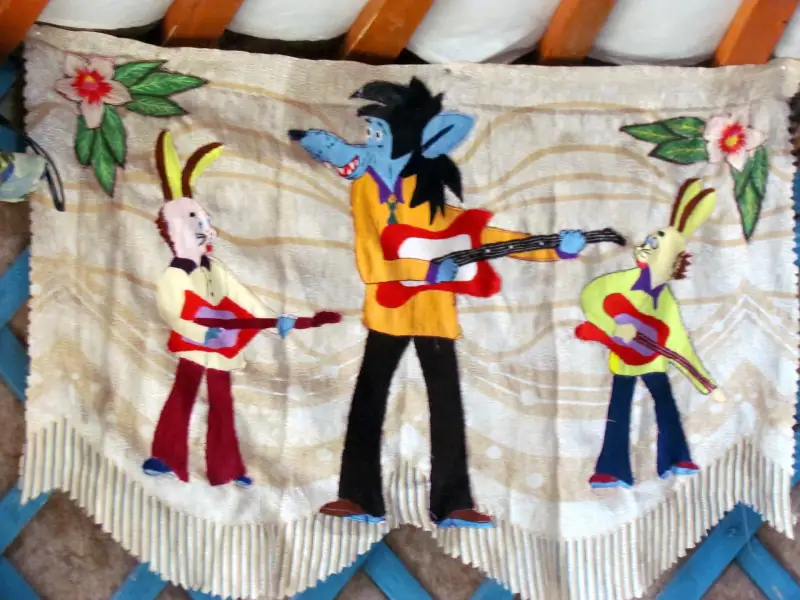
The tourist Gobi is organized around a few main sites, all reachable by 4x4 from Dalanzadgad, the provincial capital:
- Bayanzag (Flaming Cliffs): famous red formations, 100 km (62 mi) to the north
- Khongoryn Els (the Singing Dunes): the largest dunes in Mongolia, 180 km (112 mi) to the northwest
- Yol Am (Vulture Gorge): a canyon that stays icy even in summer, 50 km (31 mi) to the northwest
- Khermen Tsav: a canyon with spectacular colors, more remote
In Dalanzadgad: the Gobi hub
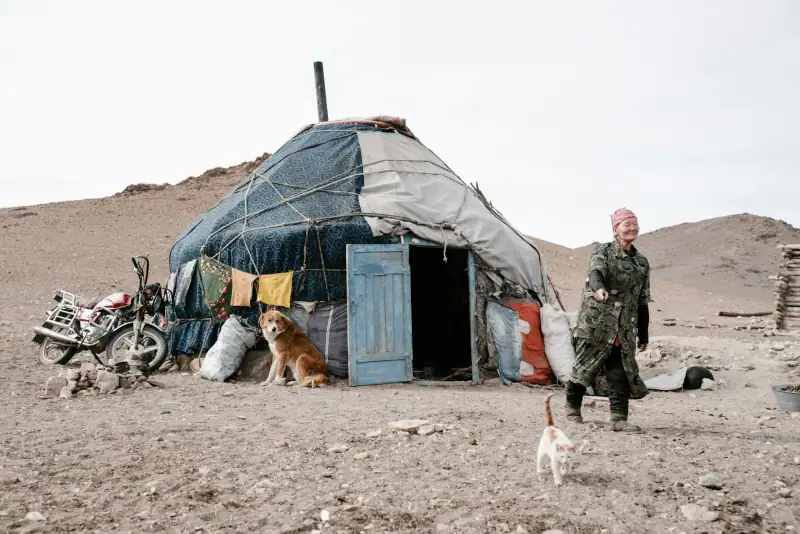
Dalanzadgad is the starting point for exploring the Gobi. Plan on spending one night there on the way out or back.
Hotels in Dalanzadgad
Gobi Discovery Hotel A hotel often cited among the best rated in town (check with the property that it is still open). Clean rooms, restaurant with local cuisine, English-speaking staff. Ideal for a transit night.
- Price: €35-60 per night (~$41-70), indicative, to be verified
Mönhhayrhan Hotel A cheaper but clean option. Central, a short walk from the local market (check its opening and current conditions with your agency or local guide).
- Price: €20-35 per night (~$23-41), indicative, to be verified
Guesthouses and homestay rooms Several families offer rooms to travelers. Ask your agency or local guide. Authentic atmosphere, home cooking.
- Price: €10-20 per night (~$12-23)
Yurt camps in the desert
Around the Khongoryn Els dunes
This is the most spectacular site in the Gobi. Several yurt camps have set up facing the huge sand dunes.
Three Camel Lodge (Gurvan Saikhan massif, at the foot of the mountains) One of the most renowned eco-lodges in all of Mongolia. Spacious, comfortable yurts, quality meals, organized activities (camel, hiking, astronomy). Luxury in the middle of the desert.
- Price: luxury packages, about €1,100 to €1,300 per person per night (~$1,275 to $1,510), or about 3,800 to 4,300 USD per person for 3 nights in 2026 depending on season, excluding domestic flights; check the rate with the lodge
Gobi Dream Camp A good mid-range option near the dunes. Well-equipped yurts, meals included, local guides available.
- Price: €60-90 per night (~$70-105)
Khongoryn Els Ger Camp Budget, basic but clean. You share the bathrooms, but you are at the foot of the dunes for an unbeatable price.
- Price: €25-40 per night (~$29-46), indicative, to be verified with your agency or the camp
Accommodation in the Gobi
Compare camps and book for your stay in the desert.
At the Flaming Cliffs (Bayanzag)
Bayanzag Ger Camp The standard camp for the Flaming Cliffs. Ideal position for sunsets over the red cliffs.
- Price: €40-65 per night (~$46-75), indicative, to be verified with your agency or the camp
Sunrise Ger Camp A basic but well-placed camp. Sunsets over Bayanzag from this camp are legendary.
- Price: €20-35 per night (~$23-41)
In the Yol Am gorge
Yol Am Nature Camp Ideally located at the entrance to the icy gorge. Quiet, little visited. To prepare your visit to the gorge, read our guide to Yol Am from Dalanzadgad.
- Price: €35-50 per night (~$41-58)
Sleeping with Gobi nomads
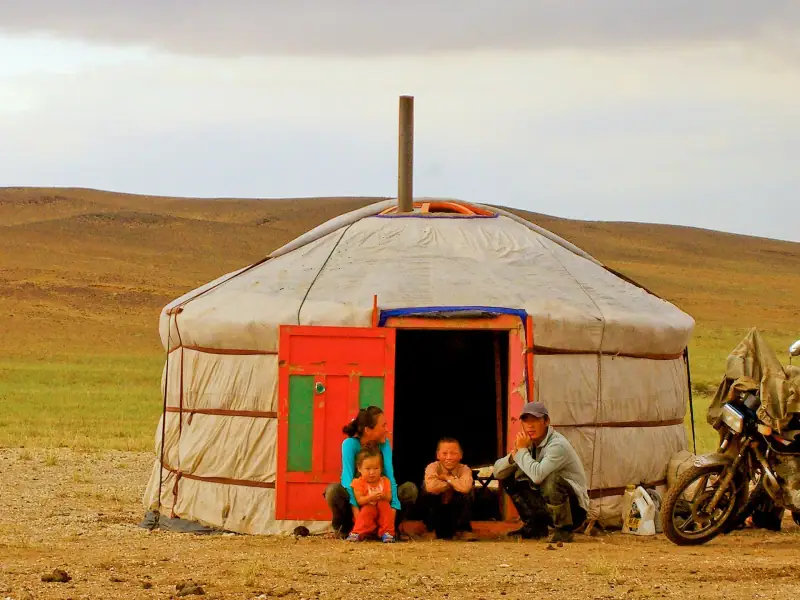
The most authentic experience is to ask a nomadic family for hospitality. In the Gobi, families live in yurts scattered across the desert, raising camels, goats and sheep.
How to do it:
- Your driver-guide generally knows families who welcome travelers
- Bring gifts (candy for the children, tea, vodka for the adults)
- Respect the codes of Mongolian hospitality
- A contribution of about €10 to €20 per night (~$12 to $23; indicative amount, dinner and breakfast included; ask your guide for advice) is well received
What you will experience:
- Lighting the fire in the yurt’s stove
- Drinking suutei tsai (salted milk tea)
- Eating boiled mutton and local dairy products
- Sleeping on mats and fur blankets
- Watching the sunrise over an absolutely silent desert
Practical tips for sleeping in the Gobi
Temperatures to expect
The Gobi is a continental desert with large temperature swings:
- Summer (July-August): 35-40 °C (95-104 °F) by day, 10-15 °C (50-59 °F) at night
- Spring/autumn: 15-25 °C (59-77 °F) by day, 0-5 °C (32-41 °F) at night
- Always bring a warm jacket, even in summer
Electricity and water
- Most camps have generators (running only 6 pm to 10 pm)
- Charge your electronic devices during those hours
- Running water is rare: wash with wipes and save water
- Bottled drinking water is available in the camps
Light at night
The Gobi offers one of the most beautiful starry skies in the world. Almost no light pollution, altitude, dry air: an astronomical show guaranteed. Bring a headlamp.
What to bring
- Comfortable sleeping bag (down to -5 °C / 23 °F at minimum, even in summer)
- High-protection sunscreen (very intense UV)
- Quality sunglasses
- Wide-brimmed hat
- Thin gloves and a beanie for cool nights
- Tissues and hand sanitizer (rudimentary bathrooms)
Sleeping in the Gobi Desert is an extraordinary experience. The silence, the immensity, the night sky and the warmth of the nomadic welcome make it one of the most memorable places to stay. Whatever comfort level you choose, the Gobi will give you lasting memories.
Frequently asked questions
Are there hotels in the Gobi Desert?
Conventional hotels are concentrated in Dalanzadgad, the main town of the Gobi. In the desert itself, lodging is exclusively yurt camps or nomadic families.
What is the best yurt camp in the Gobi?
Three Camel Lodge is often cited as one of the best eco-lodges in Mongolia. Several well-equipped camps are located near the Khongoryn Els dunes and the Flaming Cliffs.
Can you sleep in an authentic yurt in the Gobi?
Yes, by asking your driver-guide to point you to nomadic families in the area. Mongolian hospitality is legendary and this kind of welcome remains very accessible.
Do you need to book Gobi camps in advance?
In July and August (high season), yes: book preferably 2 to 4 weeks ahead (confirm with your agency or the camp). In May, June or September, camps generally have room, especially if you travel with a local guide.
Are Gobi camps air-conditioned?
No, yurts are generally not air-conditioned. In summer, nights are cool and pleasant despite hot days. Some high-end camps offer a ventilation system.
More Mongolia guides
Keep reading
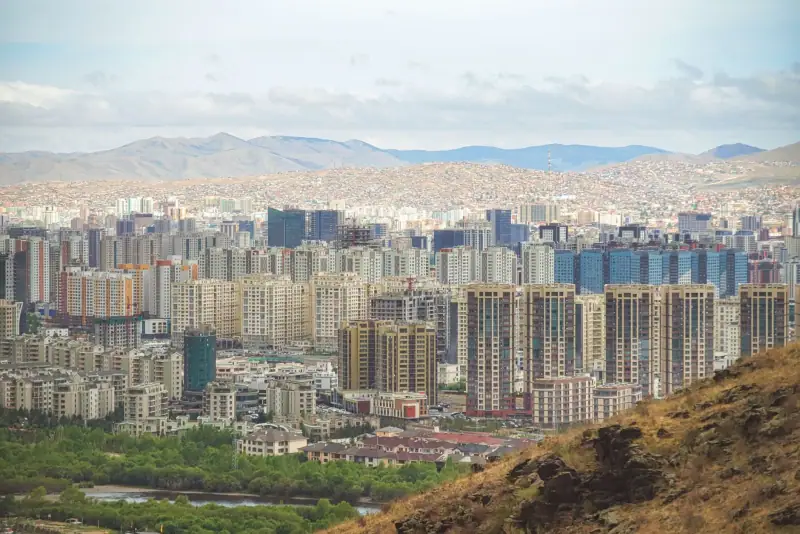
Where to stay in Ulaanbaatar: best neighborhoods and hotels
Complete guide to choosing your accommodation in Ulaanbaatar: neighborhoods, hotels, hostels and practical tips for every budget.
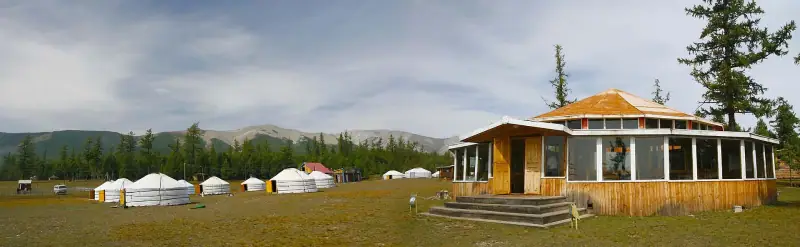
Where to stay at Lake Khövsgöl: yurt camps, lodges and guesthouses
Accommodation guide for Lake Khövsgöl: yurt camps on the shore, guesthouses in Khatgal, eco-lodges. Where to sleep for your budget and wishes.
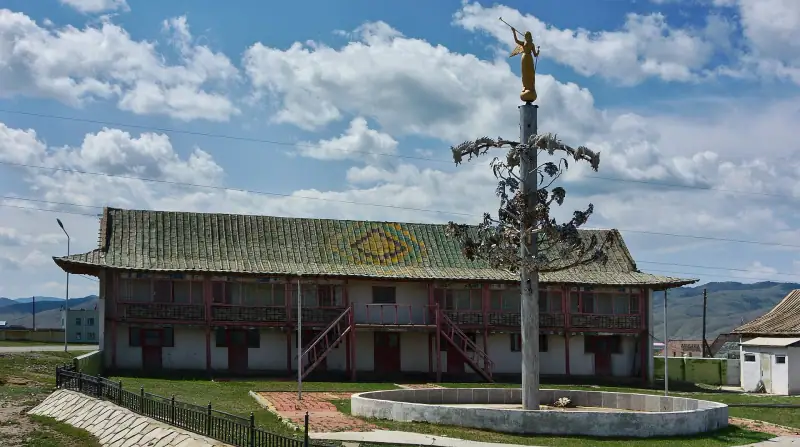
Where to stay in Karakorum: yurts, guesthouses and nomad camps
Accommodation guide for Karakorum: yurt camps, guesthouses and practical tips for sleeping near the ancient Mongolian capital.
Ready-made
Mongolia itineraries
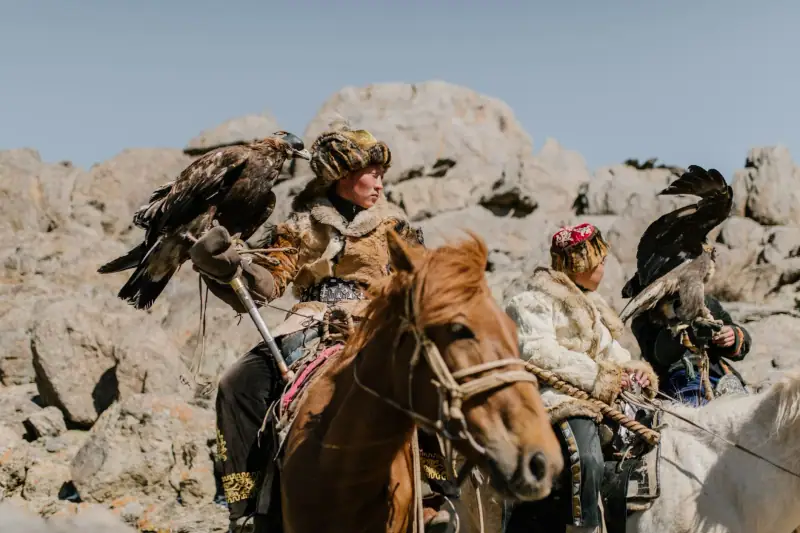
10 days
Western Mongolia in 10 days: Ölgii, the Altai and Kazakh culture
Western Mongolia in 10 days: Ölgii, the Kazakh Altai, eagle hunters, Tavan Bogd National Park. Full itinerary, budget and tips.
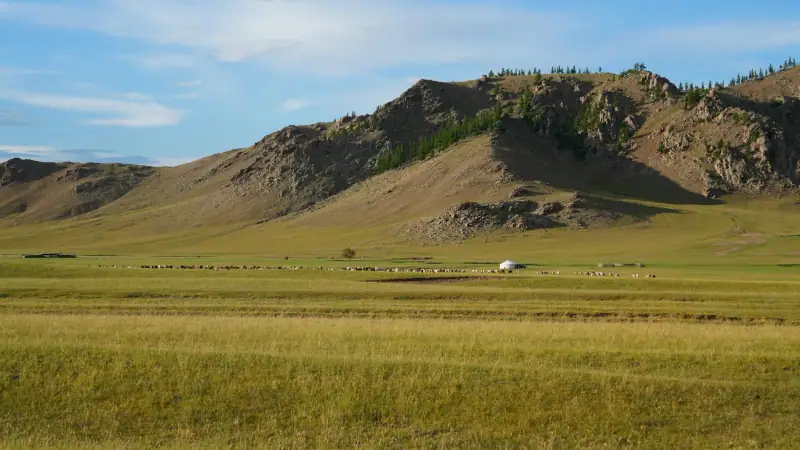
7 days
Mongolia in 7 days: a full itinerary around Ulaanbaatar
UlaanbaatarTereljKarakorumUlaanbaatar
14 days
Mongolia road trip: the grand tour in 14 to 21 days
Plan a Mongolia road trip: a 14 and 21-day itinerary through Ulaanbaatar, the Gobi, the steppe, Khövsgöl and the Altai, with logistics and budget.