Where to stay
Where to stay in Fuvahmulah: complete accommodation guide 2026
We may earn a commission when you book through links on this page, at no extra cost to you. We don't visit or try the places we cover: we summarize published sources. How we work
In short
- Fuvahmulah has no private-island resorts: accommodation is guesthouses only, from €30 to 120 a night (about $35-140).
- Dive lodges sell room, half board, 2-3 guided dives a day and gear for about €120-180 per person per day (about $140-210).
- Most guesthouses are in the town center, close to the market and cafes; book 4-8 weeks ahead in December-April.
- A domestic flight from Malé costs about €150-200 one way (about $175-230); alcohol is not available on the island.
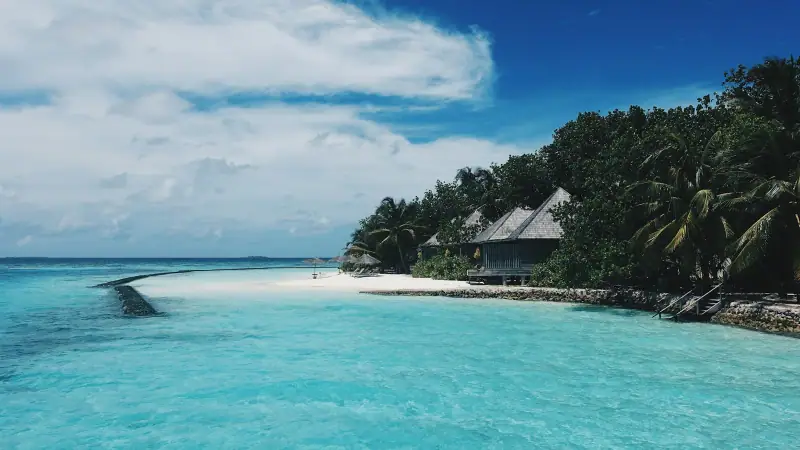
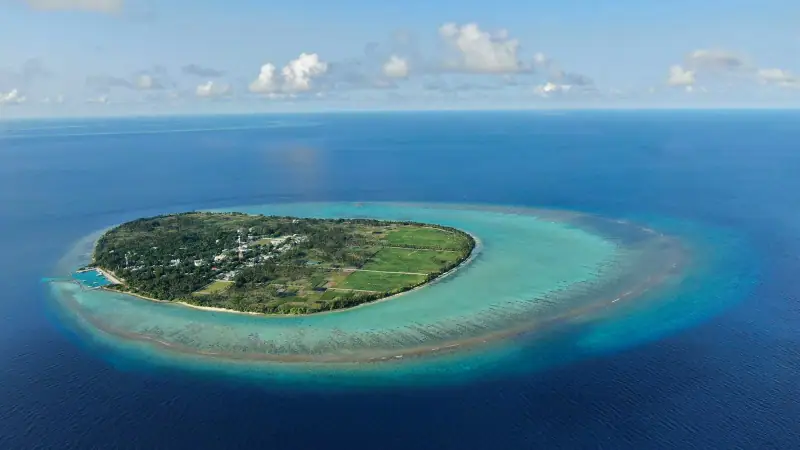
Fuvahmulah is a destination apart in the Maldivian archipelago. Where most travelers imagine overwater villas and turquoise lagoons, Fuvahmulah offers a radically different experience: a high, green, agricultural island surrounded by a wild ocean populated by tiger sharks. This singularity is reflected in its accommodation: no luxury resort complexes or overwater bungalows, but authentic family guesthouses that put visitors in the middle of local Maldivian life.
Choosing where to stay in Fuvahmulah therefore means choosing your level of immersion, your proximity to the dive centers, and the comfort-to-budget balance that matches your expectations. This complete guide helps you make the best choice for your stay on this exceptional island.
The island and its areas
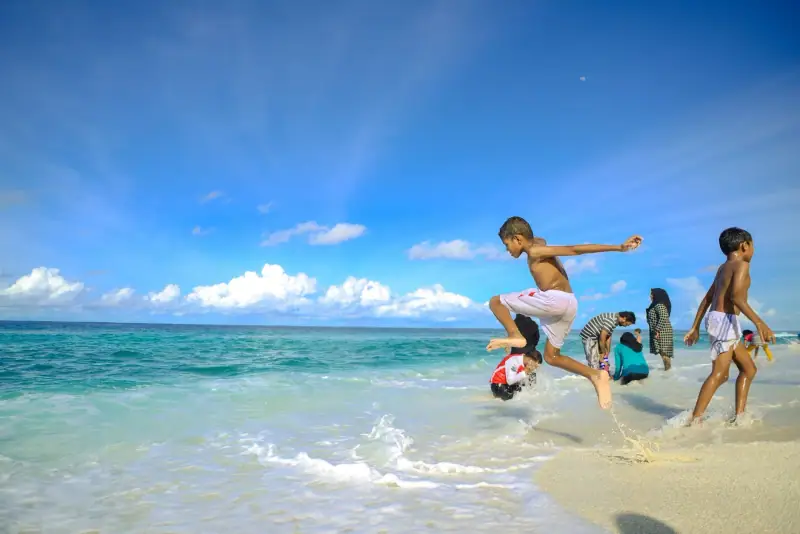
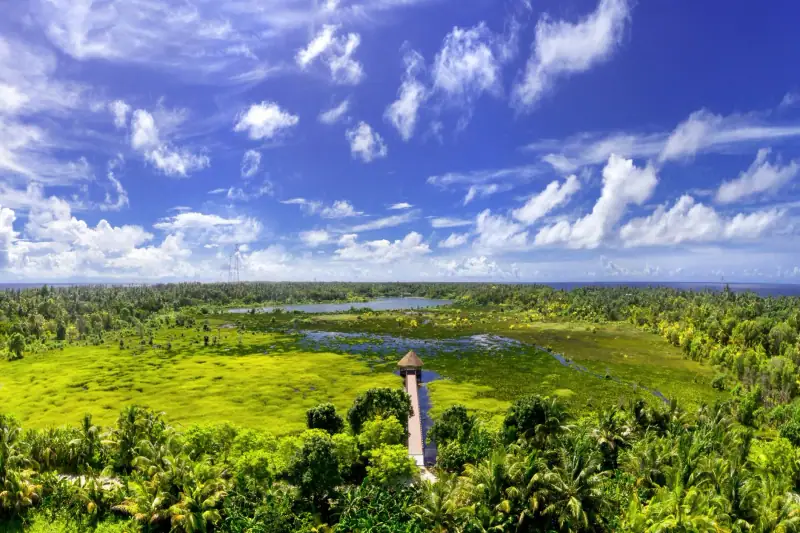
Fuvahmulah (officially Gnaviyani Atoll) is an island about 4.5 km (2.8 mi) long and 1.2 km (0.75 mi) wide, with about 9,200 inhabitants at the 2022 census (more than 13,000 people on the population register). Unlike tourist islands split into dedicated zones, Fuvahmulah is a compact community where housing, shops and services mix in a dense urban fabric.
The main areas of the island:
- The town center (Maafanu / Dhadimagi): this is where most guesthouses are concentrated, near the market, local cafes and mosques. It is the most practical area for exploring the island on foot.
- The airport area (north of the island): the airport is 2-3 km (1-2 mi) from the center, in the northern part. A few accommodations are in this sector, handy for late arrivals.
- Around the lakes (Bandaara Kilhi and Dhadimagi Kilhi): guesthouses near the two freshwater lakes let you enjoy these unique ecosystems early in the morning, when birdlife is most active.
- The south coast: less populated, this area is quieter. A few guesthouses there offer a tranquility appreciated by travelers who want to disconnect.
One essential point: Fuvahmulah has no official, developed “Bikini Beach” like Maafushi. A few swimming areas exist but remain discreet. Fuvahmulah is aimed above all at divers, nature lovers and travelers curious about local culture.
Types of accommodation in Fuvahmulah
Family guesthouses (economy budget: €30-60 a night, about $35-70)
The core of the offer in Fuvahmulah. These family-run places, often managed by long-time islanders, offer simple but functional rooms.
What you find at this price:
- Double room with air conditioning
- Private bathroom (generally)
- Wi-Fi (quality varies by location)
- Maldivian breakfast often included (mas huni, roshi, tea)
- Personalized advice from the hosts on activities and local dive providers
Points to watch:
- Walls can be thin (noise from neighbors or the street)
- Bedding can be firm depending on the establishment
- The kitchen is often shared with the host family
These guesthouses are ideal for travelers who come mainly to dive and want to put their budget into dives rather than lodging.
Guesthouses in Fuvahmulah
Compare all available accommodations with verified traveler reviews.
Dive lodges (mid-range budget: €60-120 a night, about $70-140)
Fuvahmulah has developed a niche of accommodation designed specifically for divers. These establishments offer far more than a bed: they are a complete logistical base for exploring the island’s exceptional underwater world.
Features of dive lodges
Dive-specific services:
- Integrated dive center or exclusive partnership with a specialized operator
- Gear rinsing and storage
- Daily briefings on dive conditions and sites
- 2 to 3 dives a day depending on tides and currents
- Access to nitrox for certified divers (at some sites)
- Hyperbaric doctor reachable in case of a decompression problem
Equipment available for rent:
- 3 mm wetsuits (water at 28-30 °C / 82-86 °F, a light suit is enough)
- Fins, masks, regulators
- Buoyancy vests
- Flashlights for caves and night dives
Accommodation + dive packages: The vast majority of dive lodges offer very attractive combined packages. A typical package in Fuvahmulah includes:
- Night in a double room
- Breakfast and dinner (half board)
- 2 to 3 guided dives a day
- Complete equipment
- Airport transfers
Indicative price: €120-180 per person per day for such a package (about $140-210), a very competitive rate compared with other world dive destinations.
Diving excursions in Fuvahmulah
Dives with tiger sharks and hammerheads guided by local instructors.
Detailed accommodation budget for Fuvahmulah
Options compared by budget
Tight budget (€30-50 a night, about $35-58): A simple room in a family guesthouse. Functional, authentic, no frills. Ideal for divers who spend their days underwater and their evenings reviewing photos.
Moderate budget (€50-80 a night, about $58-93): Good-quality guesthouses with a spacious room, good air conditioning, stable Wi-Fi, and often a full catering service. Most travelers fall in this range.
Comfort budget (€80-120 a night, about $93-140): The island’s best guesthouses, sometimes with a private terrace, guaranteed hot water, and facilities worthy of a small hotel. For those who want to combine underwater adventure with reasonable comfort in the evening.
Extra costs to plan for
- Malé-Fuvahmulah flight: about €150-200 one way with Maldivian (about $175-230), to book as early as possible (check the current fare with the airline)
- Airport-guesthouse transfer: €5-15 by taxi or motorbike taxi (about $6-17); free if organized by the guesthouse
- Meals: €5-20 per meal in local restaurants and cafes (about $6-23)
- Tiger shark dive: about €85-100 per guided dive (about $100-115) (local center rates, 8% tax included, equipment sometimes extra)
- 10-dive package: about €600-900 depending on the center (about $695-1,045), with a discount that pays off if you dive several days
Estimated daily budget (flight excluded) for a diver in an average guesthouse with 2 dives a day: €120-180 (about $140-210).
Choosing the right location
As the island is relatively small (4.5 km × 1.5 km / 2.8 × 0.9 mi), distances are manageable on foot or by bike. However, the location of your guesthouse affects your daily comfort.
Near the town center (recommended)
Advantages:
- Local market within reach to buy fresh fruit (papayas, island bananas)
- Cafes and restaurants within walking distance
- Authentic local atmosphere when you wake up
- Historic mosques that can be visited within 5-10 minutes’ walk
Drawbacks:
- Slightly noisier (neighborhood life, calls to prayer)
- Limited parking if you have rented a scooter
Near the airport (north of the island)
Advantages:
- Handy for late arrivals or early departures
- Quieter, less dense area
Drawbacks:
- Farther from the town center (15-20 minutes on foot)
- Fewer restaurants in the immediate vicinity
Near the lakes (center-east of the island)
Advantages:
- Early-morning access to Bandaara Kilhi and Dhadimagi Kilhi lakes to watch herons and kingfishers
- Green, calm environment
- Good base for exploring the island’s nature
Drawbacks:
- You need a means of transport to reach restaurants and dive departures
Services and facilities to check before booking
Not all accommodations are equal in Fuvahmulah. Here are the points to check systematically:
Essential for divers:
- Partnership with a dive center (preferably one specialized in tiger sharks)
- Secure gear rinsing and drying
- Briefings on dive conditions
- Ability to rent or refill tanks there
Essential for everyone:
- Working air conditioning (nights in Fuvahmulah can be hot and humid)
- Hot water in the bathroom (not always guaranteed in simple guesthouses)
- Stable Wi-Fi (to share your underwater photos and videos!)
- Mosquito nets (even though Fuvahmulah is known for having very few mosquitoes, protection remains prudent)
Nice to have:
- Airport transfer arrangements
- Bike or scooter rental to explore the island independently
- Laundry service
- Option to order late meals (after afternoon dives)
When to stay in Fuvahmulah
The choice of period directly affects accommodation conditions and guesthouse availability.
High season (December to April)
This is the reference period for Fuvahmulah. The sea is calm, underwater visibility reaches 20-35 meters (65-115 ft), and tiger sharks are extremely active. January, February and March are considered the golden months.
Consequences for accommodation:
- Guesthouses fill up quickly (book 4-8 weeks ahead)
- Prices are slightly higher (10-20% above the annual average)
- Accommodation + dive packages are often offered for a full week minimum
Low season (May to October)
The southwest monsoon brings winds and a rougher sea on the north coast. Underwater visibility can drop slightly (15-25 meters / 50-80 ft is still excellent), but tiger sharks are still present and active.
Advantages for accommodation:
- Prices cut by 15-25%
- Greater availability, booking possible up to 1-2 weeks ahead
- More relaxed atmosphere in the guesthouses
- Natural spectacles (blowholes on the north coast) are particularly impressive in this season
To choose the best period for your activities, see our guide to the best times to visit the Maldives.
Practical tips for the stay
Dress code
Fuvahmulah is a traditional Muslim community. In the village, cover your shoulders and knees. Sportswear or shorts are acceptable for men in the shopping areas, but women will be more comfortable with a sarong or light trousers. In guesthouses, the rules are more relaxed.
Local food
Fuvahmulah is nicknamed the “Galapagos of the Maldives” for its exceptional marine biodiversity and its status as a UNESCO biosphere reserve since 2020. Take advantage: guesthouses often serve fruit grown on the island, notably papayas, local bananas and breadfruit. Garudhiya (tuna broth) and mas huni (shredded tuna with coconut) are the basics of the local cuisine, delicious and accessible. To learn more, see our guide to Maldivian cuisine.
Money and payment
Many guesthouses accept card payments (Visa, Mastercard), but check with your host before arriving and bring cash in MVR (Maldivian rufiyaa) or USD for daily expenses: local restaurants, taxis, the market. An ATM is located in the town center of Fuvahmulah.
Connectivity
Dhiraagu and Ooredoo 4G coverage is good across the island. Buying a local SIM at Velana Airport (Malé) before your flight to Fuvahmulah is strongly recommended: you will have a reliable connection independent of your guesthouse’s Wi-Fi. You can also check your carrier’s international plan or use a travel eSIM.
Fuvahmulah vs. other guesthouse islands
Fuvahmulah differs fundamentally from the other guesthouse islands of the Maldives. Here is how it compares with the most popular destinations:
Fuvahmulah vs Maafushi: Maafushi is the most accessible and developed guesthouse island in the Maldives, with dozens of accommodations, a developed Bikini Beach and mature tourist infrastructure. Fuvahmulah is more off the beaten track, more authentic, without a developed Bikini Beach, but with incomparably more spectacular marine life. For snorkeling and beach, Maafushi wins. For exceptional diving and authenticity, Fuvahmulah wins hands down.
Fuvahmulah vs Thulusdhoo: Thulusdhoo is known for its surf and the diving-friendly waters of North Malé Atoll. It is a smaller, simpler island than Fuvahmulah, with a relaxed surf vibe. If diving with big predators is your priority, Fuvahmulah is the obvious choice.
Fuvahmulah vs Rasdhoo: Rasdhoo (Alif Alif Atoll, distinct from Ari Atoll) is famous for its gray reef sharks and turtles reachable by snorkeling from the beach. The island is tiny and the atmosphere very quiet. Fuvahmulah offers a more technical diving experience and far more impressive species, with logistical access that is slightly more complex (a domestic flight is required).
To compare all the accommodation options in the Maldives, our guide resorts vs guesthouses gives you a complete overview.
Activities in Fuvahmulah
Diving, snorkeling, visiting the lakes and discovering local culture.
How to choose your guesthouse in Fuvahmulah
In short, here is a simplified decision guide for choosing your accommodation in Fuvahmulah:
You come mainly for diving: Choose a dive lodge with an integrated center. The accommodation + dive package will be cheaper and far more practical than booking the two separately. Check that the center is used to tiger shark dives (advanced level) and has modern, safe equipment.
You combine diving and cultural exploration: Opt for a guesthouse in the town center. You will be within walking distance of local restaurants, the market and the lakes, while having access to dive centers 5-10 minutes away by scooter or bike.
You are a non-diving traveler interested in nature: Fuvahmulah remains a fascinating destination even without diving (lakes, blowholes, local culture, extraordinary fruit). Choose a quiet guesthouse near the lakes or in the town center, with an English-speaking host for sightseeing advice.
You have a tight budget: Fuvahmulah’s budget guesthouses offer very good value. In low season (May-October), you can find decent rooms for €30-45 a night (about $35-52), which makes Fuvahmulah accessible even to travelers on a budget.
Fuvahmulah is not a luxury-comfort destination. It is an island of diving, wild nature and authentic encounters. The guesthouses that have developed there reflect this spirit: simple, welcoming, and often run by locals passionate about their island and its exceptional marine life. To learn more about the destination before booking, read our complete guide to Fuvahmulah.
Frequently asked questions
Are there resorts in Fuvahmulah?
No, Fuvahmulah has no private-island resorts like the classic tourist atolls. Accommodation consists exclusively of guesthouses on the inhabited island. That is part of its charm: an authentic, immersive experience in a Maldivian community.
Do you need to book far ahead in Fuvahmulah?
Yes, absolutely. Fuvahmulah has only about twenty guesthouses and places are limited. In high season (December-April), accommodation fills up several weeks ahead. Even in low season, book at least 2-3 weeks before your arrival.
Is breakfast included in Fuvahmulah guesthouses?
Often yes, but not systematically. Check when booking. A typical Maldivian breakfast includes mas huni (shredded tuna with coconut), local flatbread (roshi) and tea. Some guesthouses also offer eggs and island fruit.
Do Fuvahmulah guesthouses organize dives?
Most guesthouses aimed at divers work with local dive centers. Some have their own integrated center, others partner with operators specialized in tiger shark dives. State your level and expectations when booking.
Is there alcohol in Fuvahmulah guesthouses?
No. Fuvahmulah is an inhabited island with a Muslim majority, and alcohol is not available in local establishments. This is the rule on all inhabited islands of the Maldives, unlike private-island resorts, which may serve alcohol.
What is the average price of a night in Fuvahmulah?
Fuvahmulah guesthouses charge €30 to 100 a night depending on category (about $35-116). The average is around €50-70 for a double room with breakfast (about $58-81). Some dive-focused guesthouses offer accommodation-plus-dive packages from €120-150 per person per day (about $140-175).
More Maldives guides
Keep reading
Where to stay in Hulhumalé: guesthouses, hotels and tips 2026
Complete guide to choosing where to stay in Hulhumalé: Phase 1 vs Phase 2, budget, modern guesthouses and practical tips for a smooth stay.
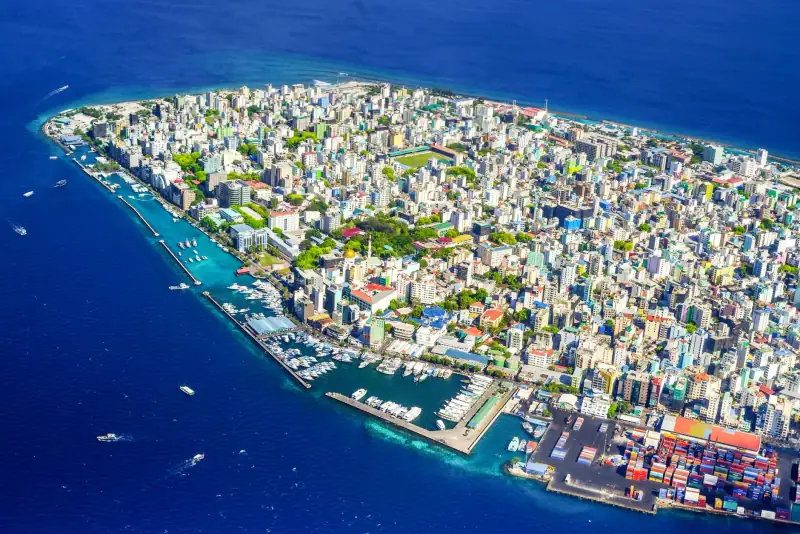
Where to stay in Malé: the best areas and hotels
Where to stay in Malé and Hulhumalé in the Maldives? Best areas, hotels by budget and practical tips for choosing where to sleep in the capital.
Where to stay in Rasdhoo: guesthouses and accommodation in 2026
Complete guide to choosing where to stay in Rasdhoo, Ari Atoll: guesthouses, hammerhead shark diving and practical tips.
Ready-made
Maldives itineraries
10 days
Maldives in 10 days: a complete itinerary to explore the atolls
10-day Maldives itinerary: Malé, Hulhumalé, Maafushi, Thulusdhoo and Ari Atoll. Day-by-day plan with transport, budgets and practical tips.
7 days
Maldives in 7 days: the ideal full-week itinerary
Complete itinerary to visit the Maldives in 7 days: Malé, Maafushi, island hopping and resort option. Day-by-day plan with practical tips.
5 days
Maldives in 5 days without a seaplane: a realistic local-island itinerary
MaafushiThulusdhoo