Where to stay
Where to Stay in Wadi Rum: Desert Camps and Nights in the Desert
We may earn a commission when you book through links on this page, at no extra cost to you. We don't visit or try the places we cover: we summarize published sources. How we work
In short
- Most lodging is in camps inside the protected area, reached by 4x4 from Wadi Rum Village; at least one night is recommended for the sunset, sunrise and starry sky.
- Indicative prices: basic camps €15-30 (~$17-35) per person, Bedouin camps €50-100 (~$58-115) per person, bubble tents and luxury camps €150-400 (~$175-465) a night for two.
- Dinner is often a zarb, meat and vegetables cooked in a sand oven; half board is usually included.
- Wadi Rum is 70-75 km (43-47 mi) from Aqaba (1 hour), 110 km (68 mi) from Petra (1 h 30 to 2 h) and 310-330 km (193-205 mi) from Amman.
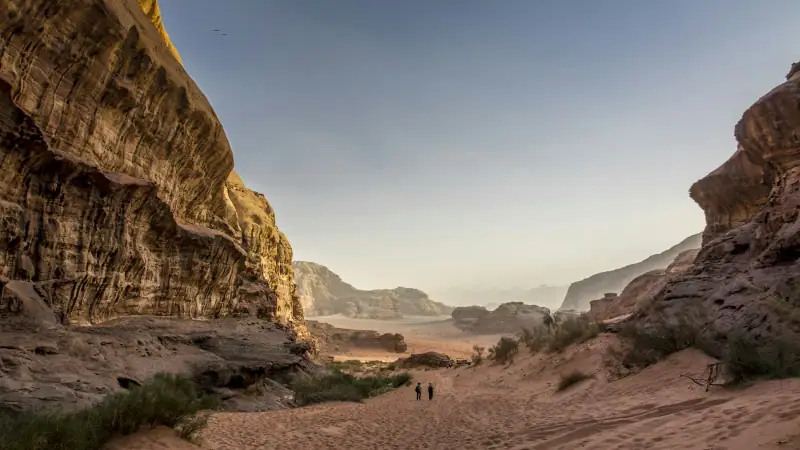
Wadi Rum is a unique case in the world of travel: here, lodging is not city hotels or apartments but camps in the middle of the desert, set between red sandstone cliffs and golden dunes. Spending a night in Wadi Rum means falling asleep under a sky with an almost unreal density of stars and waking at sunrise over landscapes that served as the setting for the film Lawrence of Arabia and several science-fiction productions.
Choosing where to stay in Wadi Rum takes a little preparation: the offering is vast and mixed, from bubble tents at €300 (about $350) a night to Bedouin camps at €20 (about $23) per person. This guide helps you navigate this jungle of tents to find the experience that suits you.
Types of lodging in Wadi Rum
Lodging in Wadi Rum falls into three main categories, each matching a different budget and experience.
Luxury camps and bubble tents
At the top end of the spectrum, luxury camps and bubble tents have turned Wadi Rum into a world-renowned glamping destination. Bubble tents, the transparent structures that let you gaze at the starry sky from your bed, are the emblem of this trend. They are generally air-conditioned in summer, heated in winter, and equipped with a private bathroom with hot water.
These camps often offer carefully decorated Sahara-style tents: handmade furniture, dimmed lighting, a private terrace looking onto the cliffs. The service rivals that of a boutique hotel: transfer from the visitor center, traditional zarb dinner, a wake-up call for sunrise, breakfast served under the stars still visible at dawn.
Indicative prices: €150 to 400 (~$175-465) a night for two people, or more for suites and the most exclusive tents.
Best for: Couples on a honeymoon or anniversary, travelers wanting an unforgettable experience, families with a comfortable budget.
Traditional Bedouin camps
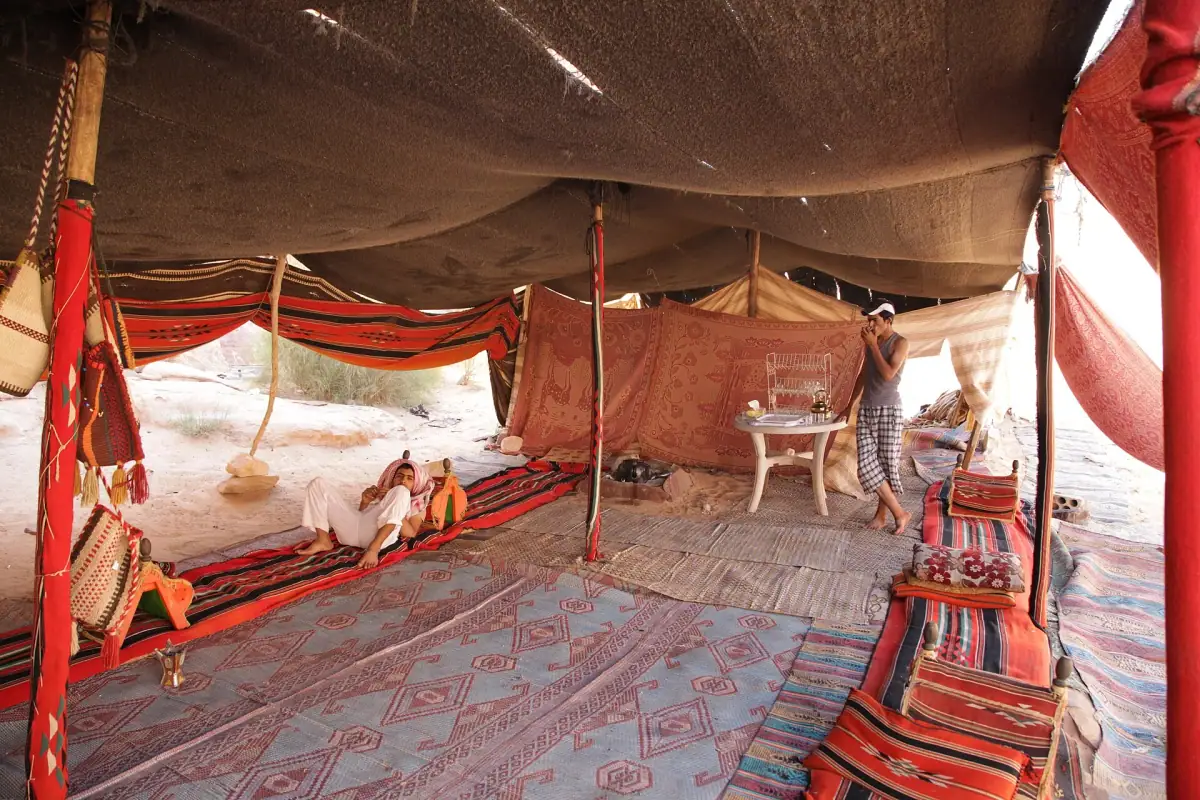
The mid-range category is made up of camps run by local Bedouin families. These camps offer an authentic experience in sturdy canvas tents, often with handmade decorations, Bedouin rugs and a warm atmosphere. Meals are prepared by the hosts themselves, from recipes passed down through generations.
Bathrooms are shared but clean, with hot water available (sometimes only at certain hours). Tents are comfortable without being luxurious: beds with decent mattresses, thick blankets for cool winter nights. Some camps offer semi-open tents that let you sleep under the stars while staying sheltered from the wind.
Indicative prices: €50 to 100 (~$58-115) per person, half board generally included.
Best for: Travelers looking for Bedouin authenticity, families, hiking and cultural discovery fans.
Camps in Wadi Rum
Compare camps and bubble tents with free cancellation on Booking.
Basic camps (small budget)
For travelers on a tight budget, Wadi Rum offers simple camps at very affordable prices. These places offer dorms or shared tents, with shared bathrooms. The infrastructure is rudimentary but functional: the essentials for sleeping are there, and the desert experience stays whole.
In many basic camps, dinner and breakfast are included in the price. The food is simple: flatbread, hummus, grilled vegetables, mint tea as much as you like. The atmosphere is often friendly, with travelers from around the world gathered around the fire.
Indicative prices: €15 to 30 (~$17-35) per person, half board often included.
Best for: Backpackers, solo travelers, young people on long trips.
Where is the lodging in Wadi Rum?
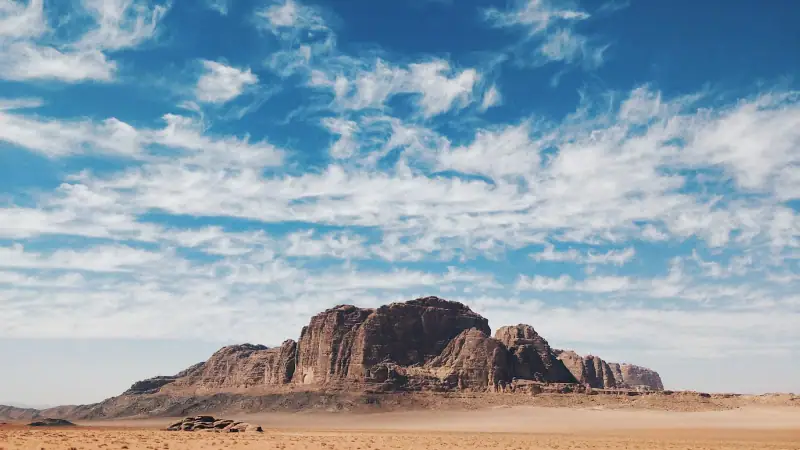
Rum Village: the mandatory entry point
Wadi Rum Village (or Rum Village) is the only official entry point into the protected area. The visitor center, the rangers’ office and the ticket office are here. A few guesthouses are set up in the village itself, outside the protected area, a rare but interesting option for travelers who want to catch the first and last light without paying the entry fee every day.
Inside the protected area
The vast majority of camps are inside the Wadi Rum Protected Area, a UNESCO World Heritage site. These camps are only reachable by 4x4 (or by camel for romantics), on marked sand tracks. Each camp sits in a different setting: at the foot of a 500-meter (1,640 ft) cliff, at the edge of a dune, or in the middle of a sand plain that seems to have no limit.
This geographic spread is one of the main attractions of Wadi Rum: staying inside the protected area gives you total darkness at night, absolute silence, and breathtaking landscapes the moment you wake up.
The bubble tent experience: everything to know
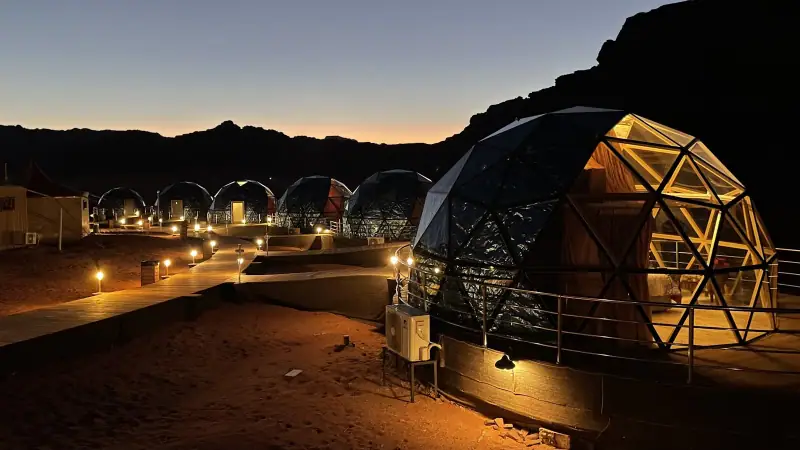
Bubble tents have become the iconic image of Wadi Rum on social media. Here is what to know before booking.
What you find in a quality bubble tent
- A comfortable double bed (or two single beds) with sheets and duvets
- A 360° view of the desert: cliffs, dunes, starry sky
- Air conditioning in summer and heating in winter (essential)
- A private bathroom (hot shower, toilet)
- A private terrace or outdoor space
- Breakfast and dinner service (generally included)
What to check before booking
Actual transparency: Some bubble tents are only partly transparent (just the roof or one side panel). Ask for precise photos of the interior and the real view from the bed.
Thermal insulation: In summer, without effective air conditioning, the greenhouse effect inside a transparent tent can be unbearable. Check that the air conditioning system is powerful.
Distance from other tents: For a total sense of isolation, check that your bubble is well separated from the camp’s other lodging. Some camps line their tents up side by side, which reduces the feeling of solitude in the desert.
Cancellation policy: Because of strong demand, some camps apply strict cancellation policies. Read the conditions carefully before paying.
The night in the desert: what to expect
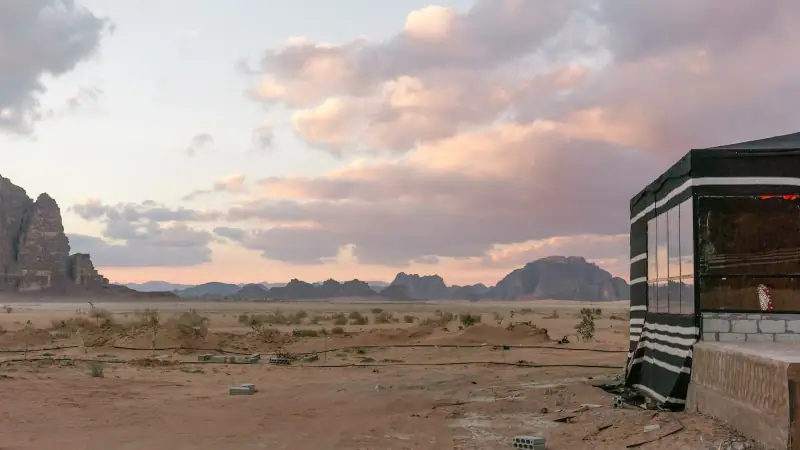
The starry sky of Wadi Rum
Wadi Rum is one of the places in the Middle East with the lowest light pollution. On a moonless night, the Milky Way is visible to the naked eye with striking clarity, and thousands of stars open up before you. For astrophotography fans, it is one of the best sites in the region.
To make the most of the night sky, avoid full-moon periods if stargazing is your priority. The ideal time is the new moon, when the darkness is total.
Night temperatures
Temperature swings between day and night are large in the Wadi Rum desert. In winter (December-January), nights can be cool or even cold (2-7 °C / 36-45 °F), and frost is common in January-February. Bring warm clothes even if you travel in summer, as the night chill can surprise you.
In summer, nights are warm (20-28 °C / 68-82 °F), pleasant for sleeping under the stars or in an open tent. Days are scorching (38-42 °C / 100-108 °F), but the sun sets around 7 pm and the desert is transformed.
The zarb meal: a highlight
Almost all camps offer a zarb dinner, the culinary specialty of the Jordanian desert. The principle is simple and ancient: meats (lamb, chicken) and vegetables are placed in a large metal container, covered with embers, then buried in an oven dug into the sand for several hours. When taken out, the food is tender, fragrant and has an irresistible smoky taste. The meal is served on rugs in the center of the camp, with rice, salads, flatbread and drinks.
This shared dinner is also a moment of conviviality: Bedouin guides readily share stories of the desert, the constellations or local traditions around the fire.
How to get to Wadi Rum
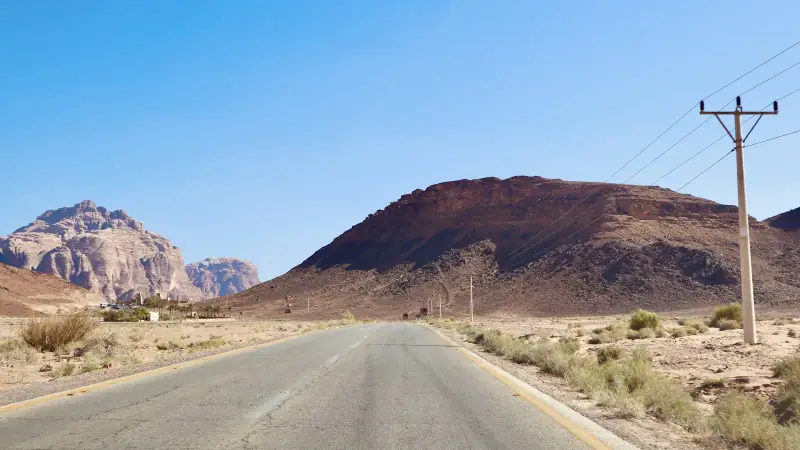
From Aqaba (70-75 km / 43-47 mi, about 1 hour)
Aqaba is the quickest gateway to Wadi Rum. The road goes through Rum village, reached from the Desert Highway (Route 15). Allow about 70 km (43 mi) from central Aqaba to the Wadi Rum Visitor Center, around 1 hour by road. Most camps organize a transfer from Aqaba for an extra charge, so ask when booking.
From King Hussein airport in Aqaba, the distance is about the same. You will find taxis at the airport to go straight to Wadi Rum; negotiate the fare in advance (allow roughly 25-40 JOD).
From Petra (110 km / 68 mi, 1 h 30 to 2 h)
Wadi Rum is often combined with Petra on a southern Jordan circuit. The road between Petra (Wadi Musa) and Wadi Rum is about 110 km (68 mi), 1 h 30 to 2 h depending on the route. The main route takes the Desert Highway south, before turning off toward Wadi Rum Village. For this leg, a rental car is the most comfortable option.
From Amman (310-330 km / 193-205 mi, about 3 h 30)
From Amman, the trip to Wadi Rum takes about 3 h 30 to 4 h by car, heading south on the Desert Highway. A same-day round trip from Amman is possible as an excursion, but spending at least one night in the desert is strongly recommended. The Jordan Pass includes entry to the protected area (as of June 2026).
Practical tips for choosing a camp
Book directly or through a platform?
Both options are valid. Platforms such as Booking.com offer a payment guarantee and a transparent cancellation policy. Booking directly with the camp (by email or WhatsApp) is often cheaper, but needs more vigilance about cancellation conditions.
Whichever channel you use, ask for recent photos of the tent or camp, and read recent reviews carefully. Quality can vary from one camp to another even in the same price category.
What is (generally) included in the price
- Entry to the Wadi Rum protected area (access fees)
- 4x4 transfer from the Visitor Center to the camp
- Traditional dinner (zarb or buffet)
- Breakfast
- Bedding (sheets, duvets, pillow)
- Tea and coffee throughout the evening
What is often extra:
- 4x4 tours in the desert
- Camel excursions
- Sunset on a panoramic dune
- Transfer from Aqaba or Petra
Preparing for your night in the desert
Clothing: Bring a fleece or a light coat for winter nights (even from March to November, nights can be cool). In summer, a simple sweatshirt is enough.
Shoes: Open sandals or light hiking shoes. Avoid heels, as sand is everywhere.
Headlamp: Essential for moving around the camp at night. Most camps have no electric lighting at ground level.
Power bank: Electrical outlets in the tents are rare or absent in traditional camps. Charge your devices during daytime excursions if outlets are available.
Sunscreen and hat: For 4x4 or camel outings during the day. The desert sun is relentless.
Water: Even if camps provide bottled water, always set out with a reserve of at least 1.5 liters (about 50 oz) per person for excursions.
Entry to the protected area
Entry to the Wadi Rum Protected Area is paid. Check the official fee on the date of your visit on the Jordanian Ministry of Tourism site. If you use the Jordan Pass, entry is included (as of June 2026), a significant advantage if you also visit Petra. For more on the Jordan Pass and whether it replaces an entry visa for your passport, see our guide to visas and formalities and your government’s official travel advice.
Best choice by traveler profile
You want the experience of a lifetime (bubble tent, flexible budget): Book a well-rated bubble tent (4.8/5 or more) between October and April. Ask for a tent isolated from the rest of the camp for maximum solitude. Plan 2 nights to enjoy a sunset and a sunrise, plus a full day of excursions.
You are traveling as a couple on a reasonable budget: A mid-range traditional Bedouin camp offers an excellent balance between authenticity and comfort. Choose a camp with a good reputation for food for the zarb experience.
You are traveling as a family with children: Mid-range camps with private bathrooms are preferable. Make sure the camp has separate sleeping arrangements if needed. The 4x4 tour is an experience enjoyed from age 5-6.
You have a small budget: A basic camp at €20-30 (~$23-35) per person will still give you the desert sunset and the starry sky. The essence of the Wadi Rum experience (the landscapes, the light, the silence) does not depend on the standard of your lodging.
You have a single night (on the way to Aqaba or Petra): One night in a mid-range camp is enough to capture the magic of the place. Arrive in late afternoon for the sunset excursion, have dinner under the stars, and leave after breakfast the next day.
Wadi Rum is one of those destinations that lastingly changes the way you look at the world. You do not need luxury to be struck by the absolute beauty of this desert, but if the budget allows, a night in a bubble tent under the Milky Way will probably stay among your best travel memories. To plan your whole stay in southern Jordan, see our Jordan road trip and our 7-day itinerary.
Frequently asked questions
Can you stay overnight in the Wadi Rum desert?
Yes, and it is the most recommended way to experience Wadi Rum. The vast majority of lodging is in camps inside the protected area. Spending at least one night there is essential to enjoy sunset, sunrise and the exceptional starry sky far from any light pollution.
How much does a night in Wadi Rum cost?
Prices vary considerably by camp type. A basic camp costs about €15-30 (~$17-35) per person (often with half board). A mid-range traditional Bedouin camp runs €50 to 100 (~$58-115) per person. Bubble tents and luxury camps charge €150 to 400 (~$175-465) a night for two.
What is a bubble tent in Wadi Rum?
A bubble tent is a transparent inflatable or rigid structure that lets you sleep in the middle of the desert while looking at the starry sky from your bed. The best models have air conditioning/heating, a private bathroom and a comfortable bed. This unique experience is one of the most sought after in Jordan and is booked far in advance.
Are meals included in Wadi Rum camps?
In the vast majority of camps, half board (dinner and breakfast) is included in the price or offered as an option. The traditional Jordanian dinner is often prepared in an underground oven (zarb): meats and vegetables cooked slowly under the sand, served with rice, flatbread and salads. It is a culinary experience in its own right.
Do you need to book bubble tents far in advance?
Yes, bubble tents and luxury camps are in high demand. In high season (October to April), book at least 2 to 3 months ahead, especially for Jordanian weekends (Friday-Saturday) and holidays. In the low summer season (June-August), lead times are shorter but daytime temperatures often exceed 40 °C (104 °F), so count on early-morning outings.
How do you get to the Wadi Rum camps?
All visitors must go through the Wadi Rum Village Visitor Center to register and pay the entry fees. Most camps send a guide or a 4x4 to pick you up at the entrance gate. From Aqaba, allow about 70-75 km (43-47 mi), around 1 hour by road. From Petra, plan on about 110 km (68 mi), 1 h 30 to 2 h.
What is the best time to stay in Wadi Rum?
The best time is October to April, when daytime temperatures are pleasant (15-25 °C / 59-77 °F) and nights are cool but not freezing. November to March is the high tourist season. In summer, temperatures often exceed 40 °C (104 °F) by day, but nights stay bearable (20-25 °C / 68-77 °F) and the starry sky is just as spectacular.
More Jordan guides
Keep reading
Where to Stay Near the Dead Sea: Best Resorts and Lodging
Where to stay near the Dead Sea in Jordan: luxury resorts, budget alternatives in Madaba, private beaches and practical tips.
Where to Stay in Amman: Best Neighborhoods and Hotels
How to choose where to stay in Amman: neighborhoods, hotels by budget, hostels and practical tips for your stay in Jordan.
Where to Stay in Petra: Complete Accommodation Guide
The best hotels and guesthouses to stay in Petra (Wadi Musa). All price ranges, plus tips on choosing and booking your accommodation.
Ready-made
Jordan itineraries
3 days
Northern Jordan Road Trip: Amman, Jerash and Ajloun
A complete northern Jordan road trip: Amman, the Roman city of Jerash, Ajloun Castle and Umm Qais in 3 to 4 days.
10 days
Road Trip in Jordan: The Self-Drive Guide
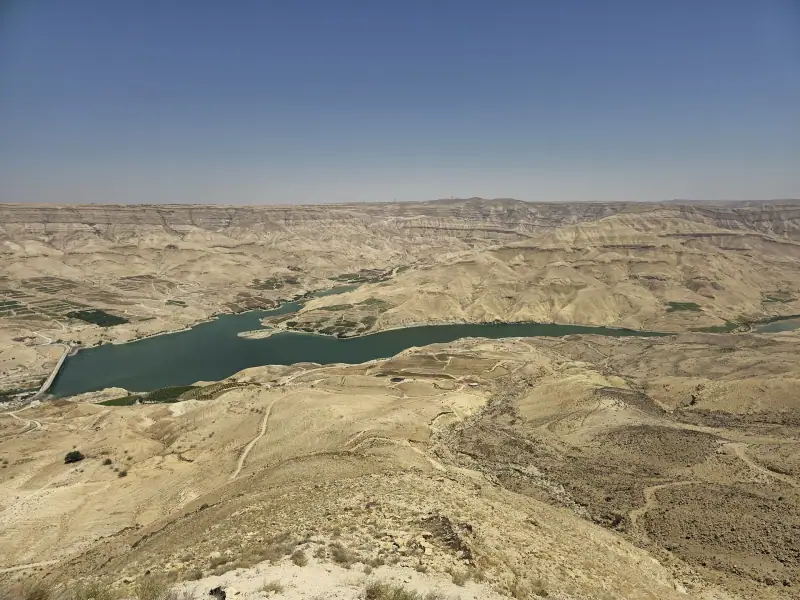
Plan your Jordan road trip: King's Highway, Desert Highway, Wadi Rum and Aqaba. Itinerary, driving tips and rental car basics.
5 days
Jordan in 5 Days Without a Car: A Realistic Bus and Taxi Itinerary
Jordan in 5 days without a car: Amman, Petra, Wadi Rum and Aqaba by JETT bus, minibus and taxi. Distances, travel times, schedules and a realistic budget.